The Greatest Sovereign Is Love
Howard Colby Ives, Portals to Freedom, (1937), George Ronald · Read original
When in Bahá'í history
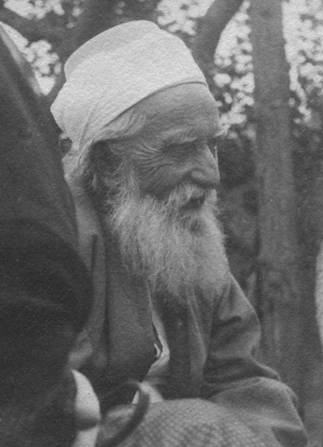
A retelling based on Portals to Freedom by Howard Colby Ives (George Ronald, 1937), chapter 7. Words in quotation marks are verbatim from the book and from The Promulgation of Universal Peace.
On the morning of 17 July 1912, in New York, 'Abdu'l-Bahá Himself united Harlan Ober and Grace Robarts in marriage according to the law of Bahá'u'lláh. He suggested that Howard Colby Ives, who was then a minister, assist Him by performing the legal ceremony as well, "that all should be done in accordance with the law of the land." Ives married the couple that evening.
The room was long and beautifully furnished, and Ives looked with wonder at the people gathered in it. There were guests from Paris, Berlin and London; from Tihrán and Qum in Persia; from Bombay, from Bákú in Russia, and from Haifa; a number of Black Americans; and about a hundred of his own countrymen. Rich and poor, educated and uneducated were there together. It came to Ives that he was taking part in an epoch-making event, a gathering of East and West that foreshadowed the unity Bahá'u'lláh had come to bring.
Ives sat very near the Master and watched Him closely. 'Abdu'l-Bahá wore a cream-colored robe that fell in folds to His feet and a fez of the same color, His long white hair falling almost to His shoulders.
After the simple ceremony, when the bride and groom had returned to their seats, 'Abdu'l-Bahá rose. He looked around the room, raised His hands palm upward, closed His eyes, and chanted a prayer for the two whose marriage He and Ives had performed. Ives did not know Persian, yet he had the impression that he understood, and so strongly that the interpreter's translation came as a shock. That chanted prayer, he wrote, was the keenest of all his memories of the evening.
Ives opened his chapter on the wedding with words 'Abdu'l-Bahá spoke at Green Acre, in Maine, the following month:
It is, therefore, evident that in the world of humanity the greatest king and sovereign is love.
A retelling based on Portals to Freedom (Howard Colby Ives, George Ronald, 1937), chapter 7; the closing quotation is from 'Abdu'l-Bahá's talk at Green Acre, 16 August 1912, in The Promulgation of Universal Peace. For the fuller account, see the original.
Cite this story
Ives, H. C.. (1937). *Portals to Freedom*. George Ronald. https://bahai-library.com/ives_portals_freedom
This story shares quotes with 1 other story
“It is, therefore, evident that in the world of humanity the greatest king and sovereign is love.”
Also in
- The Greatest Power— Howard Colby Ives, Portals to Freedom
Record yourself reading this story
Recording stays on this device only. Nothing is uploaded.
Related stories
A Marriage at the Master's Wish
In New York in 1912, Lua Getsinger told Grace Robarts that ‘Abdu’l-Bahá wished her to marry Harlan Ober, a man she scarcely knew. Grace obeyed, and the Master Himself performed their marriage.
The Greatest Power
In 1912 'Abdu'l-Bahá united two American Bahá'ís in marriage. At the wedding, before guests from many countries, He chanted a prayer for them.
The Question Answered by Silence
Howard Colby Ives asked ‘Abdu’l-Bahá why he should believe in Bahá’u’lláh. After a long silence the Master spoke of the sincerity a minister's heart must have, and only months later did Ives realize his question had been answered.
The Intellect and the Heart
Reluctantly brought to hear ‘Abdu’l-Bahá in Boston in 1912, William Randall carried Him some grape juice and was asked to sit. After twenty restless minutes the Master spoke words that became a turning point in his life.