Are You Interested in Renunciation?
Howard Colby Ives, Portals to Freedom, (1937), George Ronald · Read original
When in Bahá'í history
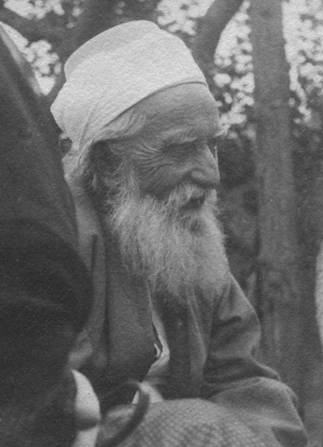
A retelling based on Portals to Freedom by Howard Colby Ives (George Ronald, 1937), chapter 3. The narrative is retold in our own words; the words in quotation marks are verbatim from the book. Read the full text for Ives's own telling.
In the spring of 1912, while 'Abdu'l-Bahá was in New York, Howard Colby Ives kept returning to a line in a prayer: "Prevent me not from turning to the Horizon of renunciation." He could not see what renunciation had to do with inspiration, and renouncing the world seemed to him an ascetic idea. Yet his heart responded to it, and he resolved to learn more.
So one cold spring day, with a strong east wind blowing, he made a special journey to ask 'Abdu'l-Bahá about renunciation. He found the house on Ninety-sixth Street almost empty; the Master was spending a day or two with friends on Seventy-eighth Street. Ives walked there and found Him about to return. He showed one of the Persian friends the passage in the little book he carried and asked him to request a few words from 'Abdu'l-Bahá on the subject. The answer came back that Ives should walk with Him to Ninety-sixth Street, and He would talk with him on the way.
A dozen or so people walked together. Ives buttoned his coat against the wind, while 'Abdu'l-Bahá's cloak floated behind Him; with a slightly amused look, He remarked that Ives seemed cold. Walking a few paces ahead of the others, the Master spoke at length about horizons: how the Sun of Reality, like the physical sun, rises at different points, the Sun of Moses at one, the Sun of Jesus at another, the Sun of Muhammad and the Sun of Bahá'u'lláh at others, yet is always the same Sun. Once or twice He stopped and drew a horizon on the sidewalk with His stick.
Ives was greatly disappointed. He had heard 'Abdu'l-Bahá speak on this subject before. "It was not of horizons I wanted to hear, but of renunciation." As they neared the house, the Master fell silent, and Ives's disappointment gave way to contentment. Perhaps, he thought, the way to learn about renunciation was by doing, and he might begin by giving up his wish to have the Master talk to him about it.
At the steps of the house, 'Abdu'l-Bahá let the others go in ahead. Then He turned and told Ives that he must always remember that this is a day of great things, very great things. Twice more He started up the steps and turned back to say it again, the third time with raised hand and in what seemed to Ives "a voice of thunder": "This is a Day for very great things."
He went quickly up the stairs to His room, a large front room on the third floor, and Ives followed, though he had not been invited. At the door 'Abdu'l-Bahá turned and beckoned him in. The room was very still. Then, Ives writes, "He simply asked me if I were interested in renunciation."
Ives had no answer. He had forgotten the question that had filled his mind an hour before, and he wondered whether, in that hour when the word was never spoken, all he needed to know about it had been given to him. He could not say he was interested, and he would not say he was not. 'Abdu'l-Bahá put His arm around him and led him to the door.
Ives left, he writes, "with my soul treading the heights." Through the long years of renunciation that followed, the memory of that afternoon stayed with him: the walk, his disappointment, the challenge repeated three times, the climb up the stairs, and then the question:
Are you interested in renunciation?
"But I never dreamed," he adds, "that renunciation could be so glorious."
This account is retold for the Bahá'í Story Library; it is a paraphrase, not the original text. The quoted words are verbatim from Portals to Freedom (Howard Colby Ives, George Ronald, 1937). See the source for Ives's complete telling.
Cite this story
Ives, H. C.. (1937). *Portals to Freedom*. George Ronald. https://bahai-library.com/ives_portals_freedom
Record yourself reading this story
Recording stays on this device only. Nothing is uploaded.
Related stories
The Question That Came Back
Howard Colby Ives went to ask 'Abdu'l-Bahá what renunciation means. The Master talked about something else on the walk back, and then asked Howard a question of His own.
The Book on the Trolley
On a trolley to Newark, Howard Colby Ives shared his copy of Some Answered Questions with the young woman beside him. At the end of the ride she asked who the author was, and the next Sunday she came to hear 'Abdu'l-Bahá.
Howard Colby Ives Meets the Master
Wary after years of disappointed hopes, Howard Colby Ives was persuaded to visit ‘Abdu’l-Bahá at the Hotel Ansonia, where he was called into the Master's room and, in a long silence with Him, found the faith he had sought.
The Question Answered by Silence
Howard Colby Ives asked ‘Abdu’l-Bahá why he should believe in Bahá’u’lláh. After a long silence the Master spoke of the sincerity a minister's heart must have, and only months later did Ives realize his question had been answered.