The Book on the Trolley
Howard Colby Ives, Portals to Freedom, (1937), George Ronald · Read original
When in Bahá'í history
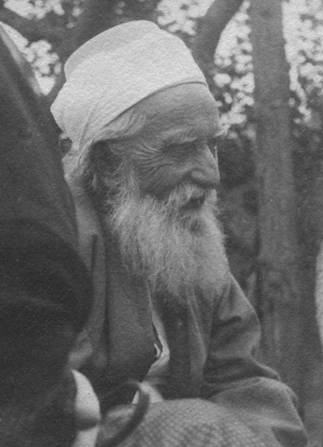
A retelling based on Portals to Freedom by Howard Colby Ives (George Ronald, 1937), chapter 5. The narrative is retold in our own words; the lines in quotation marks are verbatim from the book. Read the full text for Ives's own telling.
In May 1912, a few days before 'Abdu'l-Bahá was to speak at Howard Colby Ives's Brotherhood Church in Jersey City, Ives took the trolley to Newark on business connected with the building of his church. As usual he had a Bahá'í book with him. This time it was Some Answered Questions, in which, as Ives described it, 'Abdu'l-Bahá discusses some of the most vital matters of the spiritual life, mainly from the standpoint of the Christian tradition.
A young woman was sitting beside him, and Ives noticed that her eyes kept straying toward the book. He moved it slightly toward her, and for the hour-and-a-half ride to Newark they read it together. Neither spoke, but Ives could feel that she was deeply stirred.
When they reached the city and he closed the book, she said:
I think that is the most wonderful book I ever saw. Won't you tell me, please, who is the author?
Ives told her about 'Abdu'l-Bahá: His long years of exile and imprisonment for the sake of His love of Truth, His visit to America, and the talk He was to give at Ives's church in Jersey City the following Sunday evening. "I will surely be there," she said.
She was. Ives saw her in the audience and spoke with her after the meeting. He wrote that he often wondered afterwards whether that spark became a flame.
A retelling based on Portals to Freedom (Howard Colby Ives, George Ronald, 1937), chapter 5. For the fuller account, see the original.
Cite this story
Ives, H. C.. (1937). *Portals to Freedom*. George Ronald. https://bahai-library.com/ives_portals_freedom
This story shares quotes with 1 other story
“I think that is the most wonderful book I ever saw. Won't you tell me, please, who is the author?”
Also in
- The Shared Book— Howard Colby Ives, Portals to Freedom
Record yourself reading this story
Recording stays on this device only. Nothing is uploaded.
Related stories
The Question That Came Back
Howard Colby Ives went to ask 'Abdu'l-Bahá what renunciation means. The Master talked about something else on the walk back, and then asked Howard a question of His own.
Are You Interested in Renunciation?
Howard Colby Ives made a special journey to ask 'Abdu'l-Bahá about renunciation. On the walk back the Master spoke only of horizons; then, in His room, He asked Ives whether he was interested in renunciation.
Howard Colby Ives Meets the Master
Wary after years of disappointed hopes, Howard Colby Ives was persuaded to visit ‘Abdu’l-Bahá at the Hotel Ansonia, where he was called into the Master's room and, in a long silence with Him, found the faith he had sought.
The Question Answered by Silence
Howard Colby Ives asked ‘Abdu’l-Bahá why he should believe in Bahá’u’lláh. After a long silence the Master spoke of the sincerity a minister's heart must have, and only months later did Ives realize his question had been answered.