The New Year and the Spiritual Springtime
'Abdu'l-Bahá, Tablets of 'Abdu'l-Bahá Abbas, (1909), Bahai Publishing Society · Read original
When in Bahá'í history
'Akká (today: Acre, Israel)
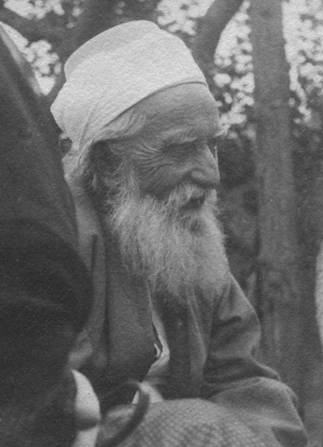
A retelling based on the Tablets of 'Abdu'l-Bahá Abbas, an early collection of His letters to the believers. Passages in quotation marks are 'Abdu'l-Bahá's words as printed in that volume.
In 1906 a group of American believers sent 'Abdu'l-Bahá a New Year's greeting. He was then in 'Akká. His reply begins: "It is New Year; that is to say, the rounding of the cycle of the year. A year is the expression of a cycle (of the sun); but now is the beginning of a cycle of Reality, a New Cycle, a New Age, a New Century, a New Time and a New Year. Therefore it is very blessed."
He went on: "I wish this blessing to appear and become manifest in the faces and characteristics of the believers, so that they, too, may become a new people, and having found new life and been baptized with fire and spirit, may make the world a new world." He went on to list what He hoped would pass away and what would take its place: "old ideas depart and new thoughts come; old garments be cast aside and new garments put on; ancient politics whose foundation is war be discarded and modern politics founded on peace raise the standard of victory."
In another Tablet in the same collection, written to a believer "turning unto the Kingdom of God," He used the image of the seasons. "Soon the whole world, as in springtime, will change its garb. The turning and falling of the autumn leaves is past; the bleakness of the winter time is over. The new year hath appeared and the spiritual springtime is at hand." He described the black earth turning into a green garden and birds singing among the roses, and He explained their song: "They are from the melodies of peace and reconciliation, of love and unity, of justice and security, of concord and harmony. In a short time this heavenly singing will intoxicate all humanity; the foundations of enmity shall be destroyed; unity and affection shall be witnessed in every assembly."
This is a retelling. For the full text of both Tablets, see the Tablets of 'Abdu'l-Bahá Abbas.
Cite this story
'Abdu'l-Bahá. (1909). *Tablets of 'Abdu'l-Bahá Abbas*. Bahai Publishing Society. https://www.gutenberg.org/ebooks/19312
Record yourself reading this story
Recording stays on this device only. Nothing is uploaded.
Related stories
The Divine Springtime in New York
On 13 April 1912, three weeks after Naw-Rúz, 'Abdu'l-Bahá spoke at a New York home about the seasons. The coming of each Manifestation of God, He said, is a divine springtime, and Bahá'u'lláh has renewed that springtime.
Feasts and Holy Days
The essential joyousness of the Bahá’í religion finds expression in numerous feasts and holidays throughout the year.
'Abdu'l-Bahá's Naw-Rúz Talk in Alexandria
In 1912, on the Feast of Naw-Rúz in Alexandria, Egypt, 'Abdu'l-Bahá explained the meaning of the blessed days appointed in every dispensation — days for rejoicing together, for unity, and for leaving "tangible philanthropic or ideal traces" reaching all mankind.
Naw-Rúz at Bahjí and Feasts for the Poor
During the First World War 'Abdu'l-Bahá Himself cooked the Naw-Rúz feast for the friends at Bahjí. On feast days He gathered the poor children of 'Akká for sweets and sharbat.