The Master Keeps the New Year with the Poor
Lady Blomfield, The Chosen Highway, (1940), Bahá'í Publishing Trust
When in Bahá'í history
'Akká (today: Acre, Israel)
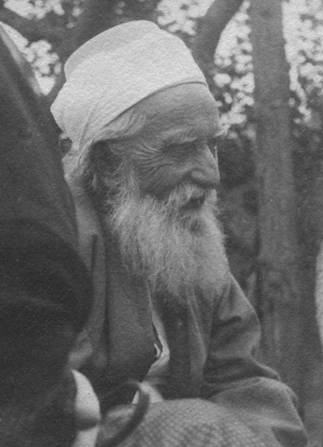
A retelling based on The Chosen Highway by Lady Blomfield, who gathered the spoken memories of the ladies of the household of Bahá'u'lláh. The narrative is retold in our own words.
Lady Blomfield — an English believer whom 'Abdu'l-Bahá named Sitárih Khánum, "Star" — spent long hours in Haifa listening to the women of the Holy Family recount what they had lived through. From Bahíyyih Khánum, the Greatest Holy Leaf, and from others who had shared the years of imprisonment and exile, she set down a record of a household that the world had tried to crush and could not. One of the things that shines through those pages is the spirit in which that family kept its festivals — and chief among the festivals was Naw-Rúz, the Bahá'í new year of the spring equinox, the day that crowns the nineteen days of the Fast.
To understand what Naw-Rúz meant in that home, one has to picture the place. For much of His life 'Abdu'l-Bahá was a prisoner. He had been a child of eight when the family's sufferings began in Persia; He had walked the long roads of exile to Baghdád, to Constantinople, to Adrianople, and at last to 'Akká, the fortress town on the Mediterranean to which the worst offenders of an empire were sent to die. The family arrived there in poverty and under guard, packed into barracks, the children falling ill, the very air of the place a sentence. And yet it was precisely in this city of exile that 'Abdu'l-Bahá became, to the people around Him, a fountain of life. The poor of 'Akká — Muslim and Christian and Jew, with no thought of His Faith — learned that there was One among the prisoners who would never turn them away.
The chronicles Lady Blomfield preserved describe a daily care for the needy that never ceased. 'Abdu'l-Bahá knew the poor of the city by name. He knew which family had a sick child and which widow had no bread, which old man could no longer work and which household was too proud to beg and suffered in silence. To the open poor He gave openly, going out among them, placing a coin in each hand, asking after those who were absent, sending a portion home to the ones too ill to come. To the proud poor — the respectable families who could not bring themselves to ask — He sent help in secret, so that no one need feel shame. The people of 'Akká, who had been told that a dangerous heretic had been sent to their gates, came in time to call Him by another name: the Father of the Poor.
It was into this lifelong habit of mercy that the festivals fell, and they raised it higher still. The Bábí and Bahá'í calendar that the family kept set apart, just before the month of the Fast, a handful of days expressly for generosity — days, as the believers understood them, for hospitality, for the giving of gifts, and for ministering to the poor and the sick. Then came the Fast itself, nineteen days of abstaining from food and drink between sunrise and sunset, a turning of the heart away from the body and toward God. And then, at the spring equinox, the Fast gave way to Naw-Rúz.
In a comfortable house, a new year is a private pleasure. In that household it was the opposite: the joy ran outward. The memories Lady Blomfield gathered are of a home with open doors. The believers gathered — those who lived nearby, and the pilgrims who had crossed deserts and seas for the bounty of a few days in the Master's presence. There would be the chanting of Tablets and prayers, the simple food of the country, the particular gladness of a people who had kept the Fast together and now broke it together. But woven through the rejoicing was the unfailing remembrance of those outside. The poor were not forgotten on the day of plenty; they were sought out. On the festivals 'Abdu'l-Bahá would see to it that the needy of the city were fed and clothed and visited, that the sick had what they lacked, that the lonely had company. In that household the new year was a season of open doors and open hands.
There is a teaching folded into this, and the ladies of the family understood it well, for they had watched it lived out year upon year. The festival was never allowed to become a celebration of the comfortable by the comfortable. 'Abdu'l- Bahá's own counsel, given in those very years, was that the friends of God should make of their holy days something that left a real and lasting good behind — that on such days they should become, as He put it, as the mercy of God to all mankind. Naw-Rúz in His home was the practice of that counsel. The renewal it celebrated was not merely the turning of a season but the renewal of the human heart; and a heart truly renewed, He taught by His every action, turns at once to the one who is suffering.
It is worth remembering how little the household itself possessed. This was not charity out of abundance. The family had known real hunger; the Greatest Holy Leaf had grown up amid privations that would have embittered most people, and had instead grown only more selfless. The gifts that went out from that door at the new year went out from a house that was itself poor and watched and confined. That is perhaps the deepest note in Lady Blomfield's record: that those who had the least reason, by the world's reckoning, to rejoice and to give, rejoiced the most and gave the most freely. The springtime they kept was an inward one, and no wall of 'Akká could shut it in.
For the believers who heard these memories from the lips of the women who had lived them, and for those who read them now, the picture endures as a kind of pattern for the festival. Naw-Rúz, kept in the Master's household, was a day of gladness that refused to stop at its own threshold. The Fast had emptied the self; the new year filled it again — and the fullness at once overflowed toward the hungry at the gate. The truest sign that spring had come to a soul, that home seemed to say, was not the feast on the table but the bread carried quietly to a neighbour who had none.
This is a retelling. For the fuller account, see The Chosen Highway by Lady Blomfield.
Cite this story
Blomfield, L.. (1940). *The Chosen Highway*. Bahá'í Publishing Trust.
Record yourself reading this story
Recording stays on this device only. Nothing is uploaded.
Related stories
Abdu'l-Bahá's Naw-Rúz Talk in Alexandria
In 1912, on the Feast of Naw-Rúz in Alexandria, Egypt, 'Abdu'l-Bahá explained the meaning of the blessed days appointed in every dispensation — days for rejoicing together, for unity, and for leaving "tangible philanthropic or ideal traces" reaching all mankind.
The Comforter of the Faithful: Bahíyyih Khánum
Through exile, imprisonment, famine, and bereavement, Bahíyyih Khánum — the Greatest Holy Leaf, daughter of Bahá'u'lláh — made herself the tender refuge of everyone around her: nursing the sick, consoling the grieving, sharing what little the household had with the poor, and binding up the sorrows of a whole community with a mercy that asked nothing for itself.
His Last Friday: The Master Among the Poor of Haifa
On the Friday before His passing in 1921, 'Abdu'l-Bahá rose, attended the noonday congregational prayer, and then — as He had done for as long as anyone could remember — distributed alms to the poor of Haifa with His own hand. It was His last public act of the service that had filled His whole life.
He Arranged Everything: The Master and the Bereaved After the Ascension
In The Chosen Highway, the women of the Holy Family remember the days that followed Bahá'u'lláh's ascension in 1892. Their grief was beyond words — yet through it all moved one steady figure. 'Abdu'l-Bahá, the Most Great Branch, took upon Himself the care of the family, the friends, and the Cause, chanting the funeral prayer, feeding hundreds for nine days, and giving to the poor.