The Divine Springtime
'Abdu'l-Bahá, The Promulgation of Universal Peace, (1912), Bahá'í Publishing Trust
When in Bahá'í history
New York (today: New York, USA)
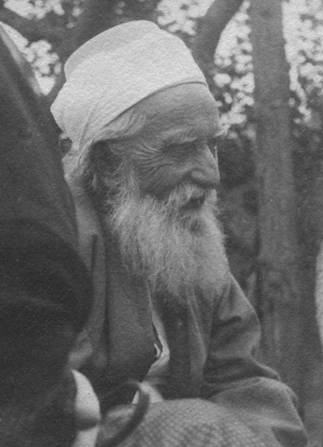
A retelling that quotes The Promulgation of Universal Peace, the record of 'Abdu'l-Bahá's 1912 talks in North America. Passages in quotation marks are His own words as set down in that volume.
In the spring of 1912 'Abdu'l-Bahá crossed the Atlantic and travelled the length and breadth of North America, carrying the message of His Father to a continent that had only just begun to hear of the Faith. He spoke in churches and synagogues, in great halls and in private parlours, to peace societies and to university students, to the rich and to the destitute. His words were taken down and afterward gathered into the volume known as The Promulgation of Universal Peace. Among the hundreds of talks He gave that year, several return to a single luminous image — the image at the very heart of the festival of Naw-Rúz — and one of the clearest of these He gave in a New York home on the thirteenth of April, only weeks after the Bahá'í new year of that spring.
The home was that of Mr. and Mrs. Alexander Morten, on East Twenty-first Street. The believers and seekers who had gathered there listened as 'Abdu'l-Bahá unfolded the meaning of the season just turning green outside the windows. He did not treat the spring as mere scenery. He treated it as a parable written by God across the face of the whole earth — a parable about how God renews the inner life of humanity. "The appearances of the Manifestations of God," He told them, "are the divine springtime."
Then He drew out the comparison with great tenderness. When a Manifestation of God appears, He said, it is as when spring returns to a frozen world. He pointed to the coming of Christ as one such spring: "When Christ appeared in this world, it was like the vernal bounty; the outpouring descended; the effulgences of the Merciful encircled all things; the human world found new life." Just as the literal spring sends the rain down upon the dead fields and stirs the sap in the bare trees, so the advent of a Manifestation pours a fresh outpouring of grace upon a humanity grown cold — and the world, inwardly, comes alive. Hearts long frozen begin to beat again; souls long barren begin to bear; a wintered world greens.
But 'Abdu'l-Bahá was too honest a teacher to stop at the glad half of the truth. Springtimes do not last. After every divine spring, He explained, comes a slow autumn and then a hard winter of the spirit. "Then by degrees these fragrances of heaven were discontinued," He said; "the season of winter came upon the world; the beauties of spring vanished." The teachings that had once been living grew formal and cold; the love that had once burned grew faint; the very faith that had quickened the world hardened into habit and dispute. The springtime departs, and the long cold sets in, until the earth of the human heart seems once more lifeless and bare. Anyone who has watched a great spiritual movement lose its fire, or watched their own ardour cool, knows the winter He was describing.
And then, into that very listening room, 'Abdu'l-Bahá spoke the word the whole talk had been moving toward. The winter is not the end. The spring returns. "Bahá'u'lláh has come into this world," He said. "He has renewed that springtime." It is the keynote of the festival of Naw-Rúz and the keynote of the Bahá'í Faith itself: that after the long winter that followed the springtimes of the past, God has once again sent His renewing grace upon the earth in the Revelation of Bahá'u'lláh. And the proof, 'Abdu'l-Bahá insisted, was not a matter of mere argument; it was something the world could feel and see. The same divine energies were flowing again. "The same fragrances are wafting," He said; "the same heat of the Sun is giving life; the same cloud is pouring its rain." It was the identical springtime — the same Sun of Reality that had shone in ages past, returned to warm a world that had grown cold.
There is a striking encouragement in the way 'Abdu'l-Bahá joined the vast to the intimate. In one breath He could speak of the rising of the Sun of Reality over the whole arc of human history; in the next, of the warming of a single human soul. The spring that quickens the violet in the field is the same spring, He taught, that is meant to quicken courage in one who has grown afraid, or kindness in one who has grown hard, or faith in one who has begun to doubt. The renewal is not only something that happens to the calendar, or even only to the world; it is something offered to each person who will open to it, as the bare tree opens to the warming air.
This is why, for the believers, Naw-Rúz is far more than the start of another twelve months. The new year of the spring equinox is a yearly enactment of the central fact of the Faith — that God renews His guidance to humanity age after age, sending a divine springtime to a wintered world. 'Abdu'l-Bahá's talk in that New York home takes the great cosmic truth and lays it, like a gift, before each listener. The spring has come, He was saying. The Sun has risen again. Do not stay frozen in the old winter. Let the springtime in.
For all who keep the festival, His words remain both a promise and an invitation. The promise is that no winter of the spirit is final — that the springtime of God is real, and has come again in our own age. The invitation is to be changed by it: to let the new year find us not unaltered, but greening, like the earth itself, with new life.
This is a retelling. For the fuller account, see The Promulgation of Universal Peace by 'Abdu'l-Bahá.
Cite this story
'Abdu'l-Bahá. (1912). *The Promulgation of Universal Peace*. Bahá'í Publishing Trust.
Record yourself reading this story
Recording stays on this device only. Nothing is uploaded.
Related stories
'Abdu'l-Bahá and the Spiritual Springtime
Across the years of His ministry, 'Abdu'l-Bahá wrote to the believers of East and West at the turning of each Bahá'í year, drawing again and again on a single great image: that as the material world is renewed at the spring equinox, so the coming of a Manifestation of God renews the whole inner world of humanity. "The new year hath appeared," He wrote, "and the spiritual springtime is at hand."
Abdu'l-Bahá's Naw-Rúz Talk in Alexandria
In 1912, on the Feast of Naw-Rúz in Alexandria, Egypt, 'Abdu'l-Bahá explained the meaning of the blessed days appointed in every dispensation — days for rejoicing together, for unity, and for leaving "tangible philanthropic or ideal traces" reaching all mankind.
The Master Keeps the New Year with the Poor
In the prison-city of 'Akká and later in Haifa, 'Abdu'l-Bahá kept the festivals of the Bahá'í year — and Naw-Rúz above all — in a way that turned joy outward: toward the hungry, the sick, the widow and the stranger. The Greatest Holy Leaf and the ladies of the household, whose memories Lady Blomfield gathered, remembered a home where the new year was a season of open doors and open hands.
A Year Named for the Names of God
Among the laws the Báb set down in His Bayán was a wholly new way of measuring time: the Badíʿ calendar, a year of nineteen months of nineteen days, each month bearing the name of an attribute of God, and nineteen years gathered into a cycle called a Váḥid. At the head of it all He placed Naw-Rúz — so that the Bahá'í year begins, every spring, upon the name of God's own splendour.