Sarah Farmer and Green Acre
Star of the West Editors, Star of the West, (1912), Bahai News Service · Read original
When in Bahá'í history
Green Acre, Eliot (today: Eliot, Maine, USA)
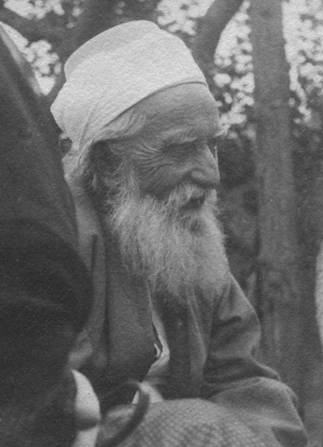
A retelling based on the Star of the West (Vol. 3, No. 16, 1912; Vol. 7, No. 12, 1916; Vol. 8, No. 5, 1917), with details from Shoghi Effendi's God Passes By and H. M. Balyuzi's 'Abdu'l-Bahá: The Centre of the Covenant. Words in quotation marks are from those sources.
Green Acre is an estate of nearly two hundred acres on the Piscataqua River at Eliot, Maine. In 1894, the year after the Parliament of Religions at the Chicago Columbian Exposition, Sarah J. Farmer opened it as a summer conference centre. Her idea, the Star of the West recalled, "was to provide a platform open to all, from which each might proclaim his message, whatever it might be," on one condition: that each speaker explain his views "in the spirit of toleration toward all holding views other than his own." Scholars and speakers of many nations and religions came. Balyuzi names John Greenleaf Whittier, John Fiske, Paul Carus and Booker T. Washington among those who took part over the years, and Mírzá Abu'l-Faḍl also taught there.
Sarah Farmer became a Bahá'í. In 1900 she made the pilgrimage to 'Akká, and afterwards, Shoghi Effendi writes, she placed the facilities of the Green Acre conferences "at the disposal of the followers of the Faith which she had herself recently embraced." A small Bahá'í community grew up there and became stronger each summer.
In August 1912 'Abdu'l-Bahá came to Green Acre and stayed for a week. Sarah Farmer was then an invalid, a patient in a sanatorium in nearby Portsmouth. Soon after He arrived, 'Abdu'l-Bahá went to see her there, and, ill and frail as she was, she came back with Him to Green Acre. That evening, August 16, He gave one of the longest talks of His whole journey. At the end He said: "Before we leave I desire to offer a prayer in behalf of Miss Farmer, for verily she has been the founder of this organization, the source of this loving fellowship and assemblage." On the hill at Green Acre called Monsalvat, Balyuzi records, He commended her wish that a "university of the higher sciences" might one day be built there.
After years of seclusion, Sarah Farmer returned to Green Acre in the summer of 1916. The Star of the West reported that every word about its success filled her with joy and that she could not express enough gratitude to the Bahá'ís of the Green Acre Fellowship. She died within the following year, and a Bahá'í service was held at her home in South Eliot.
In 1917 the Star printed some of 'Abdu'l-Bahá's first words about Green Acre after He returned to 'Akká from His journey. He said that its value lay in offering "a free and unrestricted platform to the citizens of every nation and the adherents of every religion," and He gave the credit for the plan to Sarah Farmer.
Sarah Farmer had herself taken steps to secure the future of Green Acre, and the lawyer Alfred Lunt carried the case to the Supreme Court of Maine, which upheld his work. Green Acre later came under the administration of the National Spiritual Assembly of the Bahá'ís of the United States and became the home of a Bahá'í summer school.
This is a retelling. For the fuller account, see the reports on Green Acre in the Star of the West named above.
Cite this story
Editors, S. O. T. W.. (1912). *Star of the West*. Bahai News Service. https://bahai.works/Star_of_the_West/Volume_3/Issue_16
Record yourself reading this story
Recording stays on this device only. Nothing is uploaded.
Related stories
Corinne True and the Temple Fund
As financial secretary of Bahai Temple Unity, Corinne True of Chicago gathered gifts from across America and the East for the House of Worship at Wilmette. She lived to see it dedicated in 1953 and was known as the Mother of the Temple.
The Founding of Bahá'í Temple Unity
In March 1909 thirty-nine delegates from thirty-six cities met in Chicago and formed Bahá'í Temple Unity, the national body that would hold the land and raise the funds for the first House of Worship in the West.
Thornton Chase, the Steadfast
Thornton Chase, the first American believer, served the young Chicago community for years through its House of Spirituality and its publishing work. When he died in 1912, 'Abdu'l-Bahá travelled to Los Angeles to visit his grave.
Louis Bourgeois and the Temple Design
In 1920 the American Bahá'ís chose Louis Bourgeois's design for the House of Worship at Wilmette. He then showed his drawings to 'Abdu'l-Bahá, who called the design "the most beautiful in the world."