Thornton Chase, the Steadfast
Bahá'í Chronicles editors, Bahá'í Chronicles · Read original
When in Bahá'í history
Chicago (today: Chicago, Illinois, USA)
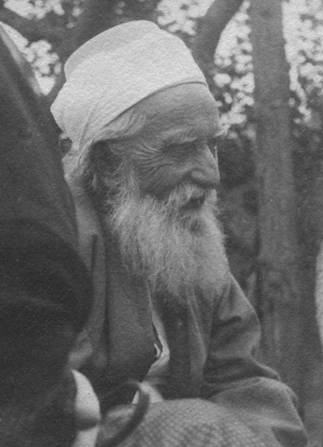
A retelling based on the biography of Thornton Chase published by Bahá'í Chronicles, with 'Abdu'l-Bahá's visit to his grave as recorded in Mahmúd's Diary and the Star of the West (vol. 3, no. 13). Words in quotation marks are from those records and from Shoghi Effendi's God Passes By.
Thornton Chase was born in Springfield, Massachusetts, in 1847. In 1894, in Chicago, he began attending classes on the Bahá'í Faith, and by 1895 he had become a believer. 'Abdu'l-Bahá called him "the first American believer," and gave him the name Thábit, meaning Steadfast. Shoghi Effendi describes him as "indeed the first to embrace the Cause of Bahá'u'lláh in the Western world."
He served the Chicago community for many years. In May 1901 he helped arrange the election of its first governing body, at first called the House of Justice and later the House of Spirituality. By 1902 he was its chairman, and he held that office until he moved to California in 1909. He wrote many circular letters that the House of Spirituality sent to Bahá'í communities across the United States and Canada, explaining the holy days and the Fast. In 1900 he helped found the Behais Supply and Publishing Board, which became the Bahai Publishing Society in 1902, and he was its principal editor and one of its principal financiers.
In 1907 he made the pilgrimage to 'Akká and was able to spend only three days with 'Abdu'l-Bahá. He described the visit in a book, In Galilee.
In September 1912 'Abdu'l-Bahá was travelling west across America. At Glenwood Springs, Colorado, a telegram reached Him that Thornton Chase was seriously ill in a hospital in Los Angeles. Maḥmúd-i-Zarqání, who travelled with Him, recorded that "He repeatedly mentioned the faithfulness of Mr Chase." Chase died on 30 September, just before 'Abdu'l-Bahá reached California, and was buried in Inglewood.
While He was in the San Francisco Bay area, 'Abdu'l-Bahá said: "I would not visit Los Angeles were it not for the purpose of visiting the tomb of Mr Chase." On 19 October 1912 He went to the cemetery with several of the friends. He walked straight to the grave without asking the way, spread flowers over it, and, facing the Holy Land, chanted the Tablet of Visitation. He then spoke of Thornton Chase: "Mr. Chase was of the blessed souls. The best time of his life was spent in the path of God. ... During his lifetime he bore many trials and vicissitudes, but he was very patient and long-suffering." He asked the friends to visit the grave on His behalf and bring flowers.
Before leaving Los Angeles He told them: "Go every year to visit the grave of Mr Chase on my behalf, for he was a sanctified soul; his station will be known later."
This is a retelling. For the fuller account, see the biography of Thornton Chase at Bahá'í Chronicles, Mahmúd's Diary for October 1912, and Shoghi Effendi's references to him in God Passes By.
Cite this story
editors, B. C.. *Bahá'í Chronicles*. https://bahaichronicles.org/thornton-chase/
Record yourself reading this story
Recording stays on this device only. Nothing is uploaded.
Related stories
Corinne True and the Temple Fund
As financial secretary of Bahai Temple Unity, Corinne True of Chicago gathered gifts from across America and the East for the House of Worship at Wilmette. She lived to see it dedicated in 1953 and was known as the Mother of the Temple.
Sarah Farmer and Green Acre
In 1894 Sarah Farmer opened Green Acre in Eliot, Maine, as a summer platform for speakers of every religion. After her pilgrimage to 'Akká in 1900 she offered it to the Bahá'ís, and in 1912 'Abdu'l-Bahá spent a week there and prayed for her.
The Founding of Bahá'í Temple Unity
In March 1909 thirty-nine delegates from thirty-six cities met in Chicago and formed Bahá'í Temple Unity, the national body that would hold the land and raise the funds for the first House of Worship in the West.
Thornton Chase, the First American Believer
Thornton Chase became a Bahá'í in Chicago in 1894. 'Abdu'l-Bahá named him Thábit, the Steadfast, and in 1912 made a special journey to his grave in Inglewood, California.