Many Cities, One House: The Founding of Bahá'í Temple Unity
Star of the West Editors, Star of the West, (1909), Bahai News Service · Read original
When in Bahá'í history
Chicago (today: Chicago, Illinois, USA)
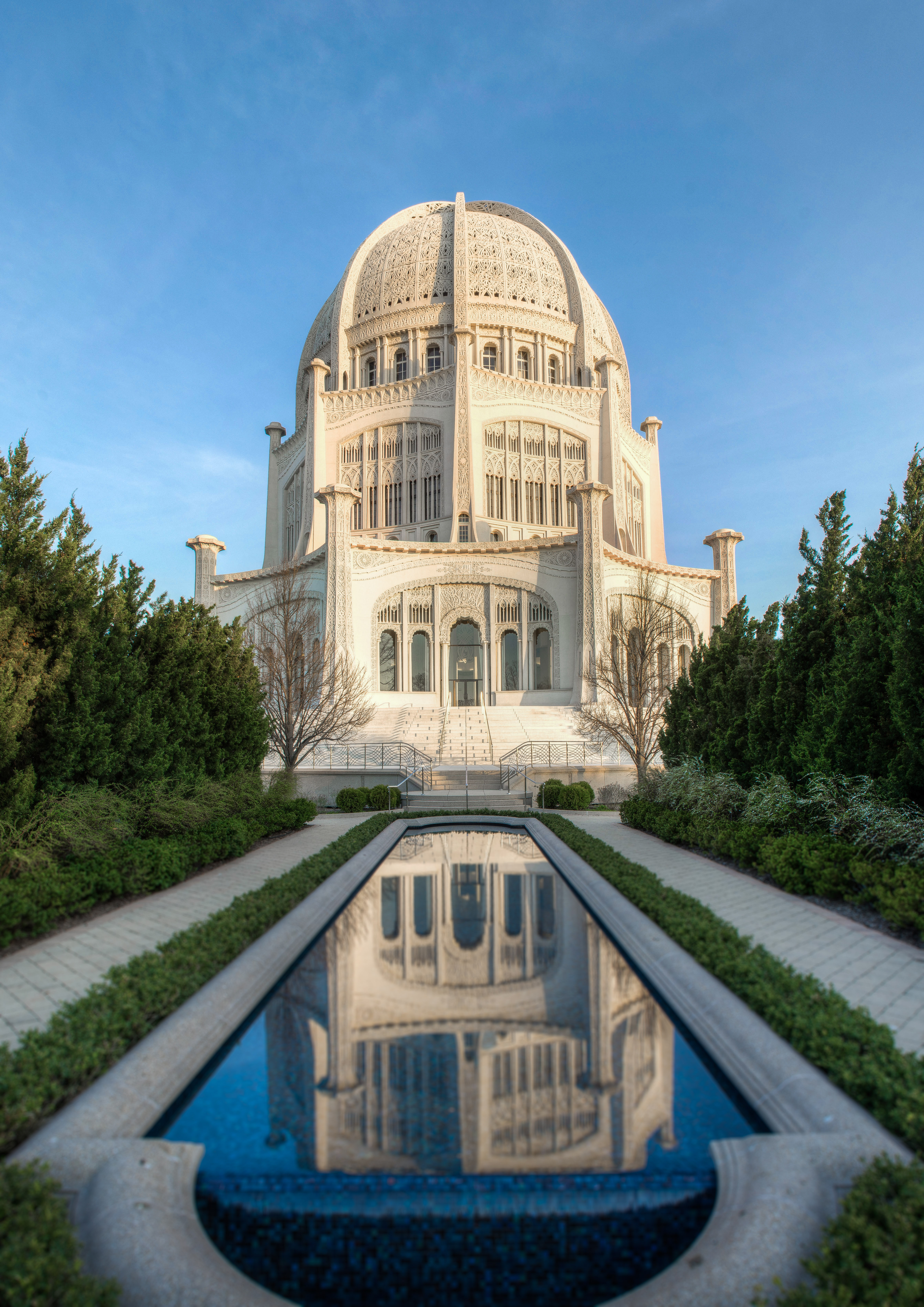
A retelling based on the contemporary reports of the early American Bahá'í conventions preserved in the Star of the West, together with the documented history of the building of the House of Worship at Wilmette.
Some of the great works of the Cause are accomplished by a single soul of heroic devotion. But there is another kind of work that no single soul can do at all — work so large that it can only be carried by a whole community acting as one body. The first Bahá'í House of Worship of the Western world was a work of that second kind. And the story of how it became possible is not, at first, the story of a building at all. It is the story of how a scattered handful of believers, spread thin across an entire continent, learned to act together — and of the institution they created in 1909 so that they could.
To feel the difficulty, one must picture the American Bahá'í community as it then was. It was very young; only a decade or so had passed since the first Americans had embraced the Faith. It was very small; a few thousand souls at most, in a country of tens of millions. And it was scattered to an extraordinary degree — little clusters of believers in Chicago and New York and Washington, in the cities of the Pacific coast, in scattered inland towns, separated from one another by hundreds and sometimes thousands of miles in an age before easy travel. Each local group had its own life, its own meetings, its own way of doing things. There was as yet almost nothing to bind them into a single community except the love they all bore the same Master across the sea, and the Tablets that came to them from His pen.
Into this scattered community 'Abdu'l-Bahá had, some years before, planted a great seed. Beginning in 1903 He had revealed Tablets directing the American believers to a task worthy of their whole strength: they were to raise a Mashriqu'l-Adhkár, a Dawning-Place of the Praise of God — a House of Worship in their own land, the first in all the West. He indicated, in time, that it should rise on the shore of Lake Michigan, near Chicago. It was a charge of breathtaking ambition for so small and so young a community, and the believers took it to heart at once. But almost immediately they ran up against the hard arithmetic of it.
For a House of Worship is enormously costly, and it cannot be built a little here and a little there. It must rise in one place, of one design, paid for out of one treasury. No single congregation among the American believers — not Chicago, not New York, not all of them separately — could possibly raise such a sum or manage such an enterprise on its own. If each city tried to act alone, nothing would ever be finished anywhere. The only way the Temple could ever be built was for the believers of all the cities to pool their gifts, their counsel, and their labour, and to act, for this one great purpose, as a single body.
But how does a continent of separate communities become a single body? They had no national institution, no shared treasury, no agreed way of choosing who should speak and decide for the whole. They had to create one. And so, in the year 1909, the believers took the decisive step. Delegates chosen by the Bahá'í communities across the United States and Canada travelled to Chicago — to the city nearest the chosen ground — and there, gathered in convention, they brought into being a new thing: a national organization, formed for the express purpose of raising the House of Worship. They called it, with a name that says exactly what it was for, Bahá'í Temple Unity.
The name was no accident. The body existed to build a Temple; but it existed, just as truly, to build unity — to be the means by which scattered believers became one. Under its constitution the local communities would elect delegates; the delegates, gathered in annual convention, would elect a governing board; and that board would hold the land, gather and guard the funds, and carry the great project forward on behalf of all. For the first time the American believers had an instrument through which they could act as one people. It was, in the simplest terms, the first national institution of the Western Bahá'í world — the seed from which the whole later structure of Bahá'í administration in America would grow.
Among the officers entrusted with the work was Corinne True of Chicago, who had received from 'Abdu'l-Bahá Himself a particular charge for the Temple and who would give the rest of her long life to it. She and her fellow servants on the new board took up tasks that were utterly unglamorous and utterly essential. They began to gather the land at Wilmette, parcel by parcel, as the money allowed. They began to gather the funds — and here the character of the whole enterprise shines out. The money that built the Mother Temple of the West did not come from a few wealthy patrons. It came from a multitude of ordinary believers, giving what little they had: the dimes and dollars of working men and women, shopkeepers, clerks, immigrants, the small savings of households that had little to spare, the pennies of children. Temple Unity was the channel that gathered all those tiny streams into one river large enough to do the work.
What the delegates of 1909 had grasped, and acted upon, was the deep truth that lies at the heart of a Feast of Mulk, of Dominion. The dominion of the Cause of God is not established in the world by isolated acts of piety, however sincere. It is established by a people who can build — who can hold together across distance and difference and time, pool their substance, govern their common affairs with justice and consultation, and so accomplish together what none of them could ever accomplish apart. A House of Worship is the most visible fruit of that capacity; but the capacity itself — the ability of believers to become one body for the sake of a shared and lasting work — is the deeper achievement, and the more durable.
The fruit, when it came, more than vindicated them. The land they began to gather was bought; the foundation stone was laid on that ground by 'Abdu'l-Bahá's own hand in 1912, when He came to America; the design was chosen; and the great building rose, slowly, across the decades that followed — through a world war, through the lean years of economic collapse, through long stretches when the unfinished structure stood waiting for funds. In time the simple organization born in 1909 would mature into the fully formed national institution of the American Faith. And at last, in 1953, the white House of Worship above Lake Michigan was completed and opened to all the peoples of the world to come and pray.
None of it would have happened if a scattered people had insisted on remaining scattered. The believers of many cities had understood that the House of God could be raised only by a single hand, and so they had resolved to become, for this one purpose, a single body. They built the institution first; and the institution built the Temple. That is the quiet, far-reaching meaning of what they did in Chicago in 1909 — and the reason it belongs, so fittingly, to a Feast of Dominion.
This is a retelling. For the fuller account, see the contemporary reports of the early Bahá'í conventions in the Star of the West, and the documented history of the building of the House of Worship at Wilmette.
Cite this story
Editors, S. O. T. W.. (1909). *Star of the West*. Bahai News Service. https://bahai-library.com/star_of_the_west
Record yourself reading this story
Recording stays on this device only. Nothing is uploaded.
Related stories
Mother of the Temple: Corinne True and the House of Worship
For nearly half a century Corinne True gave herself to a single labour of service — the raising of the first Bahá'í House of Worship of the West on the shore of Lake Michigan at Wilmette. Across two world wars and a great depression she gathered the dimes and dollars of working believers, held the project together through every discouragement, and lived to see the temple she had served dedicated to public worship. 'Abdu'l-Bahá called her the Mother of the Temple.
The Dawning-Place: The House of Worship of 'Ishqábád
In the city of 'Ishqábád, in Russian Turkistan, the Bahá'í community raised the first House of Worship the world had ever seen — a stately, nine-sided edifice set in gardens, ringed by the institutions of practical service the Cause ordains beside its temples: schools, a traveller's hospice, a clinic. Shoghi Effendi numbers its construction among the signal triumphs of the Faith's early history.
A Place for the Whole World: Sarah Farmer and Green Acre
On a green hillside above a river in Maine, Sarah Farmer founded a summer gathering where people of every religion and philosophy could meet, listen to one another, and seek the truth in peace. When she made her pilgrimage to 'Akká and recognised in the Bahá'í teachings the very unity she had been reaching for, she gave Green Acre into the keeping of the Cause — and it became one of the first enduring Bahá'í centres of learning in the West.
Thábit: Thornton Chase and the Building of a Community
The first American to embrace the Faith did not rest in the distinction. For the next eighteen years Thornton Chase quietly built the institutions of a young community — chairing the Chicago House of Spirituality, founding its publishing work, and writing the patient circular letters that knit the scattered believers of a continent together. 'Abdu'l-Bahá named him Thábit, the Steadfast.