The Making of Some Answered Questions
'Abdu'l-Bahá, Some Answered Questions, (1908), Bahá'í Publishing Trust · Read original
When in Bahá'í history
'Akká (today: Acre, Israel)
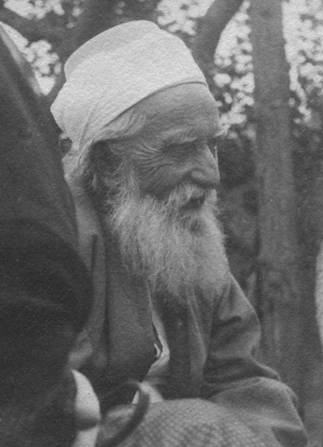
A retelling drawn from the Foreword and the Author's Preface to Some Answered Questions by 'Abdu'l-Bahá (2014 translation, Bahá'í Reference Library). The words in quotation marks are from those pages and from the Kitáb-i-Aqdas.
In the Kitáb-i-Aqdas Bahá'u'lláh told the believers that after His passing they should "refer ye whatsoever ye understand not in the Book to Him Who hath branched from this mighty Stock." That Branch was 'Abdu'l-Bahá. One of the best-known records of Him explaining the Teachings is Some Answered Questions.
Laura Clifford Barney came from a prominent family of scholars and artists in Washington, D.C. May Bolles Maxwell introduced her to the Faith in Paris around 1900, and soon afterwards she made the first of many visits to 'Akká. In those years 'Abdu'l-Bahá was still confined within the city by the Ottoman authorities and kept under constant watch, and it was dangerous to receive visitors at all.
Even so, between 1904 and 1906 Miss Barney made several long visits, sometimes staying for weeks or months, and was able to put questions to 'Abdu'l-Bahá on a wide range of subjects. Many of the conversations took place at the lunch table. One of His sons-in-law or one of His three secretaries of that time wrote down His replies in Persian.
She later recalled how the talks were given. "I have given to you my tired moments," 'Abdu'l-Bahá said once as He rose from the table after answering one of her questions. Sometimes He could speak at length. Often He was called away after a few moments, and days or even weeks might pass with no lesson at all. "But I could well be patient," she wrote, "for I had always before me the greater lesson—the lesson of His personal life."
The answers were first written down only so that she could study them. Later she asked His permission to publish them. A selection was made from the notes, and 'Abdu'l-Bahá corrected it twice in His own hand, sometimes revising it substantially, and carefully reviewed the final wording.
In 1908 the book appeared in three first editions: the Persian text in Holland, Miss Barney's English translation in London, and a French translation by Hippolyte Dreyfus, whom she later married, in Paris. Its chapters range from the influence of the Prophets and the meaning of Christian doctrines to the nature of the soul and questions such as reincarnation and the treatment of criminals.
Shoghi Effendi wrote that in this book the reader "will find the clue to all the perplexing questions that agitate the mind of man in his search after true knowledge."
This is a retelling. For the full account, see the Foreword and the Author's Preface to Some Answered Questions by 'Abdu'l-Bahá in the Bahá'í Reference Library.
Cite this story
'Abdu'l-Bahá. (1908). *Some Answered Questions*. Bahá'í Publishing Trust. https://www.bahai.org/library/authoritative-texts/abdul-baha/some-answered-questions/
Record yourself reading this story
Recording stays on this device only. Nothing is uploaded.
Related stories
How the Day of the Covenant Began
'Abdu'l-Bahá would not let His birthday be kept, for May 23 belonged to the Báb's Declaration. When the Bahá'ís begged for a day of His own, He gave them November 26. Star of the West records how they kept it.
The Household in the Days of Danger
After Bahá'u'lláh's passing, enemies within His own family slandered 'Abdu'l-Bahá to Ottoman officials. The Chosen Highway recalls the Commission of Inquiry, the family's anxious waiting, and the Master's release in 1908.
New York, the City of the Covenant
In New York in 1912 'Abdu'l-Bahá declared His station as Centre of the Covenant and named the city the City of the Covenant. Three days before He sailed, He spoke there of the Covenant as Bahá'u'lláh's safeguard against division.
The First Western Pilgrims Reach 'Akká
In December 1898 the first pilgrims from the West began to reach 'Akká to meet 'Abdu'l-Bahá. One of them, Mrs. Thornburgh-Cropper, later described entering the prison-city by night with Phoebe Hearst and being led up to the Master by candlelight.