The Tablet of the Branch
Shoghi Effendi, God Passes By, (1944), Bahá'í Publishing Trust · Read original
When in Bahá'í history
Adrianople (today: Edirne, Turkey)
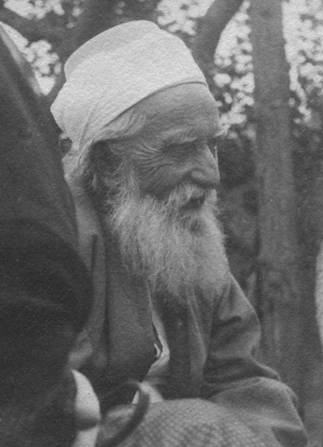
A retelling based on God Passes By by Shoghi Effendi (chs. 10, 14 and 19). The verses of the Tablet quoted here are from Shoghi Effendi's translation in "The Dispensation of Bahá'u'lláh" (The World Order of Bahá'u'lláh).
Bahá'u'lláh was exiled to Adrianople from 1863 to 1868. He called it the "remote prison." Among the Tablets He revealed there was the Súriy-i-Ghuṣn, the Súrih or Tablet of the Branch. Shoghi Effendi writes that in it 'Abdu'l-Bahá's "future station is foreshadowed," and that He is eulogized in it as the "Branch of Holiness," the "Limb of the Law of God," the "Trust of God," "sent down in the form of a human temple."
Among its verses are these: "There hath branched from the Sadratu'l-Muntahá this sacred and glorious Being, this Branch of Holiness; well is it with him that hath sought His shelter and abideth beneath His shadow." It calls Him God's "most great Favor" and "most perfect bounty" to the people, through Whom "every mouldering bone is quickened." It says: "Whoso turneth towards Him hath turned towards God, and whoso turneth away from Him hath turned away from My beauty, hath repudiated My Proof, and transgressed against Me." And it warns that "they who deprive themselves of the shadow of the Branch, are lost in the wilderness of error."
Shoghi Effendi calls the Tablet one "which may well be regarded as the harbinger of the rank which was to be bestowed upon Him, in the Kitáb-i-Aqdas, and which was to be later elucidated and confirmed in the Book of His Covenant." The Kitáb-i-Aqdas, revealed in 'Akká, told the believers to turn, after Bahá'u'lláh's passing, to "Him Whom God hath purposed, Who hath branched from this Ancient Root." The Book of the Covenant, read aloud after His ascension in 1892, named that One as the Most Mighty Branch, 'Abdu'l-Bahá.
After the ascension He took the name by which He is known, 'Abdu'l-Bahá, the Servant of Bahá. Twenty years later, in June 1912, the newly translated Tablet of the Branch was read at a gathering of the Bahá'ís of New York, and 'Abdu'l-Bahá then affirmed the implications of the Covenant. Shoghi Effendi records that New York was from then on called the "City of the Covenant."
This is a retelling. For the fuller account, see God Passes By by Shoghi Effendi, and the verses of the Súriy-i-Ghuṣn in "The Dispensation of Bahá'u'lláh."
Cite this story
Effendi, S.. (1944). *God Passes By*. Bahá'í Publishing Trust. https://www.bahai.org/library/authoritative-texts/shoghi-effendi/god-passes-by/
Record yourself reading this story
Recording stays on this device only. Nothing is uploaded.
Related stories
The Book of the Covenant
Bahá'u'lláh wrote His Will and Testament, the Kitáb-i-'Ahd, in His own hand and entrusted it to 'Abdu'l-Bahá during His last illness. Opened nine days after His ascension, it directed His family and followers to turn to the Most Mighty Branch.
The Tablet of the Branch
In Adrianople, years before His ascension, Bahá'u'lláh revealed the Súriy-i-Ghuṣn, the Tablet of the Branch, which praises the station of 'Abdu'l-Bahá and calls Him "the Limb of the Law of God" and "the Trust of God."
Him Whom God Hath Purposed
In the Kitáb-i-Aqdas Bahá'u'lláh told the believers to turn, after His passing, to "Him Whom God hath purposed." In His Book of the Covenant He wrote that this verse meant the Most Mighty Branch, 'Abdu'l-Bahá.
The Reading of the Book of the Covenant
Bahá'u'lláh wrote His Will, the Kitáb-i-'Ahd, in His own hand and entrusted it to 'Abdu'l-Bahá during His last illness. On the ninth day after His ascension it was read aloud, naming the Most Mighty Branch as the One to whom all must turn.