What White Teeth It Has
Mírzá Maḥmúd-i-Zarqání, Mahmúd's Diary, (1998), George Ronald · Read original
When in Bahá'í history
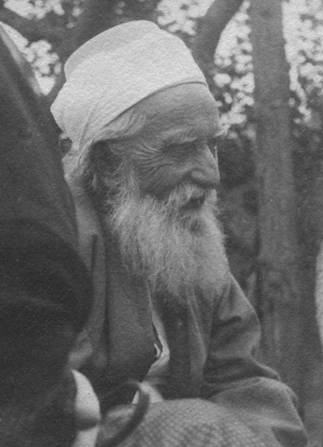
A retelling based on Mahmúd's Diary by Mírzá Maḥmúd-i-Zarqání (George Ronald), from the entry for 1 November 1912. The narrative is in our own words; the words in quotation marks are as the diary records them. Read the full text for the original entry.
On Friday, 1 November 1912, in Chicago, a man from Russia came to see 'Abdu'l-Bahá for the first time. As soon as he was shown into the Master's room, he began to complain about Russia.
The Master said to him:
Do not speak ill of Russia. Render good to friend and foe alike. Say that you are one with all. Be a true well-wisher of people. Give up your evil thoughts and pray for all. Be at peace and make peace with all. Do not express hatred or resentment toward anyone. Be a proclaimer of peace and say, "Now I feel no enmity toward anyone." Praise all and be mindful of the story of Christ. When everyone expressed disgust on seeing the body of a dead dog, Christ said, "What white teeth it has!"
The visitor was so overwhelmed that he cried out, "Today I have found the way to salvation and safety."
The Master replied, "If you follow these teachings you will see things greater than this."
This account is retold for the Bahá'í Story Library; the narrative is a paraphrase, and the quoted words are from Mahmúd's Diary (Mírzá Maḥmúd-i-Zarqání, tr. Mohi Sobhani, George Ronald, 1998), entry for 1 November 1912.
Cite this story
Maḥmúd-i-Zarqání, M.. (1998). *Mahmúd's Diary*. George Ronald. https://bahai-library.com/zarqani_mahmuds_diary
Record yourself reading this story
Recording stays on this device only. Nothing is uploaded.
Related stories
Not Even a Salad
At a Washington luncheon in April 1912, asked whether the spirit could heal broken bones, 'Abdu'l-Bahá laughed that all the spirits in the air could not create a salad. Two days later, at the Turkish Embassy, He answered high praise very simply.
The Answer at Ford Hall
In Boston in 1912, a speaker warned a large audience that a false Christ had come to America. 'Abdu'l-Bahá, speaking next, told them of the truth of all the Prophets of God, and especially of Christ.
The Best Kind of Trap
A woman's friend warned her that going to hear 'Abdu'l-Bahá might be a trap. He told her it was a trap, but a trap that sets people free.
'Abdu'l-Bahá in Boston
'Abdu'l-Bahá visited Boston three times in 1912. He addressed the Unitarian conference at Tremont Temple and the Free Religious Association at Ford Hall, spoke to journalists about peace, and later stayed a week at Malden.