The Woman Who Held His Robe
Mírzá Maḥmúd-i-Zarqání, Mahmúd's Diary, (1998), George Ronald · Read original
When in Bahá'í history
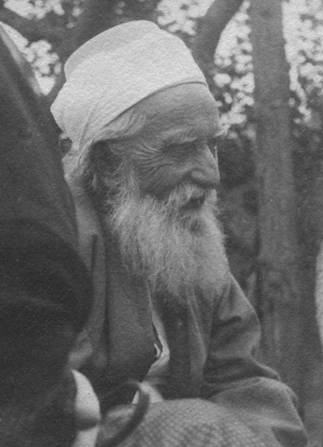
A retelling based on Mahmúd's Diary by Mírzá Maḥmúd-i-Zarqání (George Ronald), from the entry for 14 April 1912. The narrative is retold in our own words. Read the full text for the original entry.
On Sunday, 14 April 1912, 'Abdu'l-Bahá went to the Church of the Ascension in New York, where the minister, Dr Percy Stickney Grant, had invited Him. Mahmúd notes that it was the first church in America the Master visited.
He came in by a side door and rested for a while in a room of the church, where the clergymen thanked Him warmly for coming. After prayers the minister spoke about the history and teachings of the Faith and introduced Him with great courtesy. 'Abdu'l-Bahá then gave a full talk on the meaning of divine civilization, the Revelation of Bahá'u'lláh and the unification of humankind. At the end He chanted a prayer, which, Mahmúd writes, greatly affected the hearts of the listeners.
As He left the church, group after group rushed towards Him. The Bahá'ís sang "Alláh-u-Abhá" and many people asked for His blessings. Then a woman's voice was heard from the crowd. She was holding fast to the hem of the Master's robe, with tears pouring from her eyes, and she was so overcome that she could not speak. The Master showered her with His love and kindness and calmed her with loving words of assurance.
Mahmúd called it a great day and a most impressive meeting. Not one of the two thousand people present, he wrote, was disappointed, and everyone left smiling.
This account is retold for the Bahá'í Story Library; it is a paraphrase, not the original text. See Mahmúd's Diary (Mírzá Maḥmúd-i-Zarqání, tr. Mohi Sobhani, George Ronald, 1998), entry for 14 April 1912.
Cite this story
Maḥmúd-i-Zarqání, M.. (1998). *Mahmúd's Diary*. George Ronald. https://bahai-library.com/zarqani_mahmuds_diary
Record yourself reading this story
Recording stays on this device only. Nothing is uploaded.
Related stories
Not Even a Salad
At a Washington luncheon in April 1912, asked whether the spirit could heal broken bones, 'Abdu'l-Bahá laughed that all the spirits in the air could not create a salad. Two days later, at the Turkish Embassy, He answered high praise very simply.
The Answer at Ford Hall
In Boston in 1912, a speaker warned a large audience that a false Christ had come to America. 'Abdu'l-Bahá, speaking next, told them of the truth of all the Prophets of God, and especially of Christ.
The Best Kind of Trap
A woman's friend warned her that going to hear 'Abdu'l-Bahá might be a trap. He told her it was a trap, but a trap that sets people free.
'Abdu'l-Bahá in Boston
'Abdu'l-Bahá visited Boston three times in 1912. He addressed the Unitarian conference at Tremont Temple and the Free Religious Association at Ford Hall, spoke to journalists about peace, and later stayed a week at Malden.