Why Keep Two?
Howard Colby Ives, Portals to Freedom, (1937), George Ronald · Read original
When in Bahá'í history
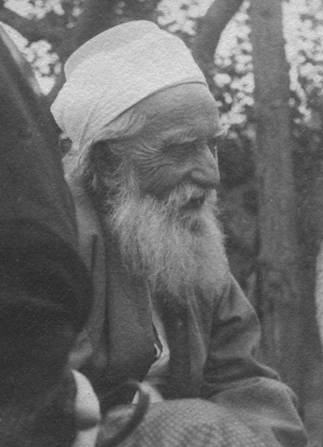
A retelling for children, based on Portals to Freedom by Howard Colby Ives (George Ronald, 1937).
It was very early in the morning at an inn in the little town of Dublin, New Hampshire. From her window, a lady who was staying there saw 'Abdu'l-Bahá walking up and down outside, speaking to His secretary.
Then an old man walked by. His clothes were ragged, and his trousers were so worn out that they barely covered his legs. 'Abdu'l-Bahá sent His secretary to call him back. He took the old man's hand and smiled at him like a friend. He talked with him for a few moments, trying to cheer him up. Then He laughed gently and said something like this: the old man's trousers were not much use, and they must do something about it.
The street was empty. 'Abdu'l-Bahá stepped into the shadow of the porch, took off His own trousers under His long robe, and gave them to the old man. "May God go with you," He said. Then He went back to His secretary as if nothing unusual had happened.
Howard Colby Ives heard this story from the lady and wrote it down. He also wrote that long before, when 'Abdu'l-Bahá was a prisoner in 'Akká, He often gave His bed to people who had none, and He would never own more than one coat. He said:
Why should I have two, when there are so many who have none?
This is a retelling for children. For the fuller account, see "Why Should I Have Two?".
Cite this story
Ives, H. C.. (1937). *Portals to Freedom*. George Ronald. https://bahai-library.com/ives_portals_freedom
This story shares quotes with 1 other story
“Why should I have two, when there are so many who have none?”
Also in
- Why Should I Have Two?— Howard Colby Ives, Portals to Freedom
Record yourself reading this story
Recording stays on this device only. Nothing is uploaded.
Related stories
The Master Arrives in Denver
After a sleepless night on the train, ‘Abdu’l-Bahá reached Denver on 23 September 1912. Within hours He was meeting reporters, and that evening He spoke to a crowded gathering at the home of Mrs. Roberts.
From Famine Relief to Knighthood
Before the First World War ‘Abdu’l-Bahá had villagers grow and store corn, which fed the poor of Haifa and ‘Akká through the famine years. After the British occupation He was knighted, in April 1920.
Refuge at Abú-Sinán
When war came in 1914, ‘Abdu’l-Bahá moved the Bahá’ís of Haifa to the Druze village of Abú-Sinán, where vegetables He had taught them to grow and corn from ‘Adasíyyih kept many from hunger.
Caring for the Sick
‘Abdu’l-Bahá visited the sick, sent daily to ask after them, and quietly paid a doctor to care for the poor of ‘Akká. When a poor, crippled woman with measles was shunned, He arranged her care and, at the last, her funeral.