The Boy in the Doorway
Rúḥíyyih Khánum, The Priceless Pearl, (1969), Bahá'í Publishing Trust
When in Bahá'í history
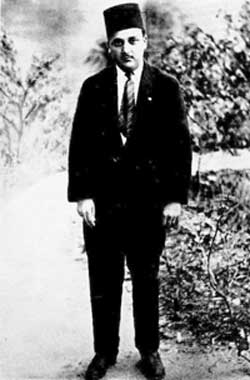
A retelling for children, based on The Priceless Pearl by Rúḥíyyih Khánum.
In 1899 a lady from America named Ella Goodall Cooper came to visit 'Abdu'l-Bahá in the city of 'Akká. She saw something there that she later wrote down.
Early one morning she was having tea with the ladies of 'Abdu'l-Bahá's family. 'Abdu'l-Bahá sat in His favourite corner of the couch, busy writing. The room was quiet except for the bubbling of the samovar, the big pot where the tea was being made. After a while 'Abdu'l-Bahá looked up with a smile and asked His daughter to chant a prayer.
Just as she finished, a small boy appeared in the open doorway across from 'Abdu'l-Bahá. He slipped off his shoes and stepped into the room, with his eyes on his grandfather's face.
'Abdu'l-Bahá looked back at him with such a loving welcome that it seemed to call the boy closer. The little boy walked slowly across the room until he stood right in front of Him.
'Abdu'l-Bahá did not hug him. He sat perfectly still and slowly nodded His head, two or three times. To Mrs Cooper, the nod seemed to be saying:
You see? This tie connecting us is not just that of a physical grandfather but something far deeper and more significant.
Everyone watched, holding their breath, to see what the boy would do. He bent down, picked up the hem of his grandfather's robe, touched it gently to his forehead and kissed it, and then put it back, never taking his eyes from 'Abdu'l-Bahá's face. The next moment he turned and ran off to play, like any other little boy.
That little boy was Shoghi. At that time he was 'Abdu'l-Bahá's only grandchild. He grew up to be Shoghi Effendi, the Guardian of the Bahá'í Faith.
This is a retelling for children. For the fuller account, see "Young Shoghi Effendi Greets the Master".
Cite this story
Khánum, R.. (1969). *The Priceless Pearl*. Bahá'í Publishing Trust.
This story shares quotes with 1 other story
“You see? This tie connecting us is not just that of a physical”
Also in
- Young Shoghi Effendi Greets the Master— Rúḥíyyih Khánum, The Priceless Pearl
“grandfather but something far deeper and more significant.”
Also in
- Young Shoghi Effendi Greets the Master— Rúḥíyyih Khánum, The Priceless Pearl
Record yourself reading this story
Recording stays on this device only. Nothing is uploaded.
Related stories
Young Shoghi Effendi Greets the Master
In 'Akká in 1899 the American pilgrim Ella Goodall Cooper watched the small Shoghi Effendi walk up to 'Abdu'l-Bahá, who greeted him with a silent nod; the boy kissed the hem of His robe and ran off to play.
Stories from the Childhood of Shoghi Effendi
Shoghi Effendi's boyhood in the household of his grandfather 'Abdu'l-Bahá: his name, morning prayers and breakfast with the Master, the Tablet telling him to memorize and chant prayers, and the surname Rabbani.
Shoghi Effendi's School Years in Beirut
Unhappy at school in Haifa and Beirut, the young Shoghi Effendi was moved by 'Abdu'l-Bahá to the Syrian Protestant College, where he aimed all his studies at serving the Master and translating His letters into English.
The Master and the Coachman
Shoghi Effendi told how a coachman at Ramleh demanded an exorbitant fare from ‘Abdu’l-Bahá and pulled Him roughly by His sash. The Master stayed calm, refused to give in, and paid exactly what He owed, without the tip.