The Long Ride to Portland
Mírzá Maḥmúd-i-Zarqání, Mahmúd's Diary: The Diary of Mírzá Maḥmúd-i-Zarqání, (1998), George Ronald
When in Bahá'í history
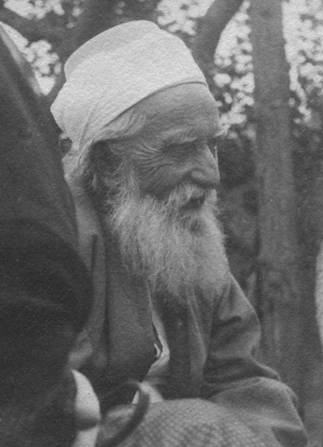
A retelling for children, based on Mahmúd's Diary (entries for the early October 1912 train journey to Portland).
It was the start of October, and a long train was rolling west across America. On board were 'Abdu'l-Bahá and His friends, and one of them, named Mírzá Maḥmúd, wrote down everything that happened so that we would know about it today.
The journey was very long — three whole days. The train rumbled across flat white salt flats that looked like snow. It climbed up into high country, crossed deep river canyons, and wound along beside a wide river through tall mountains. At night, the friends slept in little beds tucked into the train cars, and in the morning they woke up rolling on toward a city called Portland.
Now, 'Abdu'l-Bahá could have spent all that time resting by Himself in a quiet private room. But that is not what He chose. Day after day, He came and sat upright in the main car, right among the other passengers. He ate His breakfast there. He watched the mountains slide past the windows. And He spoke kindly with the people sitting nearby, even ones He had never met before.
As the great mountains went by, 'Abdu'l-Bahá talked about how very old they were, raised up over more years than anyone can count. He looked out at the small farms in the distance and thought of the families who had come to that hard, dry land full of hope, working slowly to build a home where life was not easy.
And He thought about the railway itself — how new it was, and how amazing. Not long before, no train could cross all this wild country. People fifty years earlier could never have dreamed of it. Yet here it was, carrying them smoothly over mountains and rivers, all the way across the land.
Somewhere on the third day, 'Abdu'l-Bahá said something that Mírzá Maḥmúd wrote down so it would not be forgotten:
These iron rails will one day bind the human family into a single household.
He meant that the new railways, and the cables and ships that were carrying words and people all around the world, were doing something bigger than just moving things from place to place. They were beginning to tie faraway lands together. People who had once been strangers, oceans apart, were being drawn close. And that, He explained, was exactly the kind of world Bahá'u'lláh had taught about — a world where all people live together like one big family. The roads and rails were ready. Now the love and unity had to be built on top of them.
At last, on an October evening, the train pulled into the station at Portland. The friends were already waiting on the platform, and 'Abdu'l-Bahá stepped down. The long ride was over.
Sometimes the most ordinary things — a train, a road, a wire across the sea — can be part of God's great plan to bring the whole world together. And the people who see it are the ones who, like 'Abdu'l-Bahá, look out the window with hope instead of just passing the time.
This is a retelling for children. For the fuller account, see "Aboard the Train to Portland".
Cite this story
Maḥmúd-i-Zarqání, M.. (1998). *Mahmúd's Diary: The Diary of Mírzá Maḥmúd-i-Zarqání*. George Ronald.
Record yourself reading this story
Recording stays on this device only. Nothing is uploaded.
Related stories
Aboard the Train to Portland
Mahmúd's Diary records the long train journey of 'Abdu'l-Bahá and His party from Salt Lake City to Portland in early October 1912 — the steady westward crossing of the Rockies and the Cascades, the Master's hours of conversation in the parlour car, and the slow preparation for the Pacific coast portion of the journey.
The Small Room in Baltimore
Only a handful of friends gathered in one little parlour, but 'Abdu'l-Bahá came to them anyway — and told them that keeping the Faith in a quiet place is one of the most important jobs of all.
Ten Days Across the Sea
On a great ship crossing the wide Atlantic Ocean, 'Abdu'l-Bahá sailed all the way to America to meet His friends — and to share the truth with a whole new land.
An Afternoon in the Middle of America
A few friends in the very middle of America asked if 'Abdu'l-Bahá's train could stop for just one afternoon — and to their joy, He said yes.