The Master Laughs at Juliet's Confession
Juliet Thompson, The Diary of Juliet Thompson, (1947), Kalimát Press
When in Bahá'í history
New York (today: New York, NY, USA)
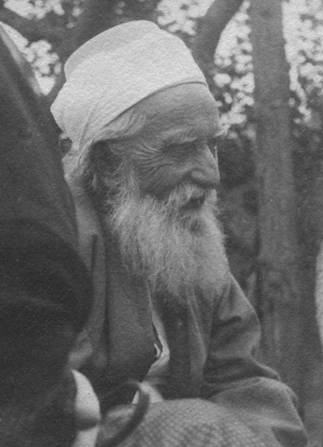
In The Diary of Juliet Thompson the painter records a small scene in New York in the summer of 1912 that, she writes, taught her more about the nature of God’s mercy than any sermon.
She had been carrying, the diary records, the secret weight of one of the besetting weaknesses of her own character. She considered it serious; she had carried it in private; she had not been able to bring herself to discuss it with anyone. The opportunity to be alone with the Master came on a quiet morning. She had asked, through the household, for a private audience. She had been received.
She knelt beside the Master’s low couch. She had prepared, she records, a careful confession; she had rehearsed the words on the way over. She began. He listened.
She finished. She waited. She had expected a careful word of counsel; she had perhaps half-expected a gentle reproof; she had wholly expected the gravity of the moment to be sustained.
He did not sustain it. He looked at her. The dark eyes crinkled. He laughed — a short, kindly, slightly surprised laugh — and reached down, and placed His hand on the top of her head.
I had brought Him my sin, and He laughed it away.
She writes in the diary, that evening, with the disorientation of a person whose sense of what God required had been altered in a single afternoon. She had grown up in the sober Christian piety of late-nineteenth-century New York, in which sins were weighty things requiring careful repentance. The Master had not denied that her weakness was a weakness; He had named it, through her, with a single quiet word; He had not told her she should continue in it.
But He had refused, His laugh had said, to permit her to make of it the heavy thing she had been making of it. The laugh had said: the sin is small; the love is large; you have been treating the small thing as if it could overcome the large. It cannot. The laugh had said: get up off your knees; the matter is settled; go and serve.
She rose. She left the room. She walked back to her studio in a condition of relief that, the diary records, was as great as the original burden had been heavy. The diary entry closes:
He has laughed away the heaviest thing I had been carrying. I do not know how He did it. I know only that it is gone.
The chapters that follow, in her ongoing diary across the remainder of His American tour, return more than once to the laughter of that morning. The Master, in her recollection, was the laughing man as well as the grave one; the mercy of the Cause, she had learnt, was a mercy that knew when to laugh.
Paraphrased from The Diary of Juliet Thompson (Kalimát Press, 1947); see original for full text.
Cite this story
Thompson, J.. (1947). *The Diary of Juliet Thompson*. Kalimát Press.
Record yourself reading this story
Recording stays on this device only. Nothing is uploaded.
Related stories
At the Bedside of Marjorie Morten: Juliet Records a Healing
In *The Diary of Juliet Thompson* the painter records the evening in 1912 when 'Abdu'l-Bahá visited her dying friend Marjorie Morten in her sickroom — and the strange peace that, by the next morning, had taken the place of the household's prepared grief.
A Walk in the Night: Juliet Beside the Master
In *The Diary of Juliet Thompson* the painter records an evening in New York in the summer of 1912 when, after one of the great public meetings, she found herself walking beside 'Abdu'l-Bahá through the dark streets — and the silence in which the most carrying conversations sometimes pass.
Paint My Servitude to God: Juliet Thompson and the Portrait
In June 1912 in New York, the painter Juliet Thompson was given an unprecedented privilege: 'Abdu'l-Bahá agreed to sit for her. The Diary preserves the moment He stopped her on the street, took her hand, and said *come tomorrow and paint;* and the cramped basement studio where He asked her to paint not the man but the *Servitude.*
Paris 1901: Juliet's First Meeting
In *The Diary of Juliet Thompson* the young American painter records her first encounter with 'Abdu'l-Bahá in Paris in 1901 — a small upstairs room, a single Persian voice, and a recognition that would, in time, organise the rest of her life.