Paris 1901: Juliet's First Meeting
Juliet Thompson, The Diary of Juliet Thompson, (1947), Kalimát Press
When in Bahá'í history
Paris (today: Paris, France)
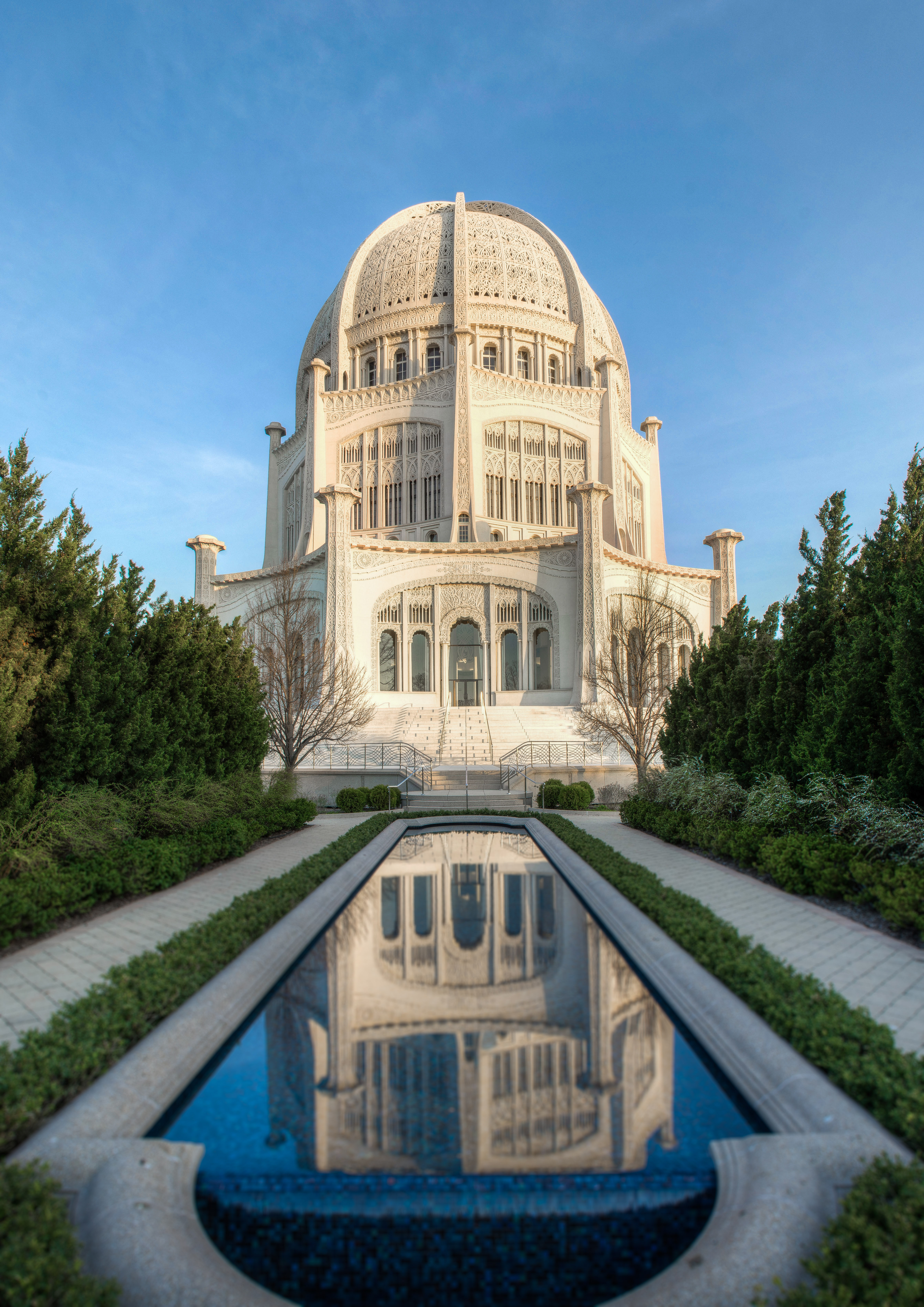
In The Diary of Juliet Thompson the young American painter, born of a New York family, sets down — in the simple, breathless prose of a private journal she would not publish in her lifetime — the moment she first met ‘Abdu’l-Bahá.
She had been studying art in Paris, the diary records, in the spring of 1901. She was perhaps twenty-six. She had heard, by some small word among the Persians of the city, that a Holy Man from Persia was passing briefly through Paris and was receiving inquirers in a private apartment in the Latin Quarter. The address was given to her. She made her way, on a quiet afternoon, across the river.
The apartment was on the upper floor of a modest building. She climbed the stair. She was met at the door by a Persian woman, who indicated that she should remove her hat and wait in the small ante-room. She waited. After a few minutes she was brought into the inner room.
What she set down in the diary, that evening, is the first of the many small intimate scenes the book contains. The Master was seated at the window. He rose. He came forward. He took her hands. He looked at her with what she would, all her life, attempt to describe.
He looked at me as if He had always known me, and as if He had always loved me.
She does not, in the diary, claim to have understood what she was meeting. She had not been raised in Bahá’í teachings; she had at that point read almost nothing of the Cause; she had come, she records, mostly out of curiosity. The recognition that came, in the small Paris room, did not depend on her having been instructed in advance. It was the recognition that some encounters carry inside them.
The conversation, the diary records, was brief. The Master asked after her health. He spoke a few words of blessing. He released her into the late afternoon of Paris.
I had come up the stair an artist, and I came down it someone the Master had named.
The encounter would shape the rest of her life. She would not, for many years, return to His company; she would teach herself the Cause from books and from the small American Bahá’í community that was forming in those years. When the Master came to the United States in 1912 she would be among the closest of His New York hosts. The room above the Latin Quarter had been the small inaugural moment of a long fidelity; the Paris afternoon of 1901 was the first day of an ongoing love.
Paraphrased from The Diary of Juliet Thompson (Kalimát Press, 1947); see original for full text.
Cite this story
Thompson, J.. (1947). *The Diary of Juliet Thompson*. Kalimát Press.
Record yourself reading this story
Recording stays on this device only. Nothing is uploaded.
Related stories
It Was Nothing but Affection
Juliet Thompson had heard the whispers about herself. One morning in a Swiss hotel room, sitting at the feet of 'Abdu'l-Bahá, she learned how little they mattered to Him. A tender retelling from the Diary of Juliet Thompson.
At the Bedside of Marjorie Morten: Juliet Records a Healing
In *The Diary of Juliet Thompson* the painter records the evening in 1912 when 'Abdu'l-Bahá visited her dying friend Marjorie Morten in her sickroom — and the strange peace that, by the next morning, had taken the place of the household's prepared grief.
A Walk in the Night: Juliet Beside the Master
In *The Diary of Juliet Thompson* the painter records an evening in New York in the summer of 1912 when, after one of the great public meetings, she found herself walking beside 'Abdu'l-Bahá through the dark streets — and the silence in which the most carrying conversations sometimes pass.
Paint My Servitude to God: Juliet Thompson and the Portrait
In June 1912 in New York, the painter Juliet Thompson was given an unprecedented privilege: 'Abdu'l-Bahá agreed to sit for her. The Diary preserves the moment He stopped her on the street, took her hand, and said *come tomorrow and paint;* and the cramped basement studio where He asked her to paint not the man but the *Servitude.*