The Master and the Cab Driver
bahaistories.com archive · Read original
When in Bahá'í history
New York (today: New York City, USA)
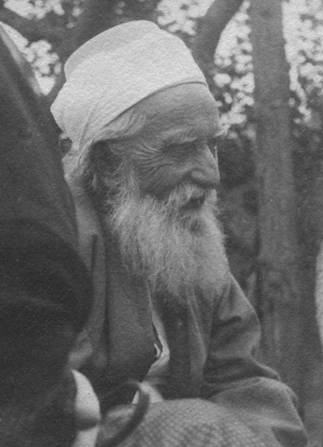
Several of the small recollections gathered at the bahaistories.com archive concern 'Abdu'l-Bahá's invariable practice in the cabs of New York, Chicago, Washington, San Francisco, and the other American cities He passed through in 1912.
The recollections, drawn from the diaries of His attendants and from the reminiscences of the American friends who often travelled in the same carriage, are uniform in their description. The Master, on entering a cab, would greet the driver by name if His attendants had collected it; would ask where the driver was from; would inquire about the wife and children if the driver had any; would, in the course of the journey, return to ordinary chat with the others in the cab in the brief intervals between His questions to the driver. On disembarking the Master would press into the driver's hand a tip noticeably larger than the standard. Several of the American friends, seeing the practice repeated again and again, had asked Him whether the larger tip was strictly necessary. He had answered: every man who carries you is your brother for the duration of the journey.
The phrase, paraphrased in the bahaistories.com piece, gave the Master's view of the small daily transaction. The cab driver was not a service. He was a brother. The small economic exchange was an opportunity for the modest practice of fraternity. The American friends who travelled with the Master in 1912 noted the practice carefully and, in many cases, adopted it themselves.
Source: bahaistories.com archive (https://bahaistories.com/), paraphrased compilation on 'Abdu'l-Bahá's manner with American cab drivers, 1912.
Record yourself reading this story
Recording stays on this device only. Nothing is uploaded.
Related stories
The Master and the Blind Man
A short paraphrase from the Baha'i Stories Blog about a small encounter on a Washington sidewalk: a blind beggar at the corner of the boarding-house street, the Master's daily greeting to him, and the small daily coin pressed into his palm.
Blessed Are the Poor
On an April night in 1912, 'Abdu'l-Bahá came to the Bowery Mission to address three hundred of New York's destitute men — and then stood at the door and pressed a coin and a gaze into the hand of every one of them. A retelling from the Diary of Juliet Thompson.
A Coin for Every Hand
Three hundred poor men crowded into a hall to meet 'Abdu'l-Bahá. He gave each one a coin — but He gave them something even more precious too.
The Guests Nobody Thanked
Leaving a grand mansion full of important guests, 'Abdu'l-Bahá asked to see someone else first — the cooks and the maids who worked behind the scenes.