Shoghi Effendi's First Letter to Australia
Baha'i Stories Blog · Read original
When in Bahá'í history
Sydney (today: Sydney, Australia)
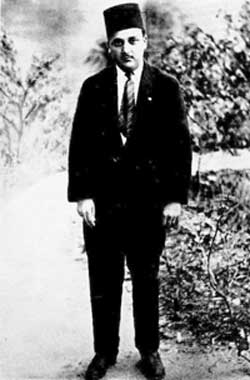
The Baha'i Stories Blog preserves, in one of its historical posts, a paraphrased account of one of the first letters Shoghi Effendi sent in his new role as Guardian of the Cause: a letter to the small Bahá'í community of Australia written in February or March of 1922, only a few weeks after his return from Oxford to take up the work entrusted to him by the Master's Will.
The Australian community in early 1922 numbered, at most, a few dozen souls. It had been founded by the Dunn family — Hyde Dunn, an English-born Bahá'í pioneer in middle age, and his wife Clara — who had emigrated from California in 1920 on the Master's specific direction. They had settled in Sydney; they had begun teaching; they had drawn around them a small group of inquirers; they had also begun work in Melbourne and several smaller cities.
The Dunns and the small group with them had been deeply shaken by the news of the Master's passing in late November 1921. They had sent letters of condolence and of inquiry to Haifa. They had been waiting, through the Australian summer, for some word from the Bahá'í Centre on what they were now to do.
The young Guardian's reply, in the paraphrase preserved in the blog's post, was brief and warm. He named the Master's particular love for the Australian work. He named the Dunns by name. He encouraged them to continue exactly as they had been instructed by the Master in the years before. He promised them his own love and his own personal attention to the Australian community in the months and years ahead.
The Master's love for Australia continues; my own love is now added to His.
The phrase, paraphrased in the blog post, gave the reassurance the small Australian community most needed. They had not been forgotten. The change of leadership had not weakened their connection to the world centre of the Faith. The new Guardian — only twenty-five, only weeks into his ministry, with the entire weight of the Bahá'í world on his shoulders — had taken the time to write specifically to them.
The Dunns continued the work. By the end of the 1920s the Australian Bahá'í community would be substantial. By the 1934 it would elect its first National Spiritual Assembly. The Guardian's letter of 1922, kept by the Dunns through all the later years, had been the first public token of the long care the new ministry would extend to the small distant community.
Source: Baha'i Stories Blog (https://bahaistories.blogspot.com/), paraphrased post on Shoghi Effendi's early letter to the Australian Bahá'ís, 1922.
Record yourself reading this story
Recording stays on this device only. Nothing is uploaded.
Related stories
Father Dunn: The Spiritual Conqueror of a Continent
Already past sixty, a travelling salesman named Hyde Dunn and his wife Clara left America to carry the Bahá'í message to a continent where it had never been heard. Town by town across Australia they planted the Faith, and Shoghi Effendi gave them the names by which they are remembered — "Father" and "Mother" Dunn, and Australia's "spiritual conqueror."
The Appointment of Shoghi Effendi as Guardian
Shoghi Effendi's own narration, in *God Passes By*, of the events of late 1921 and early 1922 — the Master's passing, the discovery of the Will and Testament naming the young Shoghi as Guardian, and the formal beginning of the Formative Age of the Faith.
The Guardian: The Name and Station of Shoghi Effendi
In His Will and Testament 'Abdu'l-Bahá named His grandson Shoghi Effendi the Guardian of the Cause of God — "the sign of God," "the chosen branch," "the priceless pearl that doth gleam from out the Twin Surging Seas." The young man who received this towering station asked only to be known by the simple name his Grandfather had used, and signed himself, in lifelong humility, the servant of the threshold.
A Tie Far Deeper: Young Shoghi Approaches the Master
Rúḥíyyih Khánum's *The Priceless Pearl* preserves a moment from Shoghi Effendi's boyhood in 'Akká: a small barefoot figure in a doorway, eyes on his grandfather, and 'Abdu'l-Bahá's slow nod of recognition that the bond between them was not only physical, but something else.