Martha Root: The Leading Ambassadress of the Faith
Bahá'í Chronicles editors, Bahá'í Chronicles · Read original
When in Bahá'í history
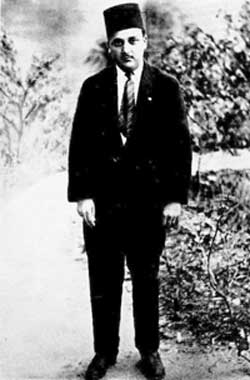
Martha Louise Root was born in 1872 in the small town of Cambridge, Ohio. She grew up in the western Pennsylvania countryside, was educated at Oberlin and at Chicago, and made her early career as a journalist and women's-page editor for the Pittsburgh papers of the 1890s and 1900s. She had been raised in a sober Methodist home; she came to the Bahá'í Faith in 1909, in her late thirties, after attending a series of lectures by an early Bahá'í teacher in Pittsburgh.
Her conversion, the chronicle records, was complete and permanent. From 1909 onward she ordered the rest of her life around what she had decided to call her teaching travels. Her first international journey was to South America in 1919; from that journey she never really stopped travelling. She would, in the next twenty years, circumnavigate the globe four times. She made her own arrangements, paid her own way out of journalism contracts, and travelled, often alone, with two suitcases and a typewriter.
She visited China, Japan, India, Iran, Burma, Indonesia, Australia, the Pacific Islands, the whole of Europe, the Balkans, Turkey, Egypt, every country of South and Central America, much of Africa. Wherever she arrived, the chronicle records, she had already made arrangements through correspondence to address local newspapers, women's clubs, religious societies, and university gatherings. She met heads of state. She met, famously, Queen Marie of Romania, who would publish — at Martha's quiet urging — the most public testimony of any European monarch to the Bahá'í Faith.
She wrote constantly. She filed news articles to American papers; she sent telegrams to the Guardian; she composed long letters to the believers of distant communities about progress in countries they had never visited.
Shoghi Effendi corresponded with her with unusual personal warmth across the years. The cables he sent at her death in Honolulu in 1939 named her, with deliberation, as the foremost Hand of the Cause of the Western world in his time — a title he conferred posthumously and at his own initiative, to recognise the unequalled scale of her teaching work in his generation.
She had travelled, by the chronicle's reckoning, more than a quarter of a million miles in the service of the Cause. She had done so on the slender resources of a working journalist. She had not married. She had not retired. She had not stopped until the cancer that took her had put her in her bed in Hawaii.
She was buried in the small Bahá'í section of the Honolulu cemetery. The Bahá'í world remembered her as the model of the travel-teacher — the woman who, with two suitcases and a typewriter, had quietly proved that the worldwide community the Master had asked the Western believers to build could in fact be built by a single faithful person, walking from country to country.
Source: Bahá'í Chronicles (https://bahaichronicles.org/martha-root/).
Cite this story
editors, B. C.. *Bahá'í Chronicles*. https://bahaichronicles.org/martha-root/
Record yourself reading this story
Recording stays on this device only. Nothing is uploaded.
Related stories
Two Suitcases and a Typewriter
Martha Root packed two suitcases and a typewriter, and she traveled all the way around the whole world four times to tell people about the Bahá'í Faith.
The Globe Her Parish: Martha Root in Service to the World
A slight, quiet newspaperwoman from western Pennsylvania, Martha Root gave the last twenty years of her life to a single errand of service — carrying the message of Bahá'u'lláh to the whole world. Between 1919 and her death in 1939 she circled the globe four times, living out of a suitcase, often ill, often with little money, planting the Cause in lands where it had never been heard. Shoghi Effendi called her the foremost Hand raised up in the West in His time.
A Queen Reads the Word: Martha Root and Queen Marie of Romania
A quiet American newspaperwoman, Martha Root, placed the Writings of Bahá'u'lláh and 'Abdu'l-Bahá into the hands of Queen Marie of Romania. The Word so moved the Queen that she became the first reigning monarch to embrace the Faith, and published her testimony to it in newspapers across the world.
Louis George Gregory
Gregory was instrumental in arranging for two major speaking engagements for ‘Abdu’l-Bahá in Washington DC to an audience of more than a thousand in Rankin Chapel at Howard University, and that evening to a large gathering of the Bethel…