The Friends at Abu-Sinan
bahaistories.com archive · Read original
When in Bahá'í history
Abu-Sinan (today: Abu Snan, Israel)
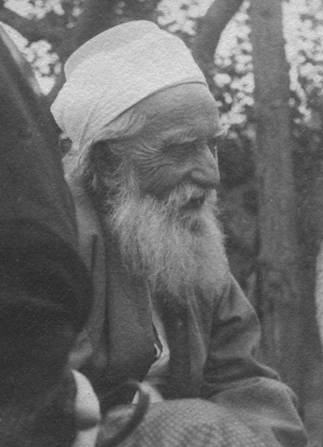
Eight months after [the Master’s return from the West] came the war. Soon after its outbreak, Haifa, which was still under Turkish rule, was panic-stricken. Most of the inhabitants fled inland, fearing bombardment by the Allies. Those Bahá'í friends who were merchants suffered great losses, for all their stores of tea, sugar, etc., were commandeered by the Government, without payment. The friends, in spite of the reassurances of the Master that no guns would be turned on Haifa, were living in constant fear, and the children, having heard terrible stories which were being told everywhere, grew quite ill, always looking round and about with frightened eyes.
At this time, the Master decided that it would be well to accept an invitation of the Shaykh of Abu-Sinan to remove the Bahá'ís and their children to that peaceful, healthy village, out of reach of the dreaded bombarding. In this village also, the very limited resources of the friends would, with strictest economy, be sufficient for their daily needs, with the help of the corn from 'Abdu'l-Bahá's storing. Shaykh Salih placed his house at the disposal of 'Abdu'l-Bahá and His family, Who received the most cordial welcome from this gracious and courteous chief of the Druze village of Abu-Sinan. The other Persian friends were gladly taken into various houses of the village, where they found themselves in most happy surroundings.
Their food was of the simplest: lentils, dried beans, delicious olives and their oil, and sometimes milk, eggs, and even some goat's meat. The fresh pure air was, of course, wonderfully good for their health, and they quickly recovered calm nerves and strength of body. The strictest economy was the rule, from necessity, there being so many mouths to feed, some of whom being in terrible distress, had to be cared for and saved from sheer starvation. 'Abdu'l-Bahá had taught the friends to grow nourishing vegetables, which, with the corn from His village of ‘Adasiyyih where there were marvellous crops, kept many from perishing of hunger.
Source: Lady Blomfield, The Chosen Highway, chapter “‘Abdu’l-Bahá in War-time”, section “Abu-Sinan”.
Collected from bahaistories.com (Subject: diet).
Cite this story
Various. *bahaistories.com archive*. https://bahaistories.com/subject/diet
Record yourself reading this story
Recording stays on this device only. Nothing is uploaded.
Related stories
Simple Life
‘Abdu’l-Bahá says:— Economy is the foundation of human prosperity.
A Lesson at the Dinner Table
At Lady Blomfield's table in London, 'Abdu'l-Bahá spoke of the blessings of freedom and wished the courses could be shared with the poor and hungry. His hosts at once resolved to simplify their dinners.
A Meal of Milk and Bread
During His third visit to Paris in 1913, ‘Abdu’l-Bahá sometimes ate only milk and bread in the evening, calling it a healthy meal and recalling that Bahá’u’lláh had lived mostly on milk in Sulaymáníyyih.
The Master's Sparse Diet
'Abdu'l-Bahá kept little clothing and ate little food: tea, goat's milk cheese and wheat bread to begin the day, while at the evening meal a cup of milk and a piece of bread might suffice.