Louis Gregory's Southern Tour
Star of the West Editors, Star of the West, (1918), Bahai News Service · Read original
When in Bahá'í history
Atlanta (today: Atlanta, Georgia, USA)
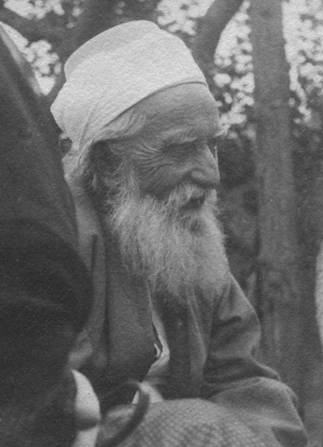
In its issue dated the eighth of June 1918 the Star of the West printed a long signed report by Louis Gregory on his recent teaching tour through the cities of the American South. Gregory — the Charleston-born African American attorney who had given up his Washington law practice some years earlier to give his life to the Bahá'í teaching work — had spent the spring travelling by rail through Atlanta, Macon, Birmingham, Memphis, Nashville, and Knoxville. He had given talks in private homes, in small rented halls, and in two of the historically Black colleges of the region.
The report described the small Bahá'í communities he had encountered. Atlanta then had a few believers, Black and white, meeting in private homes. Birmingham had a single white believer and one or two Black inquirers. Memphis had a slowly growing group, mostly Black, gathered around the household of one of the Black school principals of the city. Nashville had a small group at Fisk University. Knoxville had a few inquirers but no established gatherings.
The note that recurred through Gregory's report — and that the Star of the West's editors lifted into their own caption for the article — was the small private practice that all the Southern Bahá'í gatherings had quietly adopted.
In every city, however small the gathering, the colour line was crossed at the threshold.
The Bahá'í gatherings in the segregated South of 1918, in Gregory's account, were the first racially integrated meetings many of the participants had ever attended. The Atlanta believers met in the parlour of a white friend's home, with Black friends arriving by the back lane to avoid the attention of the white neighbours. The Memphis friends met in the home of a Black school principal, with white friends arriving by the same discretion. In Birmingham the small gathering met at lunchtime in a downtown office, with Black and white friends taking turns to enter from the service entrance and the front door respectively, so that no one passing on the street would understand the composition of the meeting.
Gregory's report named the small acts of disguise without embarrassment and without bravado. He had been doing this work for fifteen years; he knew the cost of being incautious in the South of 1918; he knew also that the friends were doing what the Faith required and that the discretion was the practical form of obedience to the higher law.
The article closed with a request: the American friends should remember the Southern communities in their prayers, should send travel-teachers to them, and should not assume that the hardness of the local racial laws made the work impossible. The work is possible, Gregory wrote. It has begun. The next generation of believers across the South would carry the work into the second half of the twentieth century, when the laws had at last begun to change. The early integrated gatherings of 1918, in Gregory's parlour-by-parlour record, were where the work had begun.
Source: Star of the West, Volume 9, Issue 5 (June 8, 1918), report by Louis Gregory on his Southern teaching tour. Public domain text from bahai-library.com.
Cite this story
Editors, S. O. T. W.. (1918). *Star of the West*. Bahai News Service. https://bahai-library.com/star_of_the_west_volume_9
Record yourself reading this story
Recording stays on this device only. Nothing is uploaded.
Related stories
A Convention for Oneness: The Word Spoken in Washington, 1921
At 'Abdu'l-Bahá's own request, a Washington hostess with no experience in such matters set out to gather Black and white Americans together to proclaim their oneness. In May 1921 over a thousand souls of both races filled a hall for the first Convention for Amity between the Races — and there the Master's message, carried fresh from Haifa, declared that no more important gathering had been held since the beginning of time.
All Colours Are One: The Master Proclaims Oneness at Howard University
In April 1912, in the segregated capital of the United States, 'Abdu'l-Bahá stood before a great mixed audience of Black and white at Howard University and proclaimed, plainly and without flinching, the oneness of humanity — that there are no whites and blacks before God, that all colours are one, and that the world of humanity is a single garden whose many colours are its beauty.
Louis George Gregory
Gregory was instrumental in arranging for two major speaking engagements for ‘Abdu’l-Bahá in Washington DC to an audience of more than a thousand in Rankin Chapel at Howard University, and that evening to a large gathering of the Bethel…
The Seat Beside Him
A fine luncheon was being set, and one good man had not been invited — until 'Abdu'l-Bahá sent for him and gave him the very best seat at the table, right beside Himself.