Louis Gregory's Four Days in London
Star of the West Editors, Star of the West, (1911), Bahai News Service · Read original
When in Bahá'í history
London (today: London, United Kingdom)
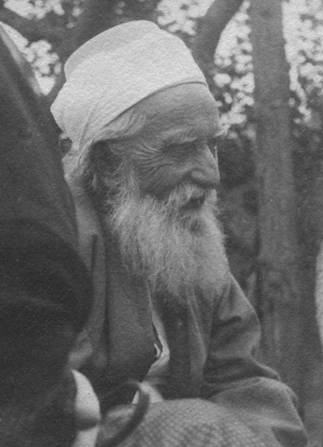
In Volume 2, No. 5 of the Star of the West, dated 5 June 1911, the editors in Chicago printed a short item headed "News of the Cause in London." Signed by Arthur Cuthbert and dated 27 May, it reported that Miss Alice Buckton had just returned from her second visit to 'Abdu'l-Bahá, and it mentioned another recent visitor, Louis G. Gregory.
Gregory, a lawyer from Washington, D.C., had gone to Egypt in the spring of 1911 to meet the Master. He found Him at Ramleh, near Alexandria, and also made the pilgrimage to Haifa and 'Akká. On the way home he visited the Bahá'í assemblies at Stuttgart, Paris and London.
The London friends who met him wrote:
Those few of the Bahais here who had the good fortune to meet Mr. Louis G. Gregory, during his four days in London on his way home to Washington, D. C., from visiting Abdul-Baha at Ramleh, were exceedingly interested and edified. To meet such a great soul, so filled with the true Bahai spirit in any man is an inspiration; but when this man is a negro, and wise enough to be proud of his colour, then it is a revelation impressive with great significance as one contemplates the difficult problems existing between the white and black populations. How these problems can be changed by a few such men aflame with God's Word!
The wording is that of 1911. The London believers saw in a Black American Bahá'í, just back from the Master's presence, a sign of how the Faith could heal the divide between the races.
Gregory returned to Washington early in June 1911, and the Star soon reported that he had given several public lectures. Work for unity between the races would occupy him for the rest of his life, until his death in 1951.
A retelling based on Star of the West, Volume 2, No. 5 (June 5, 1911), "News of the Cause in London," with details from Volume 2, No. 7, and Louis G. Gregory, A Heavenly Vista. For the fuller account, see the original.
Cite this story
Editors, S. O. T. W.. (1911). *Star of the West*. Bahai News Service. https://bahai.works/Star_of_the_West/Volume_2/Issue_5/Text
Record yourself reading this story
Recording stays on this device only. Nothing is uploaded.
Related stories
'Abdu'l-Bahá in Budapest
In April 1913 'Abdu'l-Bahá visited Budapest, where about eight hundred people heard His public address. He charged Leopold Stark with uniting those likely to form the first nucleus of the Faith in the city.
Agnes Alexander's Letter from Tokyo
In 1914 'Abdu'l-Bahá advised Agnes Alexander to go to Japan. Her 1916 letter from Tokyo, printed in the Star of the West, tells of her weekly meetings, the students who came to her, and the Esperantists who helped spread the teachings.
The Most Vital and Challenging Issue
In The Advent of Divine Justice, Shoghi Effendi called racial prejudice the most vital and challenging issue before the American Bahá'ís, asked both races for a supreme effort, and gave minorities priority when votes or qualifications were equal.
Louis Gregory Meets the Master
On April 10, 1911, the day he landed at Alexandria, Louis G. Gregory of Washington met 'Abdu'l-Bahá for the first time. The Master kissed his head, asked after his health and told him, "I am happy to have you here."