'Abdu'l-Bahá in Budapest
Star of the West Editors, Star of the West, (1913), Bahai News Service · Read original
When in Bahá'í history
Budapest (today: Budapest, Hungary)
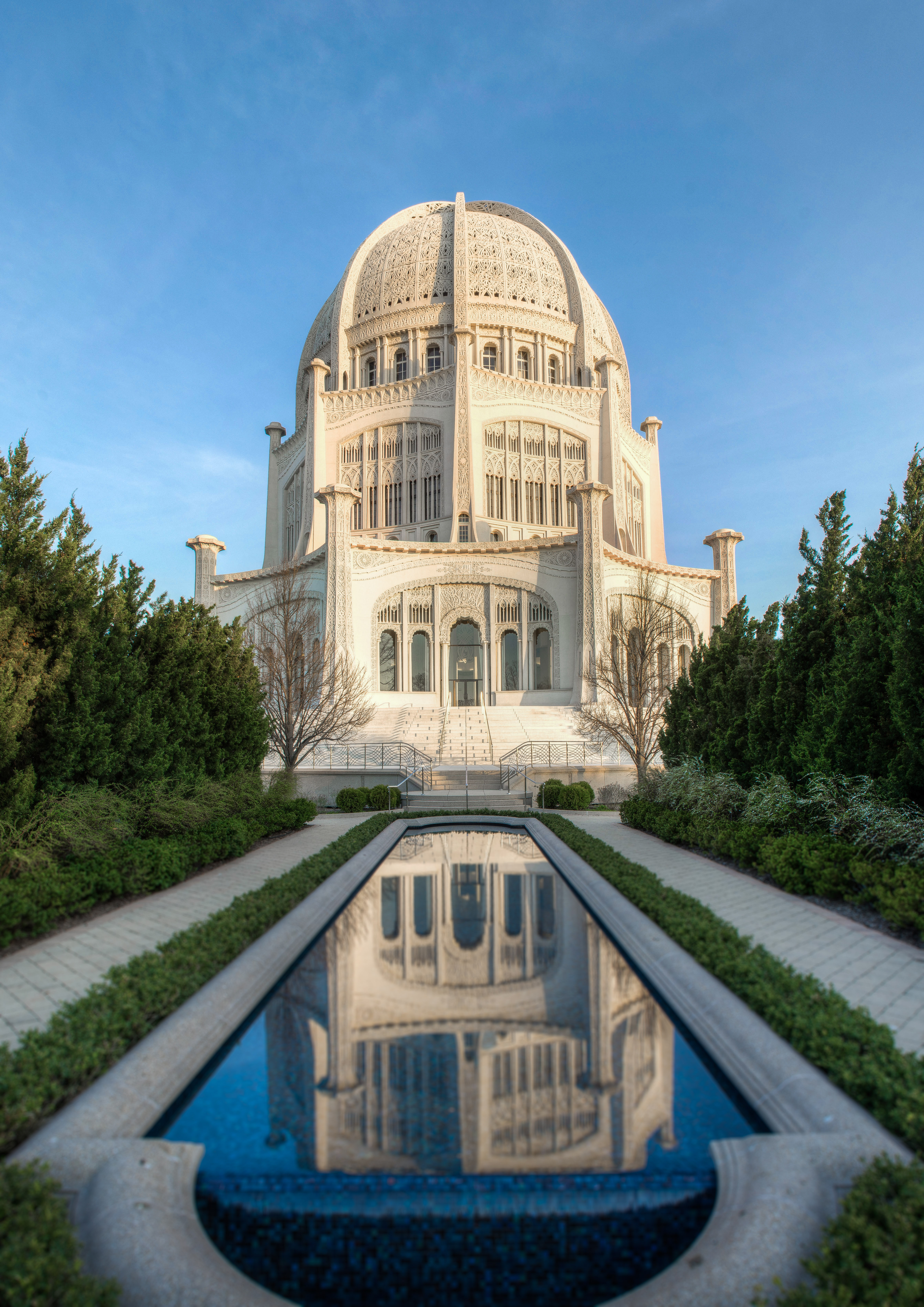
In the spring of 1913, during His second European journey, 'Abdu'l-Bahá travelled from Stuttgart to Budapest. The Star of the West of June 5, 1913, reported the visit in a short notice.
He came, the report says, at the invitation of the Hungarian Peace, Esperanto and Feminist societies and of the Oriental Commercial Academy, and arrived in Budapest on April 9. These bodies arranged a great public gathering for Him. His address there was translated into English and then into Hungarian, and about eight hundred people listened to it. On three further evenings He spoke to the Theosophical Society, to the members of the Star of the East, and to the Turanian Society.
Many distinguished visitors called on Him during His stay. Among them were the two celebrated Hungarian Orientalists, Professor Ármin Vámbéry and Professor Ignaz Goldziher. Professor Robert Nadler, a Hungarian painter of great renown, made a portrait sketch of Him.
The editors thought these outward honours less important than something else. His words and His personality, they wrote, had given a new start to the Bahá'í Cause in Hungary, a land on the border of East and West whose population was a mixture of many antagonistic nationalities, and which was therefore very much in need of inner peace and unity.
'Abdu'l-Bahá honoured a Budapest resident, Mr. Leopold Stark, by charging him to unite all those in the city who were likely to form the first nucleus of the Faith there. The notice ended by printing Stark's address and asking Bahá'í friends all over the world to help by sending good advice and literature.
A retelling based on Star of the West, vol. 4, no. 5 (June 5, 1913), "Abdul-Baha at Budapest." For the fuller account, see the original.
Cite this story
Editors, S. O. T. W.. (1913). *Star of the West*. Bahai News Service. https://bahai-library.com/star_of_the_west_volume_1
Record yourself reading this story
Recording stays on this device only. Nothing is uploaded.
Related stories
Agnes Alexander's Letter from Tokyo
In 1914 'Abdu'l-Bahá advised Agnes Alexander to go to Japan. Her 1916 letter from Tokyo, printed in the Star of the West, tells of her weekly meetings, the students who came to her, and the Esperantists who helped spread the teachings.
A Reflection of the Heavenly Concourse
On 13 September 1911, nine days after arriving in London, 'Abdu'l-Bahá spoke at the home of Mrs. Thornburgh-Cropper and described the meeting as a reflection of the heavenly concourse.
'Abdu'l-Bahá's Western Tours
After His release, ‘Abdu’l-Bahá continued the same holy life of ceaseless activity in teaching, correspondence, ministering to the poor and the sick, with merely the change from Akká to Haifa and from Haifa to Alexandria …
The Collective Center of Mankind
On June 2, 1912, speaking for the second time at the Church of the Ascension in New York, 'Abdu'l-Bahá described the church as a collective center and the Manifestations of God as the real Collective Centers of mankind.