Corinne True and the Temple Land at Wilmette
Star of the West Editors, Star of the West, (1920), Bahai News Service · Read original
When in Bahá'í history
Wilmette (today: Wilmette, Illinois, USA)
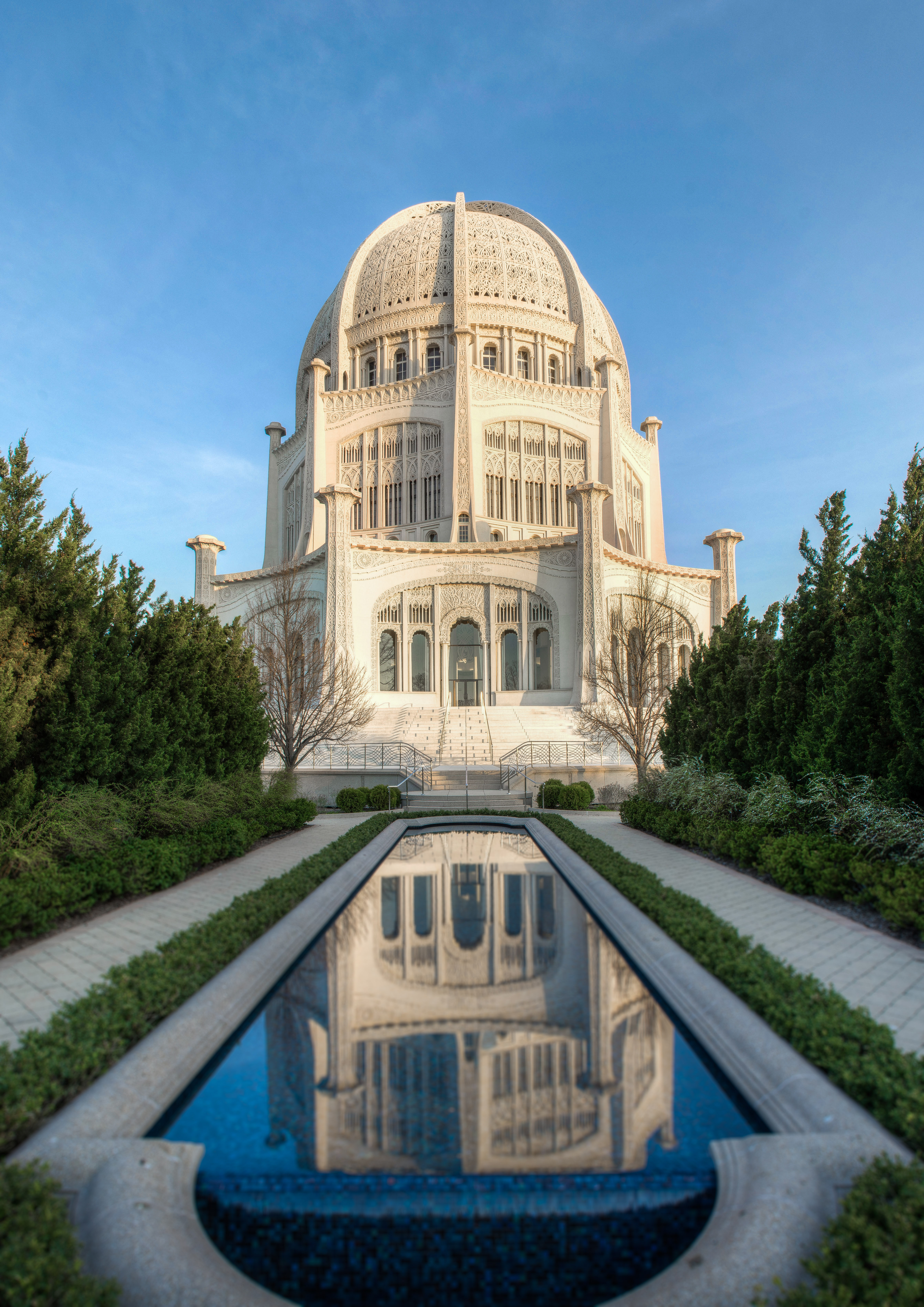
In the September 1920 issue of the Star of the West Mrs. Corinne True of Chicago contributed a long signed report on the status of the Temple project — the great enterprise, then already seventeen years in the making, of raising the first Mashriqu'l-Adhkár of the Western world on a small property at Wilmette, on the lake shore north of Chicago.
The story Corinne told was of slow accumulation. The Master had given the first Tablet pointing to a Western House of Worship in 1903. He had specified, in subsequent Tablets, that it must rise on the shore of Lake Michigan near Chicago. He had laid the foundation stone Himself, in May of 1912, on a brief visit to the property. Between 1903 and 1920, in dollars and dimes, the friends across the United States had been giving toward the purchase and the eventual construction.
The Temple Unity, the small national body charged with the project, had bought additional parcels of the Wilmette land year by year as the funds accumulated. By 1920 the full site had been assembled — a modest tract of a few acres looking across the lake toward Chicago. The next phase, Corinne wrote, would be the great task of raising the building itself.
This land is not for us. It is for the children's children of these friends.
The phrase was Corinne's own, set down in the Star's report of 1920 and quoted often afterwards. The believers who had contributed the early dimes and dollars — many of them working women, immigrants, small clerks and shopkeepers — had not expected to see the Temple finished in their own lifetimes. They had been giving in trust, into a future they themselves would not live into. The land at Wilmette, in Corinne's understanding, was a charge held in trust for a later generation of American believers who would carry the work to completion.
The eventual story would prove her right. The first dome would be raised in the late 1920s. The exterior ornament — the intricate plaster work that would in time give the building its lacelike appearance — would not be finished until the late 1940s. The first formal services would be held there in 1953, more than half a century after the first Tablet. Many of the donors of 1920 would by then have already gone.
Corinne True herself, named by 'Abdu'l-Bahá the mother of the Temple, would live to see the dome finished and the formal opening of the Temple. The land that she had asked her generation to gather, in the 1920 report in the Star, was held in their hands for the children's children, exactly as she had said.
Source: Star of the West, Volume 11, Issue 9 (September 1920), report by Corinne True on the Temple property at Wilmette. Public domain text from bahai-library.com.
Cite this story
Editors, S. O. T. W.. (1920). *Star of the West*. Bahai News Service. https://bahai-library.com/star_of_the_west_volume_11
Record yourself reading this story
Recording stays on this device only. Nothing is uploaded.
Related stories
Mother of the Temple: Corinne True and the House of Worship
For nearly half a century Corinne True gave herself to a single labour of service — the raising of the first Bahá'í House of Worship of the West on the shore of Lake Michigan at Wilmette. Across two world wars and a great depression she gathered the dimes and dollars of working believers, held the project together through every discouragement, and lived to see the temple she had served dedicated to public worship. 'Abdu'l-Bahá called her the Mother of the Temple.
Many Cities, One House: The Founding of Bahá'í Temple Unity
Scattered across an enormous continent, the early American believers could not build a House of Worship one city at a time. So in 1909 the delegates of their far-flung communities met in Chicago and brought into being Bahá'í Temple Unity — the first national institution of the Western Faith, the instrument through which a whole people could act as one to raise the first Mashriqu'l-Adhkár of the West.
The Dawning-Place: The House of Worship of 'Ishqábád
In the city of 'Ishqábád, in Russian Turkistan, the Bahá'í community raised the first House of Worship the world had ever seen — a stately, nine-sided edifice set in gardens, ringed by the institutions of practical service the Cause ordains beside its temples: schools, a traveller's hospice, a clinic. Shoghi Effendi numbers its construction among the signal triumphs of the Faith's early history.
A Temple of Light and Unity: Louis Bourgeois and the Mother Temple of the West
Long before he had ever heard of the Bahá'í Faith, the French-Canadian architect Louis Bourgeois believed his life's work was to build a universal temple of Truth for all humanity. When he found the Cause, he found his commission — and poured the rest of his life into the luminous nine-sided House of Worship at Wilmette, a building whose ornament gathers the symbols of all the world's religions into one.