Leland Hotel, Minneapolis: A Talk on the Holy Spirit
'Abdu'l-Bahá, The Promulgation of Universal Peace, (1922), Bahá'í Publishing Trust · Read original
When in Bahá'í history
Minneapolis (today: Minneapolis, Minnesota, USA)
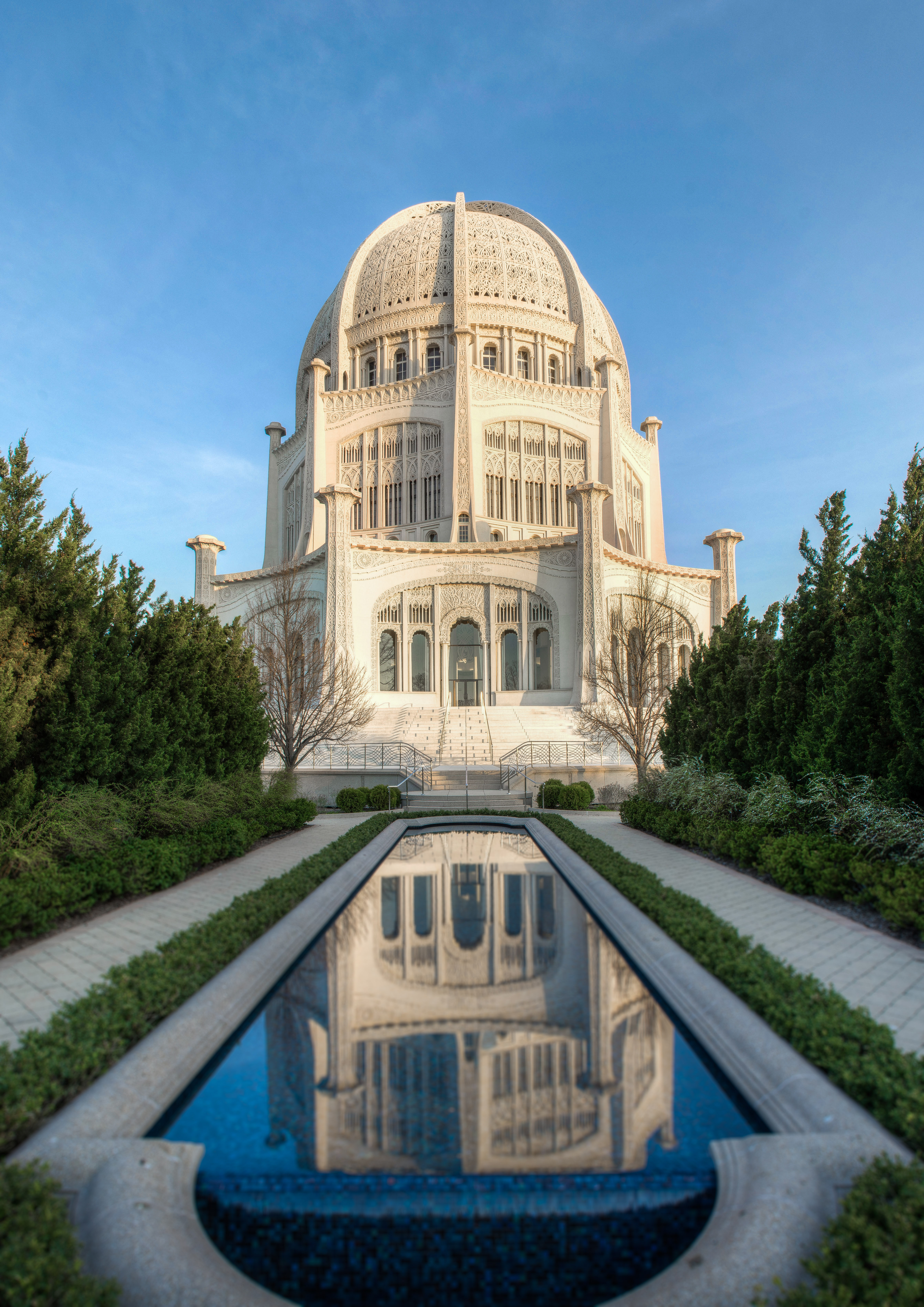
On the evening of the 19th of September, 1912, 'Abdu'l-Bahá addressed a gathering of the Twin Cities Bahá'ís and inquirers in the parlour of the Leland Hotel in downtown Minneapolis. The Master had arrived in Minneapolis only that morning. The parlour gathering was His first opportunity to speak to the local community in any extended way.
He chose, as His subject, the doctrine of the Holy Spirit — the great theological theme that the Christian tradition of the Twin Cities friends had taught them from childhood, and that the Master was now invited to set in the wider context of the Bahá'í teaching.
The Master began by acknowledging what the audience already knew: that the Christian tradition speaks of the Holy Spirit as the third person of the Trinity, given to the disciples at Pentecost, present in the church through the sacraments, available to the believer through faith. He did not contest this picture. He proposed instead an enlargement of it.
The Holy Spirit, the Master taught, is not a possession of any one religion. It is not bounded by sacraments or by institutional inheritance. It is the present and living bond between any human soul and the Divine reality.
The Holy Spirit is the bond between the human soul and the Divine reality.
The phrase, set down in the published version of the talk, gave the Master's central teaching. The Holy Spirit is not a past gift to be remembered. It is a present current to be received. Every soul that turns its face — in prayer, in service, in genuine inquiry — toward the Divine reality is in that very act receiving the Holy Spirit. Every soul that turns its face away is, in that very act, refusing the gift.
He went on to draw the practical consequences. The friends present were not to think of their daily lives as a sphere in which the Holy Spirit was occasionally invoked. They were to think of every conscious act — every word, every choice, every act of service — as an opportunity for the Holy Spirit to work through them. The bond was always available. What was sometimes lacking was the willingness to allow it.
He also enlarged the teaching to embrace the prophetic dispensations. The same Holy Spirit that had spoken in Christ at Pentecost had spoken in Moses at Sinai, in Muhammad at Hira, in the Báb at Shíráz, in Bahá'u'lláh in the Síyáh-Chál. The Holy Spirit, the Master said, blows where it will, and across all the great dispensations the direction of its movement is recognisable to the soul that has learned to attend.
The talk closed with a brief prayer. The friends rose; the inquirers asked questions; the parlour gathering broke up slowly into the late evening. The Twin Cities friends, in the hours after the Master's departure, had been given a small summary of the Bahá'í teaching on the Holy Spirit that they would carry into their own lives and their own later teaching for years afterward.
Source: 'Abdu'l-Bahá, The Promulgation of Universal Peace, talk of September 19, 1912 at the Leland Hotel, Minneapolis. Public domain text from the Bahá'í Reference Library.
Cite this story
'Abdu'l-Bahá. (1922). *The Promulgation of Universal Peace*. Bahá'í Publishing Trust. https://www.bahai.org/library/authoritative-texts/abdul-baha/promulgation-universal-peace/
Record yourself reading this story
Recording stays on this device only. Nothing is uploaded.
Related stories
The Long Ride Across the Country
On a train crossing all the way to the ocean, 'Abdu'l-Bahá kept His prayers, watched the wide land roll by, and learned the names of the men who worked aboard.
Across the Continent by Rail: A Long Quiet Crossing
Mahmúd's Diary records the long quiet stretches of the transcontinental train journey from Chicago to the Pacific in September-October 1912 — the Master at His prayers in the parlour car, the night plains rolling past, the small acts of hospitality to the train staff.
‘Abdu’l-Bahá’s prayerfulness aided Him to sustain equanimity even in
‘Abdu’l-Bahá’s prayerfulness aided Him to sustain equanimity even in times of deep sorrow and dire anguish. His ‘love for God was the ground and cause of an equanimity which no circumstance could shake and of an inner happiness which no…
Before ‘Abdu’l-Bahá arrived, Ali-Kuli Khan considered what questions
Before ‘Abdu’l-Bahá arrived, Ali-Kuli Khan considered what questions he would ask Him upon His arrival. Dr. Khan realized that the one thing he wanted most to know was some prayer see might utter quickly and from deep within his heart,…