'Abdu'l-Bahá and the Wartime Famine
Lady Blomfield, The Chosen Highway, (1940), Bahá'í Publishing Trust
When in Bahá'í history
Haifa (today: Haifa, Israel)
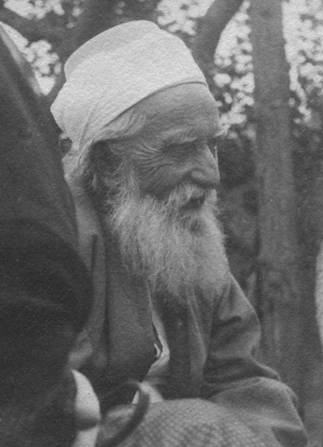
A retelling based on The Chosen Highway by Lady Blomfield, which gathers the recollections of 'Abdu'l-Bahá's family and of those close to Him. Words in quotation marks are quoted from that book.
'Abdu'l-Bahá foresaw the war. Lady Blomfield writes that He began His preparations "as early as 1912," before He had even returned to the Holy Land from His journeys in the West. The Master had bought land in the villages of Nughayb, Samrih and 'Adasiyyih, near the Jordan, where groups of Bahá'ís lived and grew corn. He taught the villagers how to grow it "so as to produce prolific harvests," and a great quantity was stored in pits, some of which had been dug long before by the Romans.
When the war came, the men who earned the bread of Haifa and 'Akká were taken for the army, and there were no government allowances for their wives and children. The blockade made the situation worse. Blomfield writes that "in 'Akka and Haifa all the poor looked to Him for their daily bread," and that "nothing and no one but the Master stood between them and certain death from hunger." With the stored corn, and the vegetables He had taught the friends to grow, 'Abdu'l-Bahá was able to feed "numberless poor of the people of Haifa, 'Akka, and the neighbourhood, in the famine years of 1914-1918." The food was given out to civilians of every nation living in Haifa, in regular rations, as an army gives them out.
The war also put the Master Himself in danger. His enemies had so stirred up the Turkish authorities that they threatened to crucify Him and His family on Mount Carmel. In the spring of 1918 Lady Blomfield, in London, received an urgent warning. Through Lord Lamington a letter reached Lord Balfour at the Foreign Office, and that same evening a cable went to General Allenby instructing him to protect 'Abdu'l-Bahá, His family and His friends when the British marched on Haifa. When the British took the town, a guard was placed around the Master's house.
The army's reserve provisions had not yet arrived, and the officer in command went to consult 'Abdu'l-Bahá. "I have corn," was the reply. "But for the army?" said the astonished soldier. "I have corn for the British Army," said 'Abdu'l-Bahá.
The British Government afterwards conferred a knighthood on 'Abdu'l-Bahá, which, Blomfield writes, He accepted as a courteous gift "from a just king." British officials came from Jerusalem to Haifa for the ceremony, and an imposing motor-car was sent to bring Him. At first the Master could not be found. Then He appeared, alone and on foot. His coachman, Isfandiyár, who for many years had driven Him on His errands of mercy, stood looking sadly at the motor-car. At a sign from 'Abdu'l-Bahá, Isfandiyár ran to harness the horse, and the Master was driven in His own carriage to a side entrance of the garden of the Governorate.
This is a retelling. For the fuller account, see The Chosen Highway by Lady Blomfield.
Cite this story
Blomfield, L.. (1940). *The Chosen Highway*. Bahá'í Publishing Trust.
Record yourself reading this story
Recording stays on this device only. Nothing is uploaded.
Related stories
War Time at Haifa
A remarkable instance of the foresight of ‘Abdu’l-Bahá was supplied during the months immediately preceding the war.
A Knighthood for the Master
During the First World War 'Abdu'l-Bahá grew wheat near Tiberias to feed the hungry of Haifa and 'Akká. In 1920 the British knighted Him for this work, and He came to the ceremony in His old servant's carriage.
The Knighting of 'Abdu'l-Bahá
On 27 April 1920 'Abdu'l-Bahá was knighted at Haifa for His relief of famine in the Holy Land during the First World War. The Star of the West printed a Persian believer's account of the ceremony.
Refuge at Abú-Sinán
When war came in 1914, ‘Abdu’l-Bahá moved the Bahá’ís of Haifa to the Druze village of Abú-Sinán, where vegetables He had taught them to grow and corn from ‘Adasíyyih kept many from hunger.