Thomas Breakwell Meets the Faith in Paris
Bahá'í Chronicles editors, Bahá'í Chronicles · Read original
When in Bahá'í history
Paris (today: Paris, France)
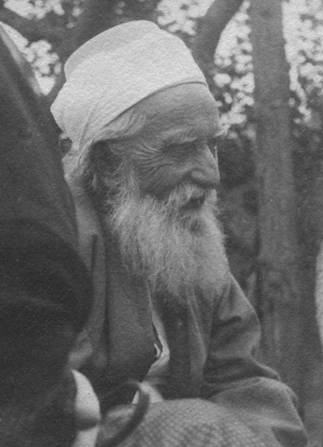
A retelling drawn from Bahá'í Chronicles and from May Maxwell's own account of Thomas Breakwell (in Star of the West, vol. 5, no. 19, and in H. M. Balyuzi's 'Abdu'l-Bahá: The Centre of the Covenant). Words in quotation marks are from those records and from 'Abdu'l-Bahá's prayer for him.
Thomas Breakwell was a young Englishman who held a well-paid post in a cotton mill in the southern United States. In the summer of 1901, crossing to Europe on holiday, he met on the steamer a Mrs. Milner, a friend of May Ellis Bolles, later May Maxwell. The day after they reached Paris, Mrs. Milner brought him to May Bolles's apartment.
At that first visit the Faith was not mentioned; they talked of Theosophy. As he left, Breakwell asked if he might come again, and he returned the next morning. He told her that after leaving her the day before he had walked alone down the Champs-Élysées, when a wind whirled around him, "and in that wind a voice said, with an indescribable sweetness and penetration, 'Christ has come again! Christ has come again!'" He asked whether she thought he was losing his senses. "No," she answered, "you are just becoming sane," and she told him of the coming of Bahá'u'lláh.
May Maxwell later wrote that he "received the Message in all its fulness and all its strength and beauty within three days." On the third day he wrote to 'Abdu'l-Bahá: "My Lord, I believe, forgive me, Thy servant Thomas Breakwell."
Permission for a pilgrimage soon came, and Breakwell travelled to 'Akká with Herbert Hopper, another young believer May Bolles had taught. There he told 'Abdu'l-Bahá about his work. His earnings were large, he said, but he now had misgivings, because the business he served relied on child labour. The Master answered, "Cable your resignation." Breakwell did so. When he left 'Akká the Master told him, "Stay in Paris," and he made Paris his home.
He had tuberculosis, and it grew worse. He died in Paris on 13 June 1902, about a year after he first heard of the Faith. 'Abdu'l-Bahá's secretary, Yúnis Khán, recalled the Master turning to him one evening and saying: "Breakwell has passed away. I am grieved, very grieved." 'Abdu'l-Bahá wrote a prayer of visitation for him, which says: "Thou art become a star in the supernal sky, and a lamp amid the angels of high Heaven; a living spirit in the most exalted Kingdom, throned in eternity."
Shoghi Effendi called Thomas Breakwell "the first English believer."
This is a retelling. For the fuller account, see Bahá'í Chronicles, May Maxwell's letter in Star of the West (vol. 5, no. 19), and Balyuzi's 'Abdu'l-Bahá: The Centre of the Covenant, chapter 6.
Cite this story
editors, B. C.. *Bahá'í Chronicles*. https://bahaichronicles.org/thomas-breakwell/
This story shares quotes with 1 other story
“My Lord, I believe, forgive me, Thy servant Thomas Breakwell.”
Also in
- You May Leave Paris— Various, bahaistories.com archive
Record yourself reading this story
Recording stays on this device only. Nothing is uploaded.
Related stories
May Bolles and the First Centre in Europe
Returning to Paris from her 1898–99 pilgrimage to 'Akká, May Bolles established, at 'Abdu'l-Bahá's instruction, the first Bahá'í centre on the European continent, where Thomas Breakwell, Hippolyte Dreyfus and Laura Barney came to the Faith.
Thornton Chase, the First American Believer
The life of Thornton Chase, whom ‘Abdu’l-Bahá called “the first American believer,” from his long spiritual search to his service in Chicago, and the Master’s visit to his grave in 1912.
Thomas Breakwell, a Living Spirit
In Paris in 1901, Thomas Breakwell heard a voice in the wind say “Christ has come again!” He learned of Bahá'u'lláh from May Bolles, visited 'Abdu'l-Bahá in 'Akká, and gave the rest of his short life to service.
The Doubts of Howard Colby Ives
Howard Colby Ives, a minister who had long searched for God without finding Him, met 'Abdu'l-Bahá in New York in 1912. His doubts did not end that day; certainty came months later, after the Master had left America.