The Doubts of Howard Colby Ives
Howard Colby Ives, Portals to Freedom, (1937), George Ronald
When in Bahá'í history
New York (today: New York, USA)
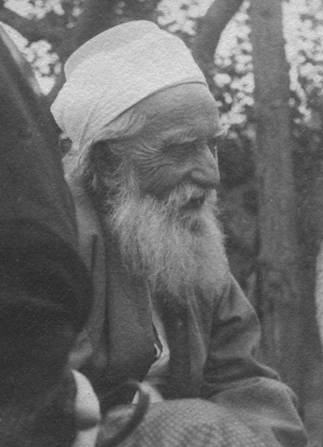
A retelling based on Portals to Freedom by Howard Colby Ives, his own account of meeting 'Abdu'l-Bahá in America in 1912. Words in quotation marks are from that book.
Howard Colby Ives was a minister, with a suburban church and a Brotherhood Church he had founded in Jersey City, when 'Abdu'l-Bahá came to America. He had moved from the orthodox faith of his youth through some ten years of agnosticism to about fifteen years of preaching what he called the "Liberal Faith," and he was, by his own account, deeply unhappy. "I know of no greater disappointment," he wrote, "no more terrible depression than that which comes to the sincere soul who, seeking God, finds Him not."
In October 1911 he read a magazine article about 'Abdu'l-Bahá and His coming visit. Soon afterwards he began going to Bahá'í meetings in New York and reading every book he could find. The friends' explanations did not settle his mind. "I was not happy," he wrote. "Strange to say I was more unhappy than ever." Walking with a friend one February day, he said that when 'Abdu'l-Bahá arrived he would like to talk with Him alone, "without even an interpreter." His friend smiled: "I fear you couldn't get very far without an interpreter."
On the morning after the Master's arrival in New York in April 1912, Ives went early to the Hotel Ansonia. He had no appointment. The reception room was full, and he stood by the window with his back to the others. When 'Abdu'l-Bahá came out of an inner room to say farewell to a group of visitors, He looked across at Ives, smiled and beckoned to him. Ives glanced around, thinking the gesture must be meant for someone else. 'Abdu'l-Bahá beckoned again, took his hand, motioned everyone else out of the room, the interpreter included, and closed the door.
They sat by the window, knee to knee. "Softly came the assurance that I was His very dear son," Ives wrote. The Master looked at him in silence, and Ives began to weep. 'Abdu'l-Bahá wiped the tears from his face, "admonishing me not to cry, that one must always be happy," and laughed. Then He placed His hand on Ives's breast, "saying that it was the heart that speaks." Ives never said a word during the whole meeting. At the end 'Abdu'l-Bahá embraced him, kissed him on both cheeks and led him to the door. "That is all," Ives wrote. "But life has never been quite the same since."
It was not the end of his questions. That summer Ives visited 'Abdu'l-Bahá at Dublin, New Hampshire. In a hotel room there he asked Him again, "as I often had," why he should believe in Bahá'u'lláh as the latest of God's Messengers. The Master did not argue the point. He spoke of Christ and of the Sermon on the Mount, told Ives to study the Book of Certitude, and after a long silence said, as Ives recalls it, that all who truly seek find, and that the door to the World of Reality is never closed to those who patiently knock.
Leaving the church where 'Abdu'l-Bahá spoke later that day, Ives told a friend: "At last I know. Never again will I doubt or question." Looking back, he added: "Alas, I spoke too soon. Many months too soon. My scholastic training had gone too deep."
In the last three days before the Master sailed from New York in early December, Ives, in his own words, "haunted His presence." He had no doubt by then of 'Abdu'l-Bahá's own station, but he still could not say from his heart that he accepted the station of Bahá'u'lláh.
About two or three months after 'Abdu'l-Bahá left America, the answer came in a way he did not expect. It was, he wrote, "the direct out-come of spiritual service." Drawing on the Writings he had been reading for months, and on the Master's teachings and example, he found that for the first time in his ministry he could truly help people in sorrow and perplexity. Seeing lives change in this way, he felt every trace of his former doubts vanish. "If this is not of God," he said to himself, "then there is no foundation for faith in God. I would rather be wrong with this great Faith than seemingly right with all the doubters and cavilers in the world."
A Tablet from 'Abdu'l-Bahá, which Ives says "completed my subjugation," began: "O thou my heavenly son." Twenty-five years later he published the story of those months as Portals to Freedom.
This is a retelling. For the full account, see Portals to Freedom by Howard Colby Ives.
This story shares quotes with 1 other story
“At last I know. Never again will I doubt or question.”
Also in
- Many Months Too Soon— Howard Colby Ives, Portals to Freedom
Record yourself reading this story
Recording stays on this device only. Nothing is uploaded.
Related stories
Laura Barney's Questions in 'Akká
Between 1904 and 1906 Laura Clifford Barney made several long visits to 'Akká and put her questions to 'Abdu'l-Bahá, often at the lunch table. His replies, written down and corrected by Him, became Some Answered Questions.
Thomas Breakwell Meets the Faith in Paris
In the summer of 1901 a young Englishman met May Bolles in Paris and within three days accepted the Bahá'í Faith. On pilgrimage to 'Akká he told 'Abdu'l-Bahá that the mill he worked for relied on child labour, and resigned at the Master's word.
Howard Colby Ives Meets the Master
Wary after years of disappointed hopes, Howard Colby Ives was persuaded to visit ‘Abdu’l-Bahá at the Hotel Ansonia, where he was called into the Master's room and, in a long silence with Him, found the faith he had sought.
A Black Rose Among the Boys
When a group of boys came to meet ‘Abdu’l-Bahá in New York, He greeted the only Black boy among them as “a black rose,” and the other boys looked at him with new eyes.