Hippolyte Dreyfus, the First French Bahá'í
Bahá'í Chronicles editors, Bahá'í Chronicles · Read original
When in Bahá'í history
Paris (today: Paris, France)
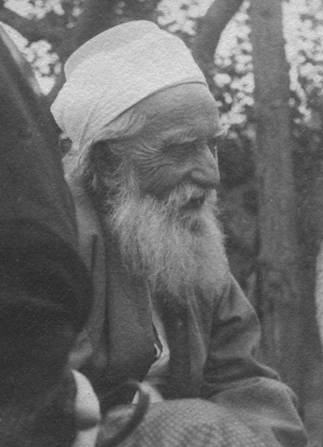
A retelling based on the biography of Hippolyte Dreyfus-Barney in Bahá'í Chronicles, with details from H. M. Balyuzi's 'Abdu'l-Bahá: The Centre of the Covenant and Shoghi Effendi's God Passes By. Words in quotation marks are quoted from those books.
Hippolyte Dreyfus was born in Paris on 12 April 1873. He studied law and received his doctorate in February 1898.
In the summer of 1901 he heard of the Faith of Bahá'u'lláh from May Ellis Bolles, the American who, at 'Abdu'l-Bahá's instruction, had formed in Paris the first Bahá'í centre on the continent of Europe. Years later May Bolles, by then May Maxwell, wrote of him:
He was at the time an agnostic who believed that life and character are above dogma and creed. Although he had never believed in any force transcending nature, nor had he received intimations of the possible existence of a Supreme Being, yet after hearing of the advent of Bahá'u'lláh his inner susceptibilities became unfolded and in his subsequent study of the teachings and his visit to 'Abdu'l-Bahá in the prison of 'Akka, he attained a supreme realization of the significance and importance of this message to the world.
Shoghi Effendi, in God Passes By, names him "the first Frenchman to embrace the Faith."
In 1903 Dreyfus gave up the practice of law to take up oriental studies at the École pratique des hautes études in Paris, where he studied Arabic and Persian. H. M. Balyuzi writes: "He learned Persian and Arabic to enable him to translate the Writings of Bahá'u'lláh and 'Abdu'l-Bahá." His French translations included writings of Bahá'u'lláh and, later, the Will and Testament of 'Abdu'l-Bahá. He translated Some Answered Questions, compiled by Laura Clifford Barney from her conversations with 'Abdu'l-Bahá, into French as Les Leçons de Saint-Jean-d'Acre, and he wrote his own account of the history and teachings of the Faith, Essai sur le Bahaïsme.
In the summer of 1905 he travelled to Persia with Laura Barney and her companion. Balyuzi records that he was "the first European Bahá'í to visit Iran, the cradle of the Faith." His journeys for the Faith took him to Canada and the United States and as far east as Japan. He also put his legal training to use on behalf of the Bahá'ís in Tunisia and Egypt.
In 1911 he married Laura Clifford Barney and took the name Dreyfus-Barney. When 'Abdu'l-Bahá came to Paris that autumn, the couple were at hand to serve Him. During the Master's second stay in Paris, early in 1913, Hippolyte rented the apartment at 30 Rue St Didier where He lived, was in constant attendance on Him, and on 6 February escorted Him to Versailles. After the First World War, Laura and Hippolyte Dreyfus-Barney were the first pilgrims from the West to reach the Holy Land.
Hippolyte Dreyfus-Barney died in Paris on 20 December 1928. Shoghi Effendi wrote that "through his writings, translations, travels and other pioneer services," he "was able to consolidate, as the years went by, the work which had been initiated in his country."
This is a retelling. For the fuller account, see the biography of Hippolyte Dreyfus-Barney in Bahá'í Chronicles and H. M. Balyuzi's 'Abdu'l-Bahá: The Centre of the Covenant.
Cite this story
editors, B. C.. *Bahá'í Chronicles*. https://bahaichronicles.org/hippolyte-dreyfus-barney/
Record yourself reading this story
Recording stays on this device only. Nothing is uploaded.
Related stories
Laura Barney's Questions in 'Akká
During her long visits to 'Akká between 1904 and 1906, Laura Clifford Barney put her questions to 'Abdu'l-Bahá at His table. His answers became Some Answered Questions, which includes His talk on the four ways people seek to understand the truth.
Dr. Esslemont Writes His Book
A doctor at a Bournemouth sanatorium first met the Bahá'í teachings in December 1914 and set out to write a book about them. 'Abdu'l-Bahá corrected part of the manuscript, and Bahá'u'lláh and the New Era appeared in 1923.
The Scholar Who Never Met Bahá’u’lláh
Mírzá Abu’l-Faḍl, head of a religious college in Tihrán, became a Bahá’í in 1876, was imprisoned three times, and taught the Faith in Turkmenistan, Egypt and America until his death in Cairo in 1914.
The Scholar Who Waited for Proof
A learned head of a religious college in Iran saw Bahá'u'lláh's prophecies come true and became a Bahá'í. As Mírzá Abu'l-Faḍl he taught the Faith in Iran, Egypt, Paris and America.