The Afnán Builds the First House of Worship
'Abdu'l-Bahá, Memorials of the Faithful, (1915), Bahá'í Publishing Trust · Read original
When in Bahá'í history
'Ishqábád (today: Ashgabat, Turkmenistan)
How this story reached us
- 1.Memorials of the Faithful, chapter "Hájí Mírzá Muhammad-Taqí, the Afnán" (gut/19279.txt lines 3607-3697)
A retelling based on Memorials of the Faithful by 'Abdu'l-Bahá, His reminiscences of the early believers. Words in quotation marks are 'Abdu'l-Bahá's own, as preserved in that book.
Ḥájí Mírzá Muḥammad-Taqí, whose title was Vakílu'd-Dawlih, was an Afnán, a kinsman of the Báb. 'Abdu'l-Bahá writes that in him "an excellent character was allied to a noble lineage." He became a believer "after one reading of the Book of Íqán," Bahá'u'lláh's Book of Certitude, and was so stirred that he cried out, "Lord, Lord, here am I!" He left Persia for 'Iráq and hurried across the mountains and deserts to Baghdád, where he attained the presence of Bahá'u'lláh.
He then returned to Persia and taught the Faith. In Yazd he was, 'Abdu'l-Bahá says, "outwardly, engaged in commercial pursuits, but actually teaching the Faith." Even his enemies admired him. They would say: "There is none to compare with this man for his words and acts, his righteousness, trustworthiness, and strong faith; in all things he is unique; what a pity that he is a Bahá'í!"
Many times Bahá'u'lláh spoke to those around Him of His "extreme satisfaction with the Afnán," and everyone was certain that he would one day "initiate some highly important task."
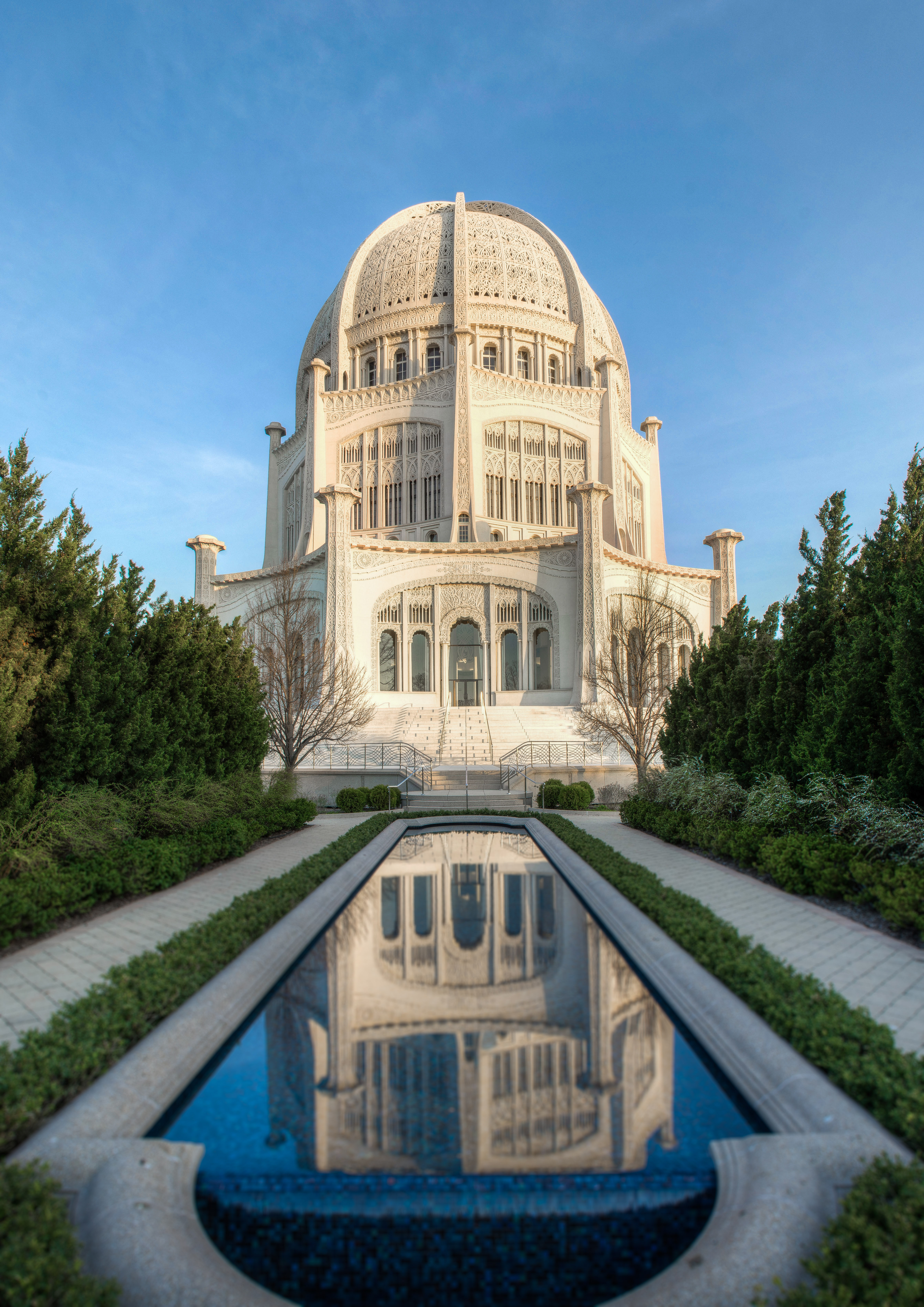
After Bahá'u'lláh's ascension, the Afnán, loyal to the Covenant, served more than ever. "He gave up his comfort, his business, his properties, estates, lands, hastened away to Ishqábád and set about building the Mashriqu'l-Adhkár." In this way, 'Abdu'l-Bahá writes, he "became the first individual to erect a Bahá'í House of Worship, the first builder of a House to unify man."
For a long time in 'Ishqábád he had no rest. Day and night he urged the believers on, and they too "made sacrifices above and beyond their power; and God's edifice arose, and word of it spread throughout East and West."
"The Afnán expended everything he possessed to rear this building, except for a trifling sum," 'Abdu'l-Bahá writes. "This is the way to make a sacrifice. This is what it means to be faithful."
Afterwards the Afnán went to the Holy Land and spent his last days near the Shrine of the Báb, praying. 'Abdu'l-Bahá remembered him as "an uncommonly happy man": "Whenever I was saddened, I would meet with him, and on the instant, joy would return again." His passing, close by the Shrine of the Báb, "deeply grieved 'Abdu'l-Bahá." His grave is in Haifa.
This is a retelling. For the fuller account, see Memorials of the Faithful by 'Abdu'l-Bahá.
Cite this story
'Abdu'l-Bahá. (1915). *Memorials of the Faithful*. Bahá'í Publishing Trust. https://www.bahai.org/library/authoritative-texts/abdul-baha/memorials-faithful/
Record yourself reading this story
Recording stays on this device only. Nothing is uploaded.
Related stories
The First House of Worship at 'Ishqábád
In 'Ishqábád, in Russian Turkistán, the Bahá'ís raised the first Mashriqu'l-Adhkár of the Bahá'í world, begun in 1902 under 'Abdu'l-Bahá's guidance, with a school, a travellers' house and a building for a hospital in its garden.
The First Builder of a House to Unify Man
Ḥájí Mírzá Muḥammad-Taqí, the Vakílu'd-Dawlih, a cousin of the Báb, gave up his business and estates to build the Mashriqu'l-Adhkár of 'Ishqábád, the first Bahá'í House of Worship, spending almost everything he owned on it.
The Afnán of All Delights
‘Abdu’l-Bahá remembers Hájí Mírzá Muhammad-Taqí, the Afnán, who believed after one reading of the Kitáb-i-Íqán, gave nearly all he owned to build the first Bahá’í House of Worship in ‘Ishqábád, and died near the Shrine of the Báb.
On Passages in The Hidden Words
Regarding the statement in The Hidden Words, that man must renounce his own self, the meaning is that he must renounce his inordinate desires, his selfish purposes and the promptings of his human self …