Tears on Leaving Milford
Mírzá Maḥmúd-i-Zarqání, Mahmúd's Diary, (1998), George Ronald · Read original
When in Bahá'í history
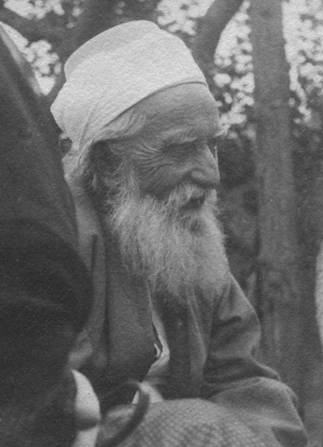
A retelling based on Mahmúd's Diary by Mírzá Maḥmúd-i-Zarqání (George Ronald), from the entries for 3 and 4 June 1912, with one detail from H. M. Balyuzi's 'Abdu'l-Bahá: The Centre of the Covenant. The narrative is retold in our own words. Read the full text for the original entry.
On June 3, 1912, 'Abdu'l-Bahá travelled from New York to Milford, Pennsylvania, where He had been invited to stay at a country estate. He spent a day and a night there. Mírzá Maḥmúd-i-Zarqání writes that many prominent statesmen and dignitaries were enraptured by the Master, and that a record of His talks and His answers to their questions during that visit would make a complete book in itself.
When He left Milford the next day, it was not only His explanations that people remembered. He called the servants of the household before Him, thanked them, and gave each of them two gold coins. Much affected, they bowed their heads, and then turned their faces towards Him as He left.
As He was leaving, the Master turned to look at the lush greenery of the place, and tears suddenly poured from His eyes. Mahmúd explains that He was thinking of Bahá'u'lláh, the Blessed Beauty, and was grieved, recalling the afflictions and sufferings His Father had endured.
H. M. Balyuzi places the moment on the train back to New York. The members of the Master's party, he writes, were concerned to see tears suddenly coursing down His cheeks as He watched the countryside go by; "once again the vivid contrast had forced the memory of His Father's sufferings and deprivations to plunge Him in deep sorrow."
That evening 'Abdu'l-Bahá returned to New York, to a house near the Hudson River that had been rented at His request, and spoke to a gathering of the friends there.
This account is retold for the Bahai Story Library; it is a paraphrase, not the original text, except for the words in quotation marks, which are Balyuzi's. See Mahmúd's Diary (Mírzá Maḥmúd-i-Zarqání, George Ronald), and H. M. Balyuzi, 'Abdu'l-Bahá: The Centre of the Covenant of Bahá'u'lláh (George Ronald, 1971), for the original accounts.
Cite this story
Maḥmúd-i-Zarqání, M.. (1998). *Mahmúd's Diary*. George Ronald. https://bahai-library.com/zarqani_mahmuds_diary
Record yourself reading this story
Recording stays on this device only. Nothing is uploaded.
Related stories
The Lights of Broadway
Driving up Broadway with Juliet Thompson in April 1912, ‘Abdu’l-Bahá smiled at the electric signs and told His companions that Bahá’u’lláh had loved light and had taught that it should be used freely.
I Have Come with This Mission
I have come from distant lands to visit the meetings and assemblies of this country.
The Prayer Ali-Kuli Khan Was Given
Ali-Kuli Khan, Persia’s representative in Washington, longed for a prayer to say in moments of sudden need. On the drive from the station, ‘Abdu’l-Bahá told him how, as a boy, He had cried “Yá Allah el Mustaghas!” all night before Bahá’u’lláh returned to Baghdad.
America
In the Book of Aqdas, revealed in Akká in 1873, Bahá’u’lláh appealed to America as follows:— O Rulers of America and the Presidents of the Republics therein ...