St. Louis: The Master at the Statler Hotel
Mírzá Maḥmúd-i-Zarqání, Mahmúd's Diary: The Diary of Mírzá Maḥmúd-i-Zarqání, (1998), George Ronald
When in Bahá'í history
St. Louis (today: St. Louis, Missouri, USA)
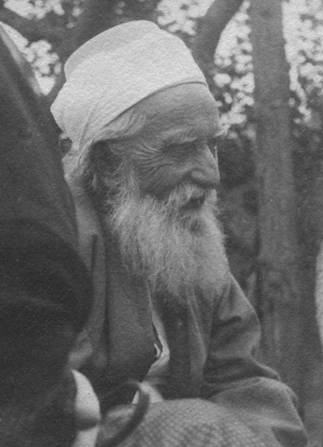
Mahmúd's Diary records that 'Abdu'l-Bahá arrived in St. Louis in the early evening of 1 November 1912, on a train that had left Chicago that morning. The visit was brief — a single overnight stop, with departure scheduled for the following afternoon. The itinerary had been added to the journey at the direct request of the small community of Missouri believers, who had written to ask the Master to grace their city, even for a single evening, on His way south.
The Master was met at the station by the chief of the delegation. The party was driven to the Statler Hotel in the downtown district, where a suite of rooms had been engaged. After a brief rest, He received the friends in the hotel parlour through the early evening.
Mahmúd records that the gathering was modest in size. Perhaps fifteen believers and several inquirers had assembled. The parlour, though comfortable, was not large. The Master spoke informally, seated in a chair drawn forward toward the friends, and in His characteristic manner addressed each visitor briefly in turn.
The talk that followed touched on the expansion of the Cause in the central American states — Missouri, Kansas, and the neighbouring territories. The Master noted, with practical attention, that the city of St. Louis stood at a geographical hinge: north toward Chicago and the Great Lakes, south toward the Gulf, west toward the great unsettled plains. He told the friends that the city's geography was, in His view, a spiritual destiny: the small community present in the hotel parlour was being asked to become, in time, a hub of teaching for the whole region.
The believers received the charge soberly. Several of them, Mahmúd notes, were practical Midwestern people — clerks, a minister's widow, a young teacher — who had been carrying the Cause in St. Louis for several years through their own personal correspondence with friends in Chicago and New York. The Master's commission added weight to what had been, until then, a small private undertaking.
The party retired late. The Master rose early the following morning, met briefly with two further inquirers who had been unable to attend the previous evening, and departed by the afternoon train south, in the direction of the next stop on the southern itinerary.
The St. Louis community, in the decades that followed, would honour the Master's commission. Its small Local Spiritual Assembly would by the late 1920s be functioning as a hub for the central states, exactly as the Master had envisioned in the Statler parlour on the November evening in 1912.
Paraphrased from Mahmúd's Diary: The Diary of Mírzá Maḥmúd-i-Zarqání (George Ronald, 1998), entry for 1 November 1912; see original for full text.
Cite this story
Maḥmúd-i-Zarqání, M.. (1998). *Mahmúd's Diary: The Diary of Mírzá Maḥmúd-i-Zarqání*. George Ronald.
Record yourself reading this story
Recording stays on this device only. Nothing is uploaded.
Related stories
Thirty Minutes at the Station
The train would stop in Spokane for only half an hour — just long enough for a few friends with armfuls of flowers to meet 'Abdu'l-Bahá on the platform.
Spokane: A Brief Stop on the Northern Route
Mahmúd's Diary records a brief station stop at Spokane, Washington, on the northern transcontinental route taken by the Master's party in October 1912 — a small group of friends meeting the train and a brief exchange in the station hall.
The Small Room in Baltimore
Only a handful of friends gathered in one little parlour, but 'Abdu'l-Bahá came to them anyway — and told them that keeping the Faith in a quiet place is one of the most important jobs of all.
Ten Days Across the Sea
On a great ship crossing the wide Atlantic Ocean, 'Abdu'l-Bahá sailed all the way to America to meet His friends — and to share the truth with a whole new land.