Mary Maxwell's Quiet Wedding
Bahá'í Chronicles editors, Bahá'í Chronicles · Read original
When in Bahá'í history
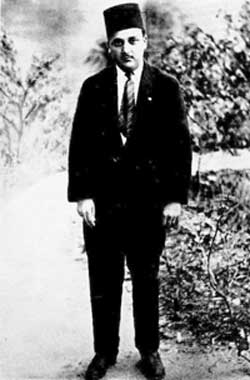
A retelling for children, based on the account of Amatu'l-Bahá Rúḥíyyih Khánum in Bahá'í Chronicles, which quotes her own description of her wedding from The Priceless Pearl.
Mary Maxwell was the only child of May Maxwell and William Sutherland Maxwell, a distinguished Canadian architect. She was born in New York City and grew up in Montreal.
Her mother travelled widely to teach the Bahá'í Faith, and the only sorrows of Mary's childhood were the times when her mother was away. Schools in those days tended to be strict and rigid, so May Maxwell started the first Montessori school in Canada, in the Maxwell home.
Mary read a great deal and was interested in many subjects. She had a great thirst for knowledge. As a young woman she took part in many youth activities, among the Bahá'ís and elsewhere.
On 25 March 1937, in Haifa, Mary Maxwell married Shoghi Effendi, the Guardian of the Bahá'í Faith. He was a great-grandson of Bahá'u'lláh, and 'Abdu'l-Bahá had appointed him to lead the Bahá'ís after His passing.
The wedding was kept secret. Only the Guardian's parents, a brother and two sisters of his, and Mary's parents knew it was going to happen. That afternoon his chauffeur drove him and Mary to Bahjí, to the Shrine of Bahá'u'lláh. There the Guardian placed his own ring on the ring-finger of her right hand. He went into the inner Shrine and gathered up in a handkerchief the dried petals and flowers that were kept at the resting-place of Bahá'u'lláh. After he had chanted the Tablet of Visitation they drove back to Haifa, and the marriage took place in the room of the Greatest Holy Leaf, 'Abdu'l-Bahá's sister. The Guardian's mother and father signed the marriage certificate to give their consent, as the laws of Bahá'u'lláh require.
Years later she wrote: "There was no celebration, no flowers, no elaborate ceremony, no wedding dress, no reception."
At dinner-time the Guardian came over to the Western Pilgrim House as usual. He gave the handkerchief full of flowers to Mary's mother, saying he had brought them for her from the inner Shrine of Bahá'u'lláh. Then Mary's parents also signed the marriage certificate.
The Guardian drafted a cable, sent over his mother's signature, to announce the marriage to the Bahá'ís of America. It read: "Announce Assemblies celebration marriage beloved Guardian. Inestimable honour conferred upon handmaid of Bahá'u'lláh Ruhiyyih Khanum Miss Mary Maxwell. Union of East and West proclaimed by Bahá'í Faith cemented. Ziaiyyih mother of Guardian." Messages of joy came to Shoghi Effendi from Bahá'ís all over the world.
From then on she was known as Rúḥíyyih Khánum. She served the Faith for the rest of her life. In 1952 the Guardian raised her to the rank of Hand of the Cause. She travelled to 185 countries and territories and was received by many leaders, among them Emperor Haile Selassie of Ethiopia, Prime Minister Indira Gandhi of India and Javier Pérez de Cuéllar, Secretary-General of the United Nations. She died in Haifa in 2000.
This is a retelling for children. For the fuller account, see "Amatu’l-Bahá Ruhiyyih Khanum".
Cite this story
editors, B. C.. *Bahá'í Chronicles*. https://bahaichronicles.org/amatul-baha-ruhiyyih-khanum/
Record yourself reading this story
Recording stays on this device only. Nothing is uploaded.
Related stories
Amatu’l-Bahá Rúḥíyyih Khánum
Mary Maxwell of Montreal married Shoghi Effendi on 25 March 1937 in a simple, private wedding; as Rúḥíyyih Khánum she later served as a Hand of the Cause and travelled to 185 countries and territories.
William Sutherland Maxwell
The Montreal architect William Sutherland Maxwell, husband of May Maxwell, spent his last years serving Shoghi Effendi in Haifa and designed the superstructure of the Shrine of the Báb.
A Secret Wedding in Haifa
In 1937 Mary Maxwell of Montreal married Shoghi Effendi in Haifa. Almost no one knew beforehand, and there was no celebration, no wedding dress and no reception.
The Guardian's Quiet Wedding
Rúḥíyyih Khánum recalls her marriage to Shoghi Effendi on 25 March 1937: a visit to the Shrine of Bahá'u'lláh, a simple ceremony in the room of the Greatest Holy Leaf, and no celebration at all.