The Last Days of 'Abdu'l-Bahá
Shoghi Effendi, God Passes By, (1944), Baha'i Publishing Trust
When in Bahá'í history
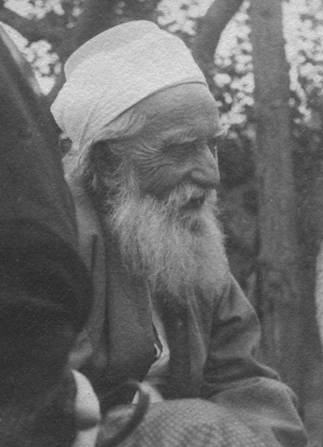
A retelling based on God Passes By by Shoghi Effendi and The Passing of 'Abdu'l-Bahá by Lady Blomfield and Shoghi Effendi (1922), as quoted in H. M. Balyuzi's 'Abdu'l-Bahá: The Centre of the Covenant.
In His last weeks, 'Abdu'l-Bahá spoke more and more of His coming departure. Not long before the end He told those around Him of a dream: "I dreamed a dream, and behold, the Blessed Beauty (Bahá'u'lláh) came and said to Me: 'Destroy this room.'" No one understood it until after His passing, when it became clear that the "room" was the temple of His body.
About two weeks before He passed away, He said to His gardener, Ismá'íl Áqá: "I am so fatigued! The hour is come when I must leave everything and take my flight. I am too weary to walk." He recalled how Bahá'u'lláh, in His own closing days, had told Him there was no use gathering His papers, and He added: "I also have finished My work. I can do nothing more. Therefore must I leave it, and take My departure."
On Friday, 25 November, He told His daughters that the wedding of Khusraw, a servant of the household, must take place that day. At noon, in spite of great fatigue, He went to the mosque for the noonday prayer. When He came out He found the poor waiting for the alms He gave every Friday, and as usual He stood and gave a coin to each of them with His own hands. After lunch He dictated His last Tablets. That evening He blessed the bride and bridegroom. "Khusraw," He said, "you have spent your childhood and youth in the service of this house: it is my hope that you will grow old under the same roof, ever and always serving God." He then attended the usual meeting of the friends.
On Saturday He was cold and feverish. "This is serious, it is the beginning," He said. On Sunday the fever had gone, but He was persuaded to stay on the sofa in His room. He sent all the friends up to the Shrine of the Báb for a feast that a Pársí pilgrim was offering for the anniversary of the Declaration of the Covenant. In the afternoon He had tea with His sister and the family, and received the Muftí of Haifa, the head of the municipality and the head of the police, walking the Muftí and the mayor to the outer door although they begged Him to rest. That night He asked after the health of every member of the household, of the pilgrims and of the friends in Haifa. At eight He went to bed, told the family to go and rest, and two of His daughters stayed with Him.
At about a quarter past one on the morning of Monday, 28 November 1921, He got up, drank some water, and went back to bed. Later He asked His daughter Rúḥá Khánum to lift the net curtains, because He had difficulty in breathing. He drank some rose-water and lay down again, and when food was offered to Him, He said clearly: "You wish Me to take some food, and I am going?" His face was so calm that they thought He was asleep. He had passed away.
The news was sent by telegraph to every part of the world, and messages of sympathy came to the family from high and low, among them the British government, the High Commissioner for Egypt and the Council of Ministers in Baghdád.
A retelling based on God Passes By and The Passing of 'Abdu'l-Bahá. For the fuller account, see the original.
Record yourself reading this story
Recording stays on this device only. Nothing is uploaded.
Related stories
Laid to Rest Beside the Báb
In 1909 'Abdu'l-Bahá laid the remains of the Báb in the Shrine He had built on Mount Carmel. Twelve years later, after His own funeral, His coffin was lowered into a vault beside that of the Báb in the same Shrine.
The Master's Last Three Years
After the Great War lifted the danger to His life, 'Abdu'l-Bahá spent His last three years receiving pilgrims, revealing Tablets and helping the poor, until He passed away in November 1921.
First Reports of the Master's Passing
In early 1922 the Star of the West printed the first detailed American accounts of the passing of 'Abdu'l-Bahá in Haifa on 28 November 1921 and of His funeral on Mount Carmel.
The Life of ‘Abdu’l-Bahá
A biography of ‘Abdu’l-Bahá, from His childhood in Tehran and long years of exile and imprisonment to His ministry as Center of the Covenant, His journeys to the West, His writings and His passing in Haifa in 1921.