The First Bahá'ís of South Africa
Bahá'í Chronicles editors, Bahá'í Chronicles · Read original
When in Bahá'í history
Johannesburg (today: Johannesburg, South Africa)
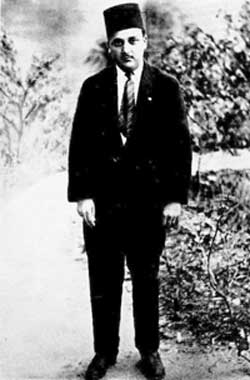
The Bahá'í Chronicles archive devotes a chapter to the foundation of the South African Bahá'í community in the early 1950s. The community came into being, the Chronicles record, under particularly demanding circumstances — the country had, in 1948, formally adopted the system of racial segregation that would become known as apartheid; and the Bahá'í teachings, on every point, opposed the new legal order.
The opening of the South African field was part of Shoghi Effendi's Ten Year Crusade — the global teaching plan that he launched in 1953 from his post as Guardian of the Bahá'í Faith in the Holy Land. Pioneers were invited to settle in each of the territories of the world that had not yet been opened to the Cause; South Africa, with its complex social order, was identified as one of the priority destinations.
The first Bahá'í pioneers arrived in Johannesburg, Cape Town, and Durban in the early years of the Crusade. Several were Americans — including the African-American Bahá'ís Betty Reed and Reginald Newkirk — who had specifically requested the South African posting. Others were British and European believers who had heard the call.
The first declarations of South African nationals came within the first three years. The Chronicles preserves the names of several of the early believers — Black, white, Coloured, and Indian — who heard the Bahá'í teachings, recognised their correspondence with their own deepest convictions, and formally enrolled.
The challenge before the new community was profound. The apartheid laws prohibited racial mixing at meetings, restaurants, public events, and most forms of social gathering. The Bahá'í practice of integrated worship — required by the central teachings of the Faith — was, on its face, illegal under several apartheid statutes.
The community made a deliberate decision. It would hold its gatherings as the Faith required: open to all races, all classes, all language groups. The Chronicles record several early Bahá'í Feasts held in racially integrated form despite the laws. The pioneers and the early local believers accepted, as a calculated risk, the possibility of arrest.
In a few cases the risk was realised. Bahá'í homes were raided. Believers were questioned. Several pioneers were deported. The community persisted.
The decades that followed saw the gradual growth of the South African Bahá'í community. By the time apartheid fell in 1994 the community numbered, by the Chronicles' estimate, several thousand. The first Local Spiritual Assembly elected under fully democratic conditions — including all races on equal terms — had been the small group that had constituted itself in Johannesburg in 1956, in a year when no such assembly was legal.
The South African Bahá'í community had, in its small way, prefigured the multi-racial constitutional order that the country would adopt a generation later. The Faith that had been planted under apartheid had, in its lived practice, demonstrated the alternative.
Source: Bahá'í Chronicles archive on the early South African Bahá'í community; see https://bahaichronicles.org for full text.
Record yourself reading this story
Recording stays on this device only. Nothing is uploaded.
Related stories
The Friends Who Met Anyway
In a faraway land where the law kept people apart, a small group of new friends decided to meet together for prayer — even when meeting together was against the rules.
The Most Vital and Challenging Issue: Shoghi Effendi on Race
In *The Advent of Divine Justice* (1939), Shoghi Effendi laid before the American Bahá'ís the work that would prove central to their century: the task of overcoming racial prejudice. White believers were called to abandon their inherited sense of superiority; minority members were to be unhesitatingly given priority — not for sentiment, but for the health of the Faith.
Father Dunn: The Spiritual Conqueror of a Continent
Already past sixty, a travelling salesman named Hyde Dunn and his wife Clara left America to carry the Bahá'í message to a continent where it had never been heard. Town by town across Australia they planted the Faith, and Shoghi Effendi gave them the names by which they are remembered — "Father" and "Mother" Dunn, and Australia's "spiritual conqueror."
‘Abdu’l-Bahá Abbas
‘Abdu’l-Bahá spent His early years in an environment of privilege, wealth, and love. ** ‘Abdu’l-Bahá…