The First Summer
'Abdu'l-Bahá, 'Abdu'l-Bahá in London, (1912) · Read original
When in Bahá'í history
London (today: London, UK)
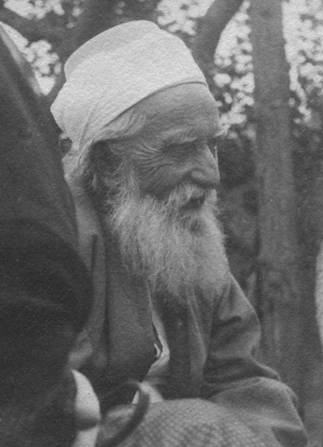
“We had no communication whatever with the out-side world. Each loaf of bread was cut open by the guard to see that it contained no message. All who believed in the Bahá’í manifestation, children, men and women, were imprisoned with us. There were one-hundred and fifty of us together in two rooms and no one was allowed to leave the place with the exceptions of four persons, who went to the bazaar to market each morning, under guard. The first summer was dreadful. Akká is a fever-ridden town. It was said that a bird attempting to fly over it would drop dead. The food was poor and insufficient, the water was drawn from a fever-infected well and the climate and conditions were such, that even the natives of the town fell ill. Many soldiers succumbed and eight out of ten of our guard died. During the intense heat, malaria, typhoid and dysentery attacked the prisoners, so that all, men, women and children, were sick at one time. There were no doctors, no medicines, no proper food, and no treatment of any kind.
“I used to make broth for the people, and as I had much practice, I make good broth,” said ‘Abdu’l-Bahá laughingly.
At this point one of the Persians explained to me that it was on account of ‘Abdu’l-Bahá’s wonderful patience, helpfulness, and endurance that he was always called “The Master.” One could easily feel his mastership in his complete severance from time and place, and absolute detachment from all that even a Turkish prison could inflict.
Source: 'Abdu'l-Bahá, 'Abdu'l-Bahá in London (1912). Public domain text from Project Gutenberg eBook #19250.
Cite this story
'Abdu'l-Bahá. (1912). *'Abdu'l-Bahá in London*. https://www.gutenberg.org/cache/epub/19250/pg19250-images.html
Record yourself reading this story
Recording stays on this device only. Nothing is uploaded.
Related stories
Some of the Experiences of His Forty Years’ Imprisonment
In an apartment in Cadogan Gardens sits a spiritually illumined Oriental, whose recent advent in London marks the latest junction of the East and West.
‘Abdu’l-Bahá Tells of His Imprisonment
In London in September 1911 a journalist asked ‘Abdu’l-Bahá about His prison life. He told of exile, the first terrible summer in ‘Akká, the Sultan’s hostile committee and His release, and said that freedom is not a matter of place.
Freedom Is Not a Matter of Place
In London in 1911 the journalist Isabel Fraser asked 'Abdu'l-Bahá how He had felt in prison. He told her the story of His exile and imprisonment and said He had been happy all that time, for the prison of self is the greater prison.
Mírzá Ja‘far and the Prayer for Healing
A learned seeker from Yazd became a carpenter in Baghdad, gathered provisions for the exiles on the road to Constantinople, and served in the ‘Akká barracks, where he revived after Bahá’u’lláh bade that the prayer for healing be chanted.