Art Is Worship
'Abdu'l-Bahá, 'Abdu'l-Bahá in London, (1912), Bahá'í Publishing Trust · Read original
When in Bahá'í history
London (today: London, United Kingdom)
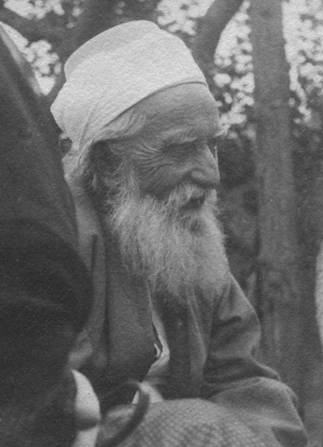
‘Abdu’l-Bahá in London, the record of ‘Abdu’l-Bahá’s visit to England in the autumn of 1911, includes among its notes of conversations a short section headed “Art.”
A painter, a woman, asked Him: “Is art a worthy vocation?” The book says that ‘Abdu’l-Bahá turned to her “impressively” and said: “Art is worship.”
An actor then spoke of the drama and its influence. ‘Abdu’l-Bahá replied:
The drama is of the utmost importance. It has been a great educational power in the past; it will be so again.
He went on to describe how, as a young boy, He had seen the Mystery Play of ‘Alí’s Betrayal and Passion. The record says it affected Him so deeply that He wept and could not sleep for many nights.
Two other conversations in the same book touch on this subject. In one, the notes record that Bahá’u’lláh “had also in His writings given a most important place to Art, and the practice of skilled trades,” and “had stated that the practice of an Art or Trade in the true spirit of service was identical with the worship of God.” In another, ‘Abdu’l-Bahá said:
There are no solitaries and no hermits among the Bahá’ís. Man must work with his fellows. Everyone should have some trade, or art or profession, be he rich or poor, and with this he must serve humanity. This service is acceptable as the highest form of worship.
A retelling based on ‘Abdu’l-Bahá in London (the sections headed “Art,” “Science and Faith” and “Christ and Bahá’u’lláh”). For the fuller account, see the original.
Cite this story
'Abdu'l-Bahá. (1912). *'Abdu'l-Bahá in London*. Bahá'í Publishing Trust. https://www.gutenberg.org/ebooks/19250
Record yourself reading this story
Recording stays on this device only. Nothing is uploaded.
Related stories
Two Arts
In 'Akká in 1909 Juliet Thompson gave 'Abdu'l-Bahá her mother's wish that she give up teaching the Faith for her painting. He told her to do both, and gave her a message about her two arts to take home.
Paint My Servitude to God
In June 1912 'Abdu'l-Bahá sat for the painter Juliet Thompson in New York. At the first sitting, in a cramped and dark entrance hall, He asked her to paint His Servitude to God.
The Master Arrives in Denver
After a sleepless night on the train, ‘Abdu’l-Bahá reached Denver on 23 September 1912. Within hours He was meeting reporters, and that evening He spoke to a crowded gathering at the home of Mrs. Roberts.
From Famine Relief to Knighthood
Before the First World War ‘Abdu’l-Bahá had villagers grow and store corn, which fed the poor of Haifa and ‘Akká through the famine years. After the British occupation He was knighted, in April 1920.