The Master in the Garden of Riḍván
bahaistories.com archive · Read original
When in Bahá'í history
Baghdád (today: Baghdad, Iraq)
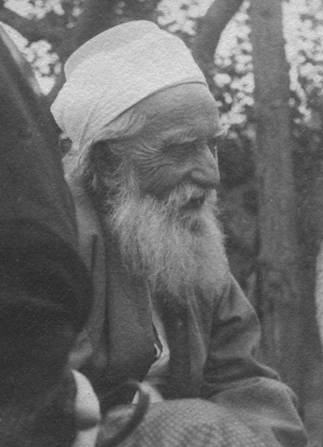
The Master, as He was now called, shielded His adored Father in all ways that lay in His power from undesirable intruders, from the world's insistence, and from those who merely wanted idly to see and to hear something new. He made the arrangements for the Beloved One to go to the Ridvan garden, there to abide until the family should have been able to make preparations for the departure.
Whilst He tarried in the Ridvan, the appointed time had arrived for the momentous proclamation. Bahá’u’lláh confided to the eldest son, ‘Abbás, the Master, that He Himself was "He Whom God shall make Manifest," heralded by the Forerunner, the Báb. As the Master heard the soul-stirring words, and realized that His own beloved Father was He Who should educate mankind in universal conceptions, abolish prejudices, bring unity and the most Great Peace into the distracted world, establish the Kingdom of God upon this sad earth, by making religion again a healing spring for all woes of the world, He understood why the Manifestation had once again become the cause of evil men's hatred and malignant persecution.
As these things were pondered by the Master, His mind, well-endowed with a peculiar receptiveness that was inborn, and strengthened by the education given to Him by His Father, saw, as in a radiant vision, the world of the future, when the divine Message, having become known and comprehended by "men of goodwill," would change the heart of the world, and the Kingdom where God's will shall be done on earth - for which we have been praying for nigh two thousand years - would be established.
Henceforth a new joy and increased devotion to His Father, Bahá’u’lláh (The Glory of God) took possession of Him. He consecrated Himself, body and soul and spirit, to the sacred work of the Bahá’í Cause, spreading abroad the new message of Love and Justice, that message which His Holiness the Lord Christ had brought to man, and which man had grown to disregard, forgetting his loyalty to the Lord of Compassion, and, as of old, worshipping the Golden Calf.
Source: Lady Blomfield, The Chosen Highway, Part II, chapter “‘Abdu’l-Bahá” (from the account of Munírih Khánum).
Collected from bahaistories.com (Subject: bahaullah-declaration).
Cite this story
Various. *bahaistories.com archive*. https://bahaistories.com/subject/bahaullah-declaration
Record yourself reading this story
Recording stays on this device only. Nothing is uploaded.
Related stories
Leaving Baghdad
Bahíyyih Khánum recalls the order that sent Bahá'u'lláh from Baghdad to Constantinople, the grief of His followers, and how the family went to live in tents in a friend's garden until the departure.
The Swollen River and the Ninth Day
Bahá'u'lláh entered the Garden of Riḍván on 22 April 1863. That same day the Tigris overflowed, and the rest of His family could not join Him until the ninth day, which Bahá'ís now keep as a Holy Day.
The Order of Separation at Adrianople
Bahíyyih Khánum recalls how, when Bahá’u’lláh was banished from Adrianople, a false report that He would be parted from His family and followers led one of them to try to take his own life, until ‘Abdu’l-Bahá’s protest kept them together.
The Childhood of ‘Abdu’l-Bahá
At eight ‘Abdu’l-Bahá grieved over His Father’s sufferings; in Baghdad He prayed without ceasing while Bahá’u’lláh was away in Sulaymaniyyih, rejoiced at His return, and drank in the teaching at the gatherings by the Tigris.