Women IN THE BAHÁ'Í Revelation
Julia M. Grundy, Ten Days in the Light of Akka, (1907) · Read original
When in Bahá'í history
Baghdád (today: Baghdad, Iraq)
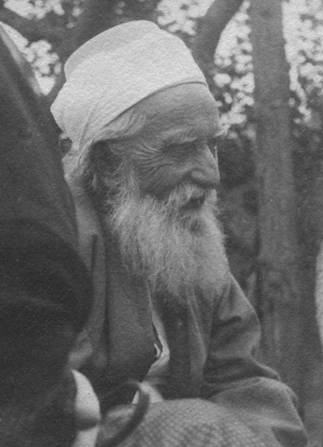
“Why are women so favored in this Revelation?” “Women in Persia were treated badly in former times by the Muhammadans. When speaking evil of a man, they would say, 'He is just like a woman.' When they wished to lower a man's pride, they would say, 'He is a woman, not a man.' In this Day see what great firmness and strength women are showing for God. The way to spiritual attainment in this Dispensation will be made more and more easy for women, for they are more devoted and zealous in this Cause than men. How many women are higher than men in moral and spiritual development! How much more eloquent in the Cause of God! Women are held in great honor in this Day. In Persia a handsome youth of twenty, son of a believer, was despised and oppressed for announcing his belief in this Revelation. He was imprisoned. His oppressors offered to release him provided he would deny his faith. He still remained steadfast, saying, 'I will give my life willingly for my belief.' He came from a very well known and respected family. His mother was asked to speak with him, his persecutors thinking her influence might induce him to recant and save his life. She told them her words would have no effect upon him except to increase his faith. Then she was told he would be killed. The Governor sent him word that if he would renounce his faith his life would be spared. Still he remained fixed and steadfast. His friends pleaded with him, begging him for their sakes to change. Then his mother stood up beside him and kissed him, saying, 'Do not be shaken! Do not waver! Be firm! Give your life to God! Say nothing that will deny His Cause! Glorify it by your death! If you deny or waver, you will no longer be my child!' She stood beside him as he was beheaded, pleading with him to the last that he might not deny the Truth. In this Dispensation the women will progress more rapidly and to a higher station than the men. God will assist them.” “Qurratu'l-Ayn (literally, 'consolation of the eye') was one of the greatest and most heroic women of this Truth. She came from a learned family and deeply loved knowledge. If Fátimih, daughter of Muhammad, had been a boy and enjoyed greater opportunities, she would have elevated her family and become a mighty pillar in the temple of Religion. While Qurratu'l-Ayn was visiting her cousin's home, she happened to read a pamphlet explaining the Mission of the Báb. She instantly became a believer. Afterward she was taught by the Báb Himself and received her name Qurratu'l-Ayn from Him. Some say she was taught in Baghdad by the command of the Báb. She was independent and absolutely fearless. Upon her return home, her husband refused to recognize her, so she left his house. Her uncle was killed in a Mosque for his Bábí faith, and for a time she was kept prisoner in his house. After being released, she went with a number of believers to a celebration outside the city, in a grove near a deserted village. The Blessed Perfection was present. It was a meeting filled with faith, love, and rejoicing. In speaking to the meeting, she became so inspired she removed the cover from her face. Her mother and some of her relatives were present, and her action produced a great commotion among them. When the news came to the ears of the Muhammadans, their charges and persecutions against her became violent and bitter. Finally, she was taken away from her friends and put to death. She died a martyr and a heroine. In her impassioned speech she had said, 'What God has created pure shall I call impure?' removing her veil as she said it. She spent the night before her execution in prayer. Her last wish was that she might be strangled instead of decapitated. Once at a wedding all present left the bride and gathered around Qurratu'l-Ayn; she was so eloquent and sincere. She knew the Blessed Perfection before He declared Himself to be the Manifestation of God. In herself she was a revelation to the women of the world. If this Revelation had produced only one martyr like Qurratu'l-Ayn, this would be sufficient proof in the Cause of God.”
Source: Julia M. Grundy, Ten Days in the Light of Akka (1907). Available at bahai-library.com.
Cite this story
Grundy, J. M.. (1907). *Ten Days in the Light of Akka*. https://bahai-library.com/grundy_ten_days_akka
Record yourself reading this story
Recording stays on this device only. Nothing is uploaded.
Related stories
THE MOST GREAT PEACE
Today there is no greater glory for man than that of service in the cause of the “Most Great Peace.” Peace is light whereas war is darkness. Peace is life; war is death. Peace is guidance; war is error. Peace is the foundation of God;…
The story of ‘Abdu’l-Baha – Part 1: 1844-1908
The life of 'Abdu'l-Baha is very significant among the lives of the past heavenly educators.
“O thou who art attracted to the Beauty of Abha!...”
O thou who art attracted to the Beauty of…
‘Abdu’l-Bahá Abbas
‘Abdu’l-Bahá spent His early years in an environment of privilege, wealth, and love. ** ‘Abdu’l-Bahá…