May Maxwell's Letter from Montreal
Star of the West Editors, Star of the West, (1912), Bahai News Service · Read original
When in Bahá'í history
Montreal (today: Montreal, Canada)
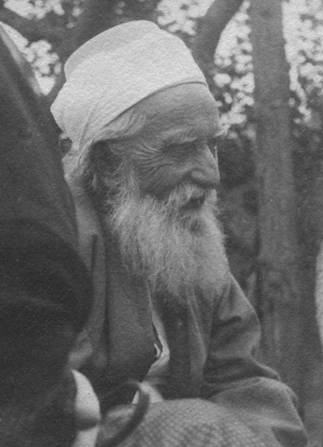
Volume 3, No. 1 of the Star of the West, dated 21 March 1912, printed a letter from May Bolles Maxwell in Montreal. May had married the Canadian architect William Sutherland Maxwell in 1902 and lived with him in Montreal.
She began by writing that the great work of preparation for the coming of 'Abdu'l-Bahá was going forward everywhere, and that the friends might wish to know of the progress in Montreal and of the widespread change taking place in Canada. Old systems, she wrote, were giving way to new social and political groups, and personal power and authority to principles of justice and truth and a higher conception of human brotherhood.
She then described the winter's events. Early in January a Persian visitor had come to Montreal and announced the coming of 'Abdu'l-Bahá to America. Among those who heard him were the leader of the Socialist party of Montreal and other socialists, the editor of the leading newspaper of Canada, and several people connected with public work. The paper afterwards published a very good article on the Bahá'í Message and the coming visit. A few weeks later a Montreal Bahá'í spoke on the significance of the Master's visit to the West. Then Honoré Jaxon of Chicago, just back from working among organized labour and socialists in England, presented the Bahá'í Message from the standpoint of the working-class movement, and spoke to bodies and societies in Montreal, Ottawa, Toronto and Quebec. May hoped that the good-will these talks created would open many doors for the reception of 'Abdu'l-Bahá. She closed:
The friends in Montreal unite in sending sincere love and greetings to their fellow Bahais and to all those who are seeking the highest welfare of mankind and the enlightenment of the world.
'Abdu'l-Bahá arrived in Montreal on 30 August 1912. He spoke at the Maxwell home at 716 Pine Avenue West, at the Church of the Messiah and at St. James Methodist Church, and He addressed a meeting of the Socialist Club. He left Montreal on 9 September. It was His only visit to Canada.
A retelling based on Star of the West, Volume 3, No. 1 (March 21, 1912), "Letter from Montreal" by May Maxwell, with the dates of the Master's visit from Mahmúd's Diary and The Promulgation of Universal Peace. For the fuller account, see the original.
Cite this story
Editors, S. O. T. W.. (1912). *Star of the West*. Bahai News Service. https://bahai-library.com/star_of_the_west_volume_1
Record yourself reading this story
Recording stays on this device only. Nothing is uploaded.
Related stories
All the Doors Open in Montreal
In a Tablet to the Bahá’ís of Canada, ‘Abdu’l-Bahá recalls how He was warned not to go to Montreal, and how, trusting in God, He went and found every door open and the hearts receptive.
May Bolles and the First Centre in Europe
Returning to Paris from her 1898–99 pilgrimage to 'Akká, May Bolles established, at 'Abdu'l-Bahá's instruction, the first Bahá'í centre on the European continent, where Thomas Breakwell, Hippolyte Dreyfus and Laura Barney came to the Faith.
Agnes Alexander's Letter from Tokyo
In 1914 'Abdu'l-Bahá advised Agnes Alexander to go to Japan. Her 1916 letter from Tokyo, printed in the Star of the West, tells of her weekly meetings, the students who came to her, and the Esperantists who helped spread the teachings.
Munírih Khánum Comforts a Pilgrim
On the first Western pilgrimage, a young American said she was now an orphan because her parents did not believe. Munírih Khánum embraced her and brought her to ‘Abdu’l-Bahá, Who told her that the ties of the spirit are all.