The House of Worship in 'Ishqábád
Star of the West Editors, Star of the West, (1910), Bahai News Service · Read original
When in Bahá'í history
'Ishqábád (today: Ashgabat, Turkmenistan)
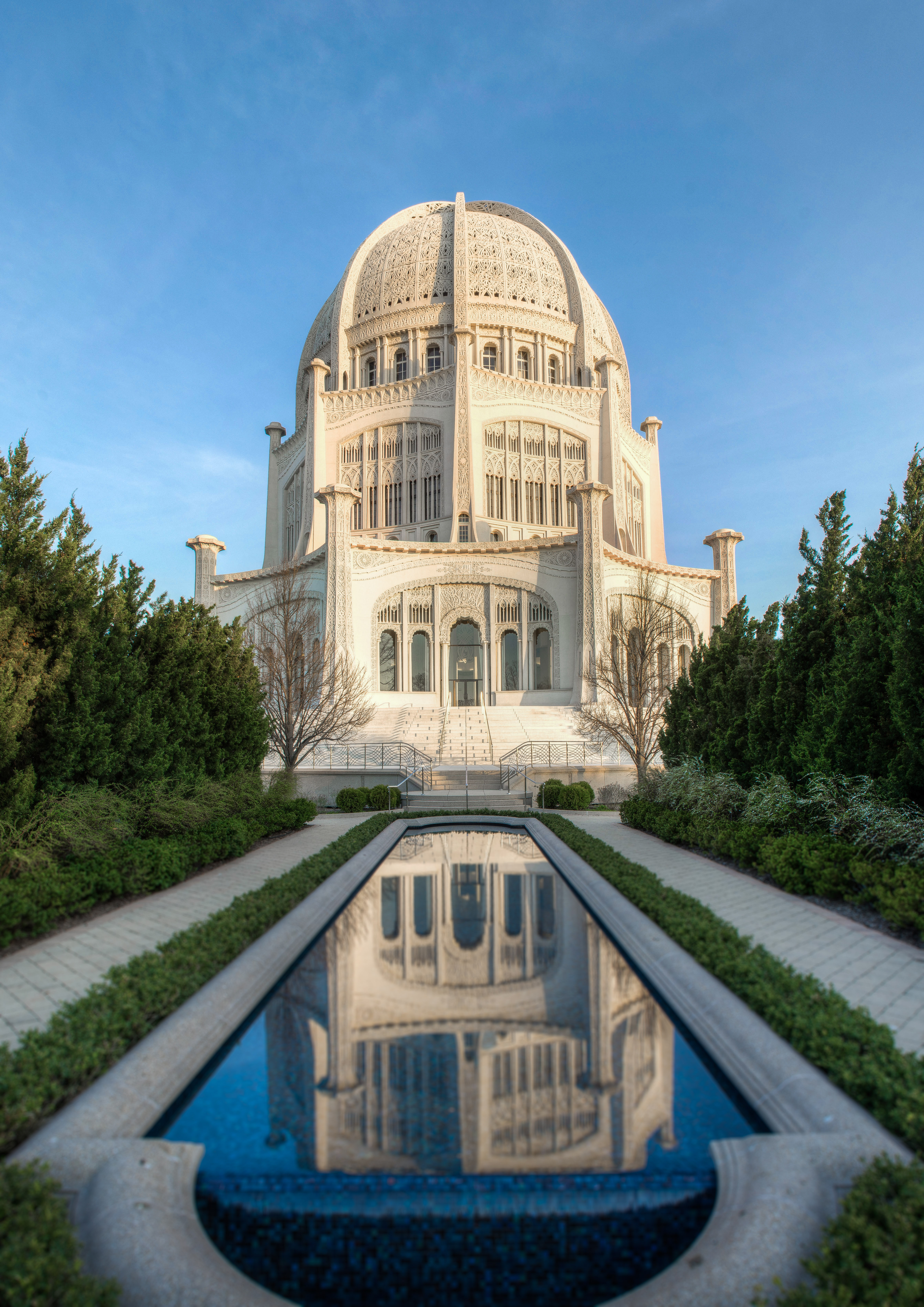
The early issues of Star of the West, the American Bahá'í periodical founded in 1910, return often to a building on the far side of the world: the Mashriqu'l-Adhkár of 'Ishqábád, in the Russian province of Trans-Caspia in Central Asia, today Ashgabat in Turkmenistan. It was the first Bahá'í House of Worship ever built.
Many Persian Bahá'ís had settled in 'Ishqábád after the Russian conquest of the region in the 1880s, finding there a freedom they did not have at home. In or about 1902, at the initiative of 'Abdu'l-Bahá, they began to build. The chief builder was a cousin of the Báb, Ḥájí Mírzá Muḥammad-Taqí, known as the Afnán and by his state title Vakílu'd-Dawlih. A photograph caption in Star of the West in 1910 describes him as the aged Afnán who supervised the building, and a notice of his passing in 1911 says that he laid its first stone. As soon as it was finished, 'Abdu'l-Bahá called him to the Holy Land, where he spent the rest of his days. The design is credited to Ustád 'Alí-Akbar Banná of Yazd.
When the American friends began gathering funds for their own Temple, 'Abdu'l-Bahá held up 'Ishqábád as their example:
In Eshkabad, the believers of God made the erection of the Temple conducive to affinity and unity, so that it really became the cause of Oneness of the Word.
He also said that its influence had been felt in all the Oriental countries, and that whoever heard of it had begun to investigate the Cause.
On May 1, 1912, at the dedication of the Temple grounds near Chicago, He described it to the American friends. All the believers of 'Ishqábád, He said, had put forward the greatest effort, and the Afnán had devoted all his wealth to it. The building was now almost complete, with all its gardens. He pictured a lofty edifice in the center, with nine avenues, nine gardens, nine ponds and nine fountains, "nine on nine, all nines," like a beautiful bouquet. A hospital, a school for orphans, a home for the disabled, a large dispensary and a hospice were being planned around it. "When that, God willing, shall be completed," He said, "it will be a Paradise!" He added that He hoped it would be like this in Chicago.
Under Soviet rule the building was expropriated in 1928. The Bahá'ís were allowed to go on using it until 1938, when it was taken from them and turned into an art gallery. An earthquake in 1948 badly damaged it, and in 1963 what remained was demolished.
A retelling based on articles in Star of the West, vols. 1–3 (1910–1912), including 'Abdu'l-Bahá's address at the dedication of the Temple grounds near Chicago, May 1, 1912. For the fuller account, see the originals.
Cite this story
Editors, S. O. T. W.. (1910). *Star of the West*. Bahai News Service. https://bahai-library.com/star_of_the_west_volume_1
Record yourself reading this story
Recording stays on this device only. Nothing is uploaded.
Related stories
The Founding of Bahá'í Temple Unity
In March 1909 thirty-nine delegates from thirty-six cities met in Chicago and formed Bahá'í Temple Unity, the national body that would hold the land and raise the funds for the first House of Worship in the West.
Corinne True and the Temple Fund
As financial secretary of Bahai Temple Unity, Corinne True of Chicago gathered gifts from across America and the East for the House of Worship at Wilmette. She lived to see it dedicated in 1953 and was known as the Mother of the Temple.
The First House of Worship at 'Ishqábád
In 'Ishqábád, in Russian Turkistán, the Bahá'ís raised the first Mashriqu'l-Adhkár of the Bahá'í world, begun in 1902 under 'Abdu'l-Bahá's guidance, with a school, a travellers' house and a building for a hospital in its garden.
Sarah Farmer and Green Acre
In 1894 Sarah Farmer opened Green Acre in Eliot, Maine, as a summer platform for speakers of every religion. After her pilgrimage to 'Akká in 1900 she offered it to the Bahá'ís, and in 1912 'Abdu'l-Bahá spent a week there and prayed for her.