The Garden of God
bahaistories.com archive · Read original
When in Bahá'í history
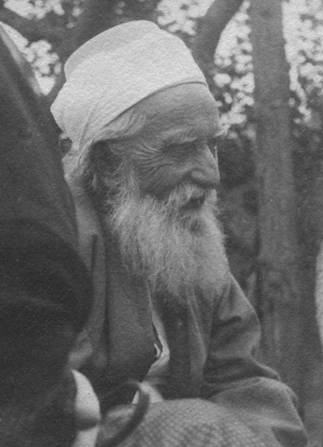
Ridvaniyyih Khánum related that when her child was ill, the Master came and gave two pink roses to the little one, then, turning to the mother, He said in His musical voice so full of love: "Be patient." That evening the child passed away.
"Ridvaniyyih," said the Master, "there is a Garden of God. Human beings are trees growing therein. The Gardener is Our Father. When He sees a little tree in a place too small for her development, He prepares a suitable and more beautiful place, where she may grow and bear fruit. Then He transplants that little tree. The other trees marvel, saying: 'This is a lovely little tree. For what reason does the Gardener uproot it?' "The Divine Gardener, alone, knows the reason.
"You are weeping, Ridvaniyyih, but if you could see the beauty of the place where she is, you would no longer be sad. "Your child is now free, and, like a bird, is chanting divine joyous melodies. "If you could see that sacred Garden, you would not be content to remain here on earth. Yet this is where your duty now lies."
When my own mother made the "great change" from one world of God to another, ‘Abdu’l-Bahá wrote a very beautiful tablet to me, in which He spoke of my mother as being "in the garden of rejuvenation." One day a friend, who had not yet heard of the tablet of the Master, told me of a vivid dream she had of my mother, whom she had known and loved. "I seemed to be in a marvellous garden, where every type of rare and beautiful flower was in bloom. Moving about among the flowers was a young girl. She seemed to be in a state of inexpressible joy over the loveliness of her garden. Her voice, as she chanted, was full of the ecstasy of a complete happiness. She listened to the song of birds, and inhaled the odour of the flowers as though she were filling her soul with their fragrance. Suddenly she turned towards me, as though conscious that someone was there beside herself. The young girl facing me with an enchanting smile was your mother, in the full beauty of youth."
Source: Lady Blomfield, The Chosen Highway, pp. 216–17.
Collected from bahaistories.com (Subject: death).
Cite this story
Various. *bahaistories.com archive*. https://bahaistories.com/subject/death
This story shares quotes with 1 other story
“If you could see that sacred Garden, you would not be content to remain here on earth. Yet this is where your duty now lies.”
Also in
- Two Pink Roses for a Little Girl— Various, Baha'i Stories for Children
Record yourself reading this story
Recording stays on this device only. Nothing is uploaded.
Related stories
A Child Recognizes the Master’s Picture
Two days before ‘Abdu’l-Bahá left Paris, a mother arrived from America. Her small daughter had pointed at His picture in a magazine store window, and she had caught a boat that same night.
Two Pink Roses for a Little Girl
When a little girl was ill, 'Abdu'l-Bahá brought her two pink roses. After she passed away, He consoled her mother by describing the Garden of God, where the Divine Gardener transplants a little tree to a more beautiful place.
O Bird of the Rose-Garden of Fidelity!
O bird of the Rose-garden of Fidelity! Be of no cheerless heart; have no wing nor feather broken; sigh not, neither do thou wail, and sit not chilled in a corner.
The Golden Rain
Lady Blomfield told of seeing broad rays of golden light pour from ‘Abdu’l-Bahá over a London congregation as He spoke, flooding some people and avoiding others completely.