A Bahá’í Wedding in London
bahaistories.com archive · Read original
When in Bahá'í history
London (today: London, United Kingdom)
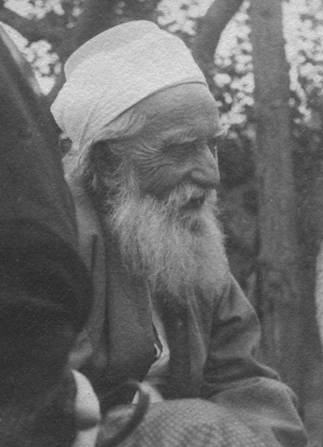
Quite an oriental note was struck toward the end of ‘Abdu’l-Bahá's London visit, by the marriage of a young Persian couple who had sought His presence for the ceremony, the bride journeying from Baghdad accompanied by her uncle in order to meet her fiance here and be married before ‘Abdu’l-Bahá's departure. The bride's father and grandfather had been followers of Bahá’u’lláh during the time of His banishment.
We hesitate to alter the bridegroom's description of the service and therefore print it in his own simple and beautiful language. It will serve to show a side not touched on elsewhere, and without which no idea of His visit is complete. We refer to the attitude of reverence with which people from the East who came to see ‘Abdu’l-Bahá regard their great teacher. They invariably rise and stand with bowed heads whenever He enters the room.
Mírzá Dáwúd writes:
On Sunday morning, the 1st of October, 1911, A.D., equal to the 9th Tishi 5972 (Hebrew Era), Regina Núr Mahal Khánum, and Mírzá Yuhanna Dáwúd were admitted into the holy presence of ‘Abdu’l-Bahá: may my life be a sacrifice to Him!
After receiving us, ‘Abdu’l-Bahá said, "You are very welcome and it makes me happy to see you here in London."
Looking at me He said, "Never have I united anyone in marriage before, except my own daughters, but as I love you much, and you have rendered a great service to the Kingdom of Abhá, both in this country and in other lands, I will perform your marriage ceremony today. It is my hope that you may both continue in the blessed path of service."
Then, first, ‘Abdu’l-Bahá took Núr Mahal Khánum into the next room and said to her, "Do you love Mírzá Yuhanna Dáwúd with all your heart and soul?" She answered, "Yes, I do."
Then ‘Abdu’l-Bahá called me to Him and put a similar question, that is to say, "Do you love Núr Mahal Khánum with all your heart and soul?" I answered "Yes, I do." We re-entered the room together and ‘Abdu’l-Bahá took the right hand of the bride and gave it into that of the bridegroom and asked us to say after Him, "We do all to please God."
We all sat down and ‘Abdu’l-Bahá continued; "Marriage is a holy institution and much encouraged in this blessed cause. Now you two are no longer two, but one. Bahá’u’lláh's wish is that all men be of one mind and consider themselves of one great household, that the mind of mankind be not divided against itself.
"It is my wish and hope that you may be blessed in your life. May God help you to render great service to the kingdom of Abhá and may you become a means of its advancement.
"May joy be increased to you as the years go by, and may you become thriving trees bearing delicious and fragrant fruits which are the blessings in the path of service."
When we came out, all the assembled friends both of Persia and London congratulated us on the great honour that had been bestowed upon us, and we were invited to dine by the kind hostess.
Source: ‘Abdu’l-Bahá in London (1912), “A Bahá’í Wedding”, pp. 77–79.
Collected from bahaistories.com (Subject: weddings).
Cite this story
Various. *bahaistories.com archive*. https://bahaistories.com/subject/weddings
Record yourself reading this story
Recording stays on this device only. Nothing is uploaded.
Related stories
A Persian Wedding in London
Before leaving London, ‘Abdu’l-Bahá married a young Persian couple, asking each whether they loved the other with all their heart and soul. The writer recalls the simplicity of His own wedding and His words on the holiness of marriage.
Why the Master Bore the Hardships of Travel
Riding to a hotel in Chicago, ‘Abdu’l-Bahá explained that He bore the hardships of His travels in America because He feared that, after Him, self-seeking persons might disturb the love and unity of the friends.
No Golden Trowel
At the dedication of the Wilmette Temple site on 1 May 1912, ‘Abdu’l-Bahá set aside the golden trowel He was given and broke the ground with an ordinary axe and shovel.
Four Travellers and the Grapes
To show the need for one common language, ‘Abdu’l-Bahá told of four hungry travellers who quarrelled over what to buy for supper until a donkey laden with grapes showed that all four wanted the same thing.