The Station of Man: 'Abdu'l-Bahá at Howard University
'Abdu'l-Bahá, The Promulgation of Universal Peace, (1922), Bahá'í Publishing Trust · Read original
When in Bahá'í history
Washington, D.C. (today: Washington, D.C., USA)
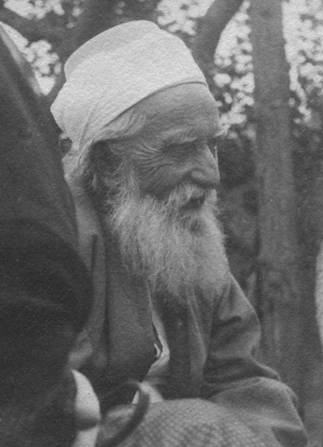
‘Abdu’l-Bahá’s American tour was deliberate in its choices. On the afternoon of the 22nd of April, 1912 — only days after His arrival in Washington, D.C. — He went to Howard University, the historically Black institution at the centre of African American higher education in the capital. He had not come to Washington to address only the parlours of the city’s wealthy. He had come to address everyone, and He intended His presence in that hall to be itself a teaching.
The lecture room filled. Black students, white faculty, visitors who had come specifically to see Him assembled in the same space. The Master rose and chose, deliberately, the highest possible subject.
The station of man is great, very great. God has created man after His own image and likeness.
He went on to draw the contrast that ran through so many of His addresses on the journey. The animal kingdom, however magnificent, is bounded by its instincts. The human being is the only creature who can inquire beyond what its senses report — who can investigate the mysteries of nature, who can know the laws of the heavens, who can recognize, however dimly, the divine spark placed within it.
This was not abstract teaching for that audience. The room held many who had been told, every day of their lives by the racial ideology of the country, that they were not made in any image worth honouring. The Master’s sentence — that man is created in the image of God — was set down in front of them as a principle that did not admit of subtraction.
He encouraged the students to seek not only material knowledge but spiritual advancement; to use the disciplines they were studying in service to humanity; and, by the conduct of their own lives, to prove the dignity of every human soul.
The talk was brief. The witness, in 1912, was not. ‘Abdu’l-Bahá had walked into a Black university and said, in the plainest language available, the sentence the country had been refusing to say.
Source: 'Abdu'l-Bahá, The Promulgation of Universal Peace, talk of April 22, 1912 at Howard University, Washington, D.C. Public domain text from the Bahá'í Reference Library.
Cite this story
'Abdu'l-Bahá. (1922). *The Promulgation of Universal Peace*. Bahá'í Publishing Trust. https://www.bahai.org/library/authoritative-texts/abdul-baha/promulgation-universal-peace/
Record yourself reading this story
Recording stays on this device only. Nothing is uploaded.
Related stories
THE SOURCE OF UNITY
What is real unity? When we observe the human world we find various collective expressions of unity therein. For instance, man is distinguished from the animal by his degree or kingdom. This comprehensive distinction includes all the…
Eighteen Hundred Students: 'Abdu'l-Bahá at Stanford
On October 8, 1912, Mírzá Maḥmúd records, 'Abdu'l-Bahá addressed an audience of approximately 1,800 students and 180 professors at Leland Stanford Junior University in Palo Alto — the largest single audience of His American journey, gathered in the university chapel to hear a Persian teacher speak on universal peace.
"Do You Teach the Spiritual Things?" — Stanwood Cobb
A Harvard-trained teacher, proud of the Latin, algebra, and geometry he drilled into his pupils, met 'Abdu'l-Bahá and was asked one quiet question that exposed the great gap in modern education. Stanwood Cobb spent the rest of his long life — he lived to 101 — trying to put back what his schooling had left out.
A Garden of Many Flowers: 'Abdu'l-Bahá in Paris
In a Paris drawing-room in the autumn of 1911, 'Abdu'l-Bahá answered the world's fear of difference with the image of a garden. A garden of one single flower, He said, would be dull; it is the many colours that make it beautiful. So it is with the human family — and the diversity that men turn into hatred was meant to be the very source of beauty.