Four Proofs and a Prayer at Green Acre
'Abdu'l-Bahá, The Promulgation of Universal Peace, (1922), Bahá'í Publishing Trust · Read original
When in Bahá'í history
Eliot (today: Eliot, Maine, USA)
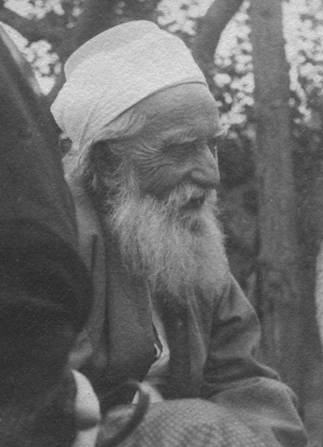
On 16 August 1912 ‘Abdu’l-Bahá came to Green Acre, the conference centre Sarah Farmer had founded on the Piscataqua River at Eliot, Maine. Mírzá Maḥmúd’s diary records that after a short talk at the Inn He visited Miss Farmer, who was unwell, and that she came back with Him to the Inn. That evening, answering questions from the audience, He spoke on the love of God and the immortality of the spirit.
He began with the ways by which the human mind reaches its conclusions:
Proofs are of four kinds: first, through sense perception; second, through the reasoning faculty; third, from traditional or scriptural authority; fourth, through the medium of inspiration.
He took each in turn and showed that none is reliable by itself. The senses err: the eye sees a mirage as a body of water, and to the eye the earth appears fixed while the sun and stars revolve about it. Reason errs: the philosophers who held to it as their standard differed widely among themselves. Tradition depends on how the Holy Books are understood, and their interpreters contradict one another. Inspiration errs: the promptings of the heart are sometimes satanic, and how is one to tell them apart? A statement can be relied upon, He said, only when it has been tested by all four standards together. "When we apply but one test, there are possibilities of mistake."
He then took up "the subject of love which has been suggested," testing it by the same four standards:
We declare that love is the cause of the existence of all phenomena and that the absence of love is the cause of disintegration or nonexistence.
Cohesion in the mineral kingdom, the attraction that forms the cells of a plant, the feelings and affinities of animals, and in man the attraction of hearts that binds people together in friendship: all these, He said, are degrees of love.
He spoke also of the human spirit and its independence from the body. "Man is the sovereign of nature; he breaks nature's laws." The spirit, being "a unit and not a compound," cannot be destroyed.
At the end He said, "Before we leave, I desire to offer a prayer in behalf of Miss Farmer; for, verily, she has been the founder of this organization, the source of this loving fellowship and assemblage." In the prayer He asked God to bestow "quick recovery" on the founder of the Association, who "has established these conferences in order that reality might be investigated and the light of reality shine."
A retelling based on The Promulgation of Universal Peace ('Abdu'l-Bahá), talk of 16 August 1912 at Green Acre, Eliot, Maine (notes by Edna McKinney), with details from Mahmúd's Diary (16 August 1912). For the fuller account, see the originals.
Cite this story
'Abdu'l-Bahá. (1922). *The Promulgation of Universal Peace*. Bahá'í Publishing Trust. https://www.bahai.org/library/authoritative-texts/abdul-baha/promulgation-universal-peace/
Record yourself reading this story
Recording stays on this device only. Nothing is uploaded.
Related stories
Love Is the Foundation of Everything
On pilgrimage in 1909, Ethel Rosenberg asked ‘Abdu’l-Bahá how the friends could increase their numbers. He answered that they should love each other very much, for love is the foundation of everything.
On Fire with the Love of the Kingdom
At his last meeting with ‘Abdu’l-Bahá in the United States, Stanwood Cobb was embraced and told three times, “Be on fire with the love of the Kingdom!” He later reflected that these nine words summed up the Master’s teaching.
Yet He Loved Them All
In Julia Grundy's pilgrim notes from 'Akká, 'Abdu'l-Bahá is asked how we can love someone whose personality is unpleasant. His answer points to Christ, who loved even those who crucified Him, and to the tree whose fruit is love.
Sarah’s Vision of Peace
Sarah Farmer's vision of Green Acre as a place of peace and learning for all races and religions found its true purpose when she met 'Abdu'l-Bahá in 'Akká in 1900, and He visited Green Acre in 1912.