A Statement for Cincinnati
'Abdu'l-Bahá, The Promulgation of Universal Peace, (1922), Bahá'í Publishing Trust · Read original
When in Bahá'í history
Cincinnati (today: Cincinnati, Ohio, USA)
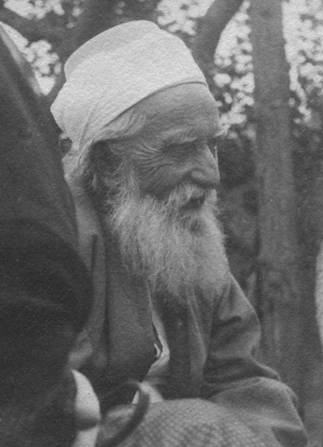
‘Abdu’l-Bahá came to Cincinnati from Chicago on 4 November 1912 to stay one night with the believers there. That evening He spoke to a public meeting at the Grand Hotel. Mahmúd’s diary records that early the next morning He called the friends to Him, and that several representatives of the press came and wrote down His words. He had planned to leave in the morning, but the seekers and friends kept Him until noon, when He left for Washington.
At the Grand Hotel that morning He began: "As we are in Cincinnati, the home of President Taft, who has rendered such noble service in the cause of peace, I will dictate a statement for the people of Cincinnati and America generally." In the East, He said, He had heard that there were many lovers of peace in America, and He had come to meet them. Bahá’u’lláh had taught the unity of nations in the East fifty years before and had written to the kings and rulers of the world. In Persia people of many races and religions, Muslims, Jews, Christians, Buddhists and Zoroastrians, had followed His counsels and were living together without prejudice.
America has arisen to spread the teachings of peace, to increase the illumination of humankind and bestow happiness and prosperity upon the children of men.
Other nations, He said, were not free from intrigues and complications as the United States was; America was at peace with all the world and worthy of raising the flag of international agreement. He recalled that Bahá’u’lláh had asked the parliaments of the world to send their wisest and best men to an international conference that would decide all questions between the peoples and establish universal peace. This would be the highest court of appeal, and its accomplishment would be more far-reaching than the Hague tribunal.
He thanked President Taft for the treaties he had made with various nations, and said that when there was a body of delegates from all the nations, "the utopian dream of sages and poets, the parliament of man, will be realized."
A retelling based on The Promulgation of Universal Peace ('Abdu'l-Bahá), statement of 5 November 1912 at the Grand Hotel, Cincinnati, Ohio (from stenographic notes), with details from Mahmúd's Diary (4–5 November 1912). For the fuller account, see the originals.
Cite this story
'Abdu'l-Bahá. (1922). *The Promulgation of Universal Peace*. Bahá'í Publishing Trust. https://www.bahai.org/library/authoritative-texts/abdul-baha/promulgation-universal-peace/
Record yourself reading this story
Recording stays on this device only. Nothing is uploaded.
Related stories
Mankind Is in Danger
O people of the world! The dawn of the Sun of Reality is assuredly for the illumination of the world and for the manifestation of mercy.
The Most Great Peace
Today there is no greater glory for man than that of service in the cause of the “Most Great Peace.”
'Abdu'l-Bahá at Lake Mohonk
In May 1912 'Abdu'l-Bahá spoke at the peace conference at Lake Mohonk in New York State. Mahmúd's Diary records His address, His comparison of some peace workers to wine sellers, and His farewell gift of a Persian carpet.
'Abdu'l-Bahá at Stanford University
On October 8, 1912, at the invitation of its president, David Starr Jordan, 'Abdu'l-Bahá spoke to some 1,800 students and 180 professors at Leland Stanford Junior University in Palo Alto.