Freedom of Conscience in Brooklyn
'Abdu'l-Bahá, The Promulgation of Universal Peace, (1922), Bahá'í Publishing Trust · Read original
When in Bahá'í history
Brooklyn (today: Brooklyn, NY, USA)
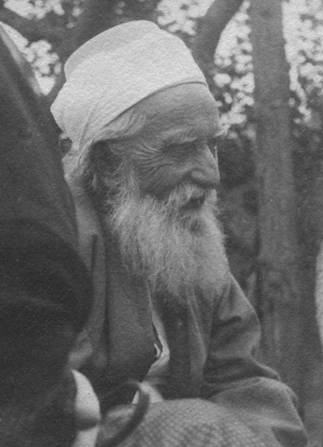
On June 16, 1912, 'Abdu'l-Bahá spoke at the Central Congregational Church on Hancock Street in Brooklyn. It was His second church in Brooklyn that day; that morning He had spoken at the Fourth Unitarian Church in Flatbush. Esther Foster took the notes of the evening address that were later published in The Promulgation of Universal Peace.
He began by praising the church itself as "a house of worship wherein conscientious opinion has free sway," where every religion might be freely voiced. Just as free thought was needed in politics, He said, so in religion there should be the right of unrestricted individual belief.
When freedom of conscience, liberty of thought and right of speech prevail--that is to say, when every man according to his own idealization may give expression to his beliefs-- development and growth are inevitable.
He thanked the minister, whom He called "indeed a servant of the oneness of humanity," and turned to the Founders of the religions. Abraham, Moses, Zoroaster, Buddha, Jesus, Muḥammad, the Báb and Bahá'u'lláh, He said, are one in spirit and reality, and each fulfilled the promise of the One before Him.
The divine religion is reality, and reality is not multiple; it is one.
The followers of these religions had disagreed, He explained, because they had held to imitations rather than to that one reality. He gave the example of the Jews of Christ's time, who had waited for the Messiah but read the prophecies literally, as their ancestors had taught them, and so did not recognize Him when He came. He spoke of the Qur'án's praise of Christ and Mary, and of the centuries of warfare between Christians and Muslims that He attributed to misunderstanding.
If the Holy Books were rightly understood, none of this discord and distress would have existed, but love and fellowship would have prevailed instead.
"The essential purpose of the religion of God," He said, "is to establish unity among mankind." He went on to tell how Bahá'u'lláh had united Muslims, Christians, Jews, Zoroastrians and Buddhists in the East, and how from prison He had summoned the kings and rulers of the world to unity and peace.
Mahmúd's diary records that the address covered freedom of conscience, the unity of religions, dogmatic imitations and the truth of Islam, and that afterwards pastors, professors, reporters and others came to thank Him. The minister asked more than once for the promise of another visit, but the Master's engagements did not allow it.
A retelling based on The Promulgation of Universal Peace ('Abdu'l-Bahá), talk of 16 June 1912 at the Central Congregational Church, Hancock Street, Brooklyn (notes by Esther Foster), with details from Mahmúd's Diary. For the fuller account, see the originals.
Cite this story
'Abdu'l-Bahá. (1922). *The Promulgation of Universal Peace*. Bahá'í Publishing Trust. https://www.bahai.org/library/authoritative-texts/abdul-baha/promulgation-universal-peace/
Record yourself reading this story
Recording stays on this device only. Nothing is uploaded.
Related stories
First Steps Toward Unity
As a means of promoting religious unity Bahá’u’lláh advocates the utmost charity and tolerance, and calls on His followers to “consort with the people of all religions with joy and gladness.”
Religious Prejudices
In order to see clearly how the Most Great Peace may be established, let us first examine the principle causes that have led to war in the past and see how Bahá’u’lláh proposes to deal with each.
The True Shepherds
At the Town Hall in Fanwood, New Jersey, on 31 May 1912, 'Abdu'l-Bahá traced the weakness of religion to the hatred between sects and to blind imitation, and said that the Prophets, as true shepherds, come to unite people.
Louis Gregory's Place at the Table
During 'Abdu'l-Bahá's visit to segregated Washington, D.C., He shocked white socialites by insisting that Louis Gregory, an African-American Bahá'í and lawyer, be seated next to Him at a society luncheon, and He asked the Bahá'ís to hold integrated meetings.