Grace Before Meals
bahaistories.com archive · Read original
When in Bahá'í history
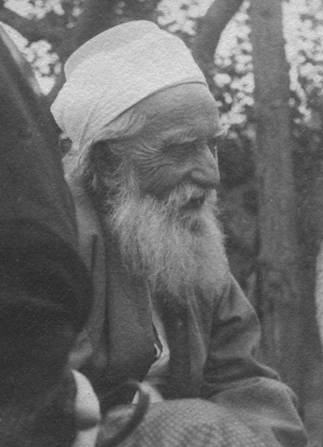
One early pilgrim noted that grace was not said before meals. She mentioned this to the Master, to which He replied, “My heart is in a continual state of thanksgiving, and so often those accustomed to this form say the words with the lips merely, and their hearts are far from being in a state of thanksgiving.”
Yet, it is of interest that Thornton Chase, who is known as the first American believer, noted that ‘Abdu’l-Bahá, always the perfect host, at the noon meal accepted food only after all those present had been served and then indicated that the meal should be eaten by saying ‘In the Name of God’.
And there is that precious little anecdote about Lua Getsinger, one of America’s earliest Bahá’ís, when she was visiting at the home of ‘Abdu’l-Bahá. “She had been in a great hurry that morning, and was scurrying to breakfast without having had her usual morning prayer. ‘Abdu’l-Bahá met her in the hall and looked at her with a penetrating glance. Then He said, ‘Lua, you must never eat material food in the morning until you have had spiritual food.’”
Source: Honnold, Annamarie, Vignettes from the Life of ‘Abdu’l-Bahá, p. 150
Collected from bahaistories.com (Subject: prayer).
Cite this story
Various. *bahaistories.com archive*. https://bahaistories.com/subject/prayer
Record yourself reading this story
Recording stays on this device only. Nothing is uploaded.
Related stories
Parables from Simple Things
‘Abdu’l-Bahá would begin a conversation with something simple, such as the weather, a stone or a bird, and weave it into a parable of spiritual truth, speaking easily and clearly in brief phrases.
Louis George Gregory
Born in Charleston to formerly enslaved parents, Louis G. Gregory became a Bahá'í in 1909, was seated by 'Abdu'l-Bahá at His right in Washington, gave decades to teaching and race unity, and was posthumously named a Hand of the Cause.
Thornton Chase, the First American Believer
The life of Thornton Chase, whom ‘Abdu’l-Bahá called “the first American believer,” from his long spiritual search to his service in Chicago, and the Master’s visit to his grave in 1912.
Strict Imprisonment Renewed
In consequence of this and other equally unfounded charges, in 1901, ‘Abdu’l-Bahá and His family, who for more than twenty years had been allowed the freedom of the country for some miles around Akká, were again, for over seven years …